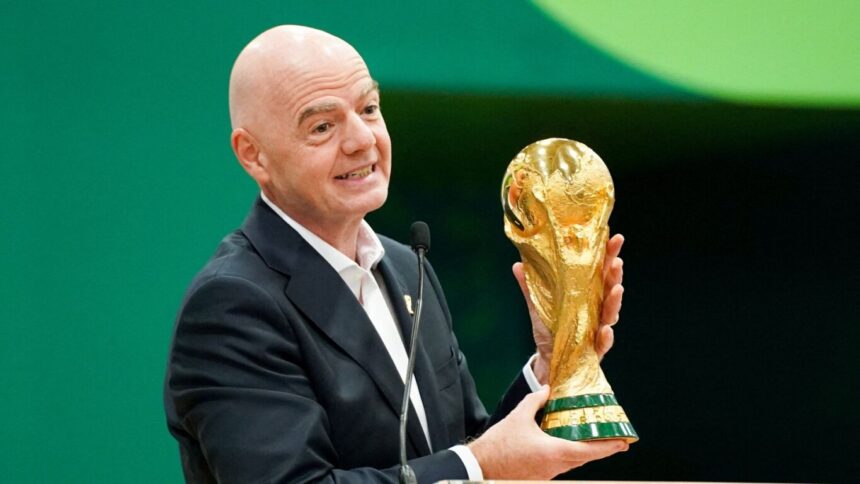
The Football Association (FA) and the French Football Federation (FFF) have publicly criticised FIFA President Gianni Infantino’s reported plan to sell minority stakes in the organisation’s commercial business, saying they were not consulted and raising concerns about transparency, governance and the future direction of world football.
The dispute centres on a proposal that could reshape how FIFA generates revenue. According to reports, Infantino wants FIFA’s 211 member associations to approve the sale of minority, non-controlling stakes in Football Forward Enterprise, the commercial entity that manages FIFA’s broadcasting rights, sponsorships, licensing agreements and ticketing operations.
The plan reportedly aims to raise $4.2 billion from private investors, with FIFA arguing that the investment would generate more than $10 billion for member associations over the next four years. However, some of Europe’s biggest football bodies say they have received little or no information about the proposal and are questioning both the process and its implications.
In a statement issued on Wednesday, the Football Association of England said it had not been properly informed about the proposal and lacked sufficient details to assess its impact.
The FA expressed concern over what it described as the absence of transparency and proper governance, saying it was unaware of the proposal until reports emerged publicly.
According to the association, it has not received detailed information explaining how the investment would work, the conditions attached to the proposed stake sale or the long-term consequences for FIFA and its member associations.
The FA said it would carefully examine the proposal once FIFA provides full documentation before deciding its position.
The French Football Federation also questioned the reported proposal, with its president, Philippe Diallo, expressing surprise that national football associations had not been consulted before such a significant initiative became public.
Diallo said the introduction of private investment into FIFA’s commercial operations raises important questions about governance, ownership and decision-making within world football.
He added that he intended to hold discussions with other major European football federations, including UEFA President Aleksander Čeferin, to determine a common approach once more information becomes available.
Football Forward Enterprise is the commercial company responsible for managing FIFA’s most valuable business assets.
These include global broadcasting rights for FIFA competitions, sponsorship agreements with multinational companies, licensing arrangements and ticket sales for tournaments such as the FIFA World Cup.
Under the reported proposal, private investors would purchase minority, non-controlling stakes in the company. Although FIFA would remain in overall control, outside investors would acquire a financial interest in the organisation’s commercial revenues.
Supporters argue that such investment could unlock significant new funding for football development worldwide, while critics worry it could increase commercial influence over decisions traditionally made by football’s governing bodies.
According to reports, FIFA believes bringing in external investors would strengthen its financial position and provide additional funding for football development programmes across its member associations.
The governing body reportedly estimates that the investment could generate more than $10 billion over the next four years, allowing greater support for infrastructure, youth development, women’s football and grassroots programmes.
To proceed, however, FIFA would reportedly require the backing of more than 50 per cent of its member associations.
Reports also suggest that national football associations have been given until 19 September to indicate whether they support the proposal.
The opposition from England and France is less about the concept of investment itself than about the process surrounding the proposal.
Both associations argue that such a significant decision should involve wider consultation with member federations before any approval is sought. They also want greater clarity on the structure of the investment, the rights that investors would receive and the safeguards that would protect FIFA’s independence.
Their concerns reflect broader debates within global sport about balancing commercial growth with transparency, accountability and the long-term interests of the game.
The reported proposal is expected to become a major topic of discussion among FIFA’s member associations in the coming weeks.
With influential European football bodies already expressing reservations, attention will now turn to whether FIFA provides additional details that address concerns over governance and transparency.
If the proposal secures the required support from member associations, it could mark one of the most significant commercial changes in FIFA’s history. If opposition grows, however, the governing body may face pressure to revise or delay its plans.