
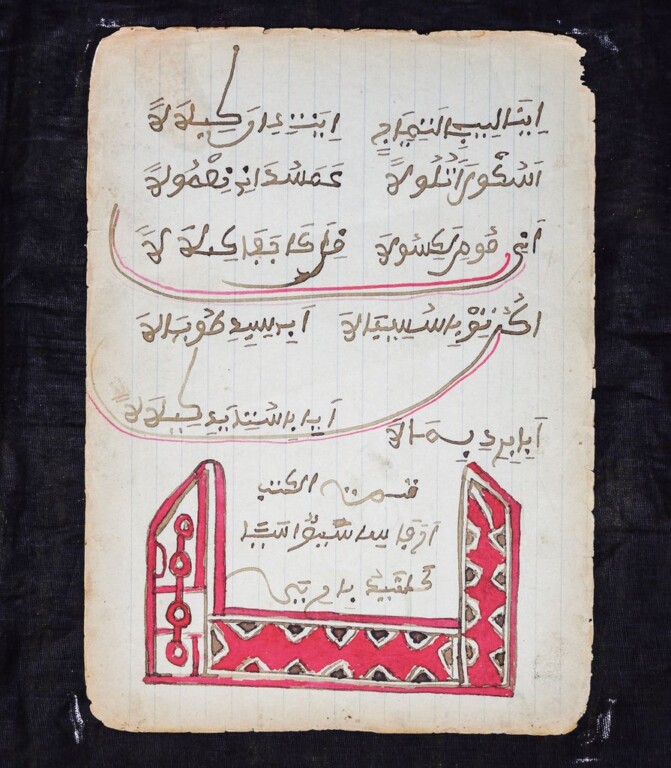
Long before smartphones and digital keyboards made writing effortless, communities across Africa found creative ways to put their languages on paper.
One of those systems was Ajami, an adapted form of Arabic script used to write African languages such as Hausa, Fula, Mandé, Kanuri, Wolof, Yoruba and Swahili.
Written from right to left, Ajami may look like Arabic to an unfamiliar reader. However, the words can represent completely different African languages. Its story reflects centuries of cultural exchange, religious scholarship and African innovation.
More Than Arabic Writing
The word Ajami comes from the Arabic word ʿajamī, traditionally used to describe non-Arabic languages or people who were not Arab. Over time, the term became associated with the use of Arabic letters to write other languages.
Ajami developed because Arabic did not contain symbols for some sounds found in African languages. Instead of abandoning the script, scholars and writers adapted it. They modified existing Arabic letters by adding dots, lines and other marks to represent sounds that Arabic does not have.
This simple adaptation made it possible to write African languages using a familiar script.
A Long African History
Ajami has existed for centuries, with its use spreading alongside Islamic learning and trade across different parts of Africa. Religious scholars used it to write prayers, teachings and other Islamic materials, while communities also used it for everyday communication.
In Hausa-speaking communities, for example, Ajami became an important means of recording Hausa before the widespread adoption of the Latin alphabet. Writers used the script for religious texts, letters, poetry, historical records and other forms of communication.
The practice was not limited to Hausa. Different communities developed their own versions of Ajami, adapting the Arabic script according to the sounds and structure of their languages.
When One Script Speaks Many Languages
One of the most fascinating things about Ajami is that there is no single universal Ajami alphabet.
The way Ajami represents a particular sound can differ from one language to another. A letter that represents one sound in Hausa Ajami may have a different use in another African language.
Languages such as Bambara, Dyula, Fula, Mandinka, Kanuri, Songhay, Wolof, Yoruba and Swahili have all been written in forms of Ajami.
This makes Ajami less like a single writing system and more like a family of adaptations. Each community shaped the script to fit the sounds of its own language.
Ajami in a Changing World
The arrival and spread of the Latin alphabet changed the way many African languages were written. Colonial education systems largely promoted Latin-based writing, while formal education increasingly moved away from Ajami.
Yet Ajami did not disappear.
In some communities, people still use it for religious education, personal writing, poetry and cultural expression. Researchers and historians also study old Ajami manuscripts to understand African languages, societies and intellectual traditions.
Today, digital technology is creating new possibilities for preserving these writing traditions. Scholars, language advocates and cultural organisations can document old manuscripts and explore ways to make Ajami more accessible to younger generations.
Preserving a Written Heritage
Ajami tells a story that goes beyond handwriting. It shows how African communities encountered an existing writing system and reshaped it to express their own languages.
Its continued study also challenges the idea that written African history began only with European colonial education. For centuries, African scholars and communities produced written materials in languages they spoke, using a script they had adapted to their own needs.
Every additional dot, line or modified letter carries part of that history.
Ajami therefore remains more than an Arabic-derived script. It is a record of adaptation, cultural exchange and African intellectual creativity — a reminder that people have always found ways to make writing speak in their own voice.