

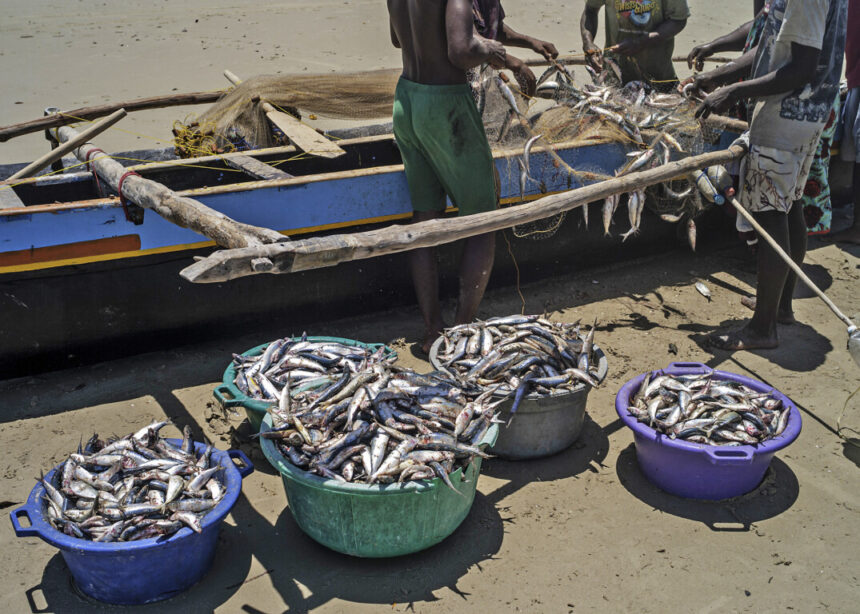
In Mantanito, a fishing village along Madagascar’s Menabe coast, 46-year-old fisher Nariky says he sometimes travels up to 50 kilometres to find enough fish to support his family. He recently returned from a fishing trip with about 20 kilogrammes of fish, including sardines, as well as crabs and prawns, after strong winds had kept him ashore.
“I left at about two in the morning and, luckily, came back with around 20 kilos of fish,” he told bird story agency.
Nariky, who asked to be identified only by his first name, moved to Mantanito from Andranopasy, about 80 kilometres away, after struggling to earn enough from fishing in his former community.
“We put in the effort and spent hours at sea, but we caught little and made hardly any money,” he said.
A Fishing Tradition Under Pressure
The Vezo communities have traditionally depended on the sea along Madagascar’s western and southwestern coast, from Morondava to areas south of Toliara. Their name is believed to derive from mivehy izao, meaning “to handle an oar”, reflecting their longstanding relationship with fishing and sailing.
Children often learn from an early age how to navigate the sea, fish and interpret weather conditions. Their traditional canoes are carved from single logs, often using wood from the farafatse tree, before being fitted with wooden crossbeams, an outrigger and a square sail.
For 24-year-old Jean Tsimiraiky, canoe-building remains an important part of this heritage. He says he has built all eight of his canoes himself, with each one taking about three days to complete.
“I’ve been doing this for about ten years, since I left school,” he said.
Fishers also rely on generations of knowledge to determine when and where to fish, observing wind patterns, tides and currents to identify suitable fishing grounds.
However, Nariky says increasingly difficult conditions have forced some fishers to travel farther, while strong winds can prevent them from going to sea altogether.
Research Highlights Changing Fishing Conditions
A 2022 study of the Barren Isles off Madagascar’s west coast examined how weather conditions affect the ability of traditional fishers to go to sea.
Researchers combined fishers’ knowledge of winds and ocean swells with weather data covering the period from 1979 to 2020. They estimated that the number of hours when conditions allowed sailing canoes to operate fell by about 22 hours annually over the period studied.
Wind was identified as the main factor determining whether fishers could safely take their canoes out.
Samantha Farquhar, the study’s lead author, said disruptions to established seasonal wind patterns could reduce fishing opportunities for communities that depend on them.
She noted, however, that further research would be needed to establish whether the experiences reported by fishers in Mantanito reflect a long-term change in local weather conditions.
Avisoa Francis Nirindrainy, a co-author of the study who conducted interviews in Ampasimandroro, Maintirano, said fishers there identified southerly winds as a major reason for remaining ashore.
Many reported that winds reaching 25 to 30 kilometres per hour could make sailing and fishing difficult or dangerous, while waves between one and two metres were enough to force them to cancel trips.
Nirindrainy said fishers in Mantanito could face similar challenges, given the communities’ reliance on small-scale fishing along Madagascar’s west coast, although dedicated research would be needed to establish this.
Families Struggle When Canoes Stay Ashore
The difficulties extend beyond the fishers to families who depend on daily catches and sales to meet household expenses.
Women sell fish at local markets and sometimes gather shellfish and crustaceans to supplement household income. Mahereza, 20, whose husband goes fishing, says her earnings from selling dried fish are often insufficient to cover everyday expenses.
She said prices generally range from 7,000 to 9,000 ariary per kilogramme, while a good day’s sales could bring in about 30,000 ariary.
However, such opportunities are limited, particularly when bad weather keeps fishing canoes ashore and reduces the supply of fish available for sale.
In other communities studied, some fishers turn to fishing in rivers or sheltered waters when conditions at sea become dangerous. Others earn money through bicycle rickshaws and three-wheeled motorised vehicles, while some women take up sewing and other small jobs.
Climate Change and Fishing Pressure Threaten Marine Resources
Beyond difficult weather conditions, declining fish stocks could further threaten the livelihoods of coastal communities.
World Bank projections under pessimistic climate scenarios suggest Madagascar’s maximum catch potential could decline by up to six per cent by 2040 and nearly 10 per cent by 2050.
Research cited by the bank in the Menabe region also points to pressure from fishing activities. Of the 20 most common species examined in one small-scale fishery, 13 recorded fishing-related mortality rates higher than their natural mortality rates.
Researchers also found that many fish were being caught before they had the opportunity to reproduce, raising concerns about the sustainability of fishing practices.
The combination of environmental changes and pressure on marine resources presents a growing challenge for communities whose food, income and cultural traditions are closely tied to the sea.
Local Association Promotes Sustainable Fishing
In response, the Mantanito fishers’ association is working with its members to encourage practices that allow fish stocks to recover and reduce damage to marine ecosystems.
The association’s president, Ramiandrisoa Sylvain, who is also a fisher, says he works with nearly 800 members and holds weekly discussions on changes they can make to their fishing methods.
He said members are encouraged to respect fishing seasons and adjust their equipment to avoid damaging the seabed or catching fish before they reach maturity.
The changes, he explained, followed recommendations from authorities who help the association understand and comply with fishing regulations.
For the community, protecting marine resources is not only about sustaining current livelihoods but also ensuring that future generations can continue to depend on fishing.
As Nariky’s experience illustrates, a favourable break in the wind can determine whether a family has enough fish to sell and eat. But for Vezo communities, the longer-term challenge is ensuring that the sea remains productive and accessible despite growing environmental and economic pressures.