As heavy rainfall spreads across Nigeria, concerns are growing over the possibility of another devastating flood season in several parts of the country.
Emergency management agencies have already warned that many states could experience severe flooding during the 2026 rainy season, especially communities located near rivers, floodplains, and low-lying areas.
The warnings have triggered anxiety among residents who still remember the destruction caused by previous floods that displaced thousands of families, destroyed farmlands, and claimed lives across multiple states.
Over the years, floods have remained one of Nigeria’s most destructive environmental disasters.
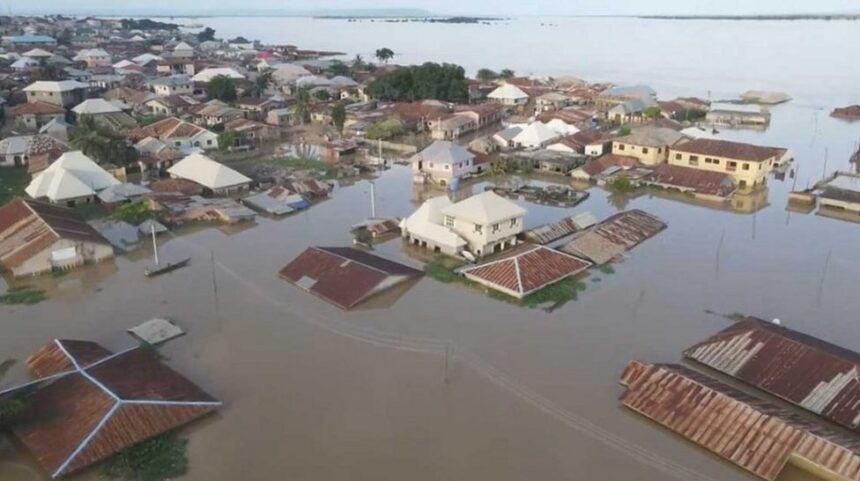
Entire communities have been submerged during peak rainfall periods, forcing residents to flee their homes, sometimes overnight, as rising water levels swept through streets and buildings.
Many survivors of previous floods say they lost property, businesses, household items, and sources of livelihood within hours.
Some families displaced by earlier disasters are still struggling to recover financially and emotionally.
Residents in vulnerable communities now fear that unresolved drainage and environmental problems could worsen the situation this year.
Authorities and environmental experts say blocked drainage systems, poor urban planning, and illegal construction on waterways continue to increase flood risks across many Nigerian cities.
In several urban centres, drainage channels remain clogged with waste, reducing the ability of floodwater to flow freely during heavy rainfall.
Communities built close to riverbanks and natural flood channels are considered especially vulnerable as rainfall intensifies.
Experts warn that without stronger environmental enforcement and better infrastructure planning, flooding could continue to threaten lives and property annually.
Flooding also poses serious risks to agriculture and food security.
In previous years, thousands of hectares of farmland were destroyed after rivers overflowed into farming communities.
Many farmers suffered heavy losses as crops were washed away before harvest periods.
Analysts say another severe flood season could worsen food inflation and economic pressure, particularly at a time when many Nigerians are already struggling with rising living costs.
Emergency officials say awareness campaigns have already begun in several flood-prone communities.
Residents have been advised to monitor weather updates closely and comply with evacuation directives whenever necessary.
Authorities are also urging Nigerians to clear drainage channels around homes and avoid dumping refuse into waterways.
People living in high-risk areas have been encouraged to relocate early if flood conditions become dangerous.
Despite official assurances, many Nigerians remain concerned about the country’s level of preparedness for another major flood emergency.
Questions continue to surround disaster response capacity, relief distribution systems, and long-term prevention strategies.
Environmental experts argue that Nigeria must invest more in drainage infrastructure, flood-control systems, and sustainable urban planning to reduce future disasters.
They also stress the importance of stronger coordination between federal, state, and local authorities in managing climate-related emergencies.
As rainfall becomes heavier across different parts of the country, millions of Nigerians are now watching closely to see whether the country can avoid another large-scale humanitarian disaster.
For many residents in flood-prone communities, the rainy season no longer brings only relief from heat, it also brings uncertainty, fear, and memories of past devastation.
In this episode of Nigeria Daily, we examine the latest flood warnings, hear from survivors of previous disasters, and speak with emergency officials about what Nigerians must do to stay safe during the 2026 rainy season.