
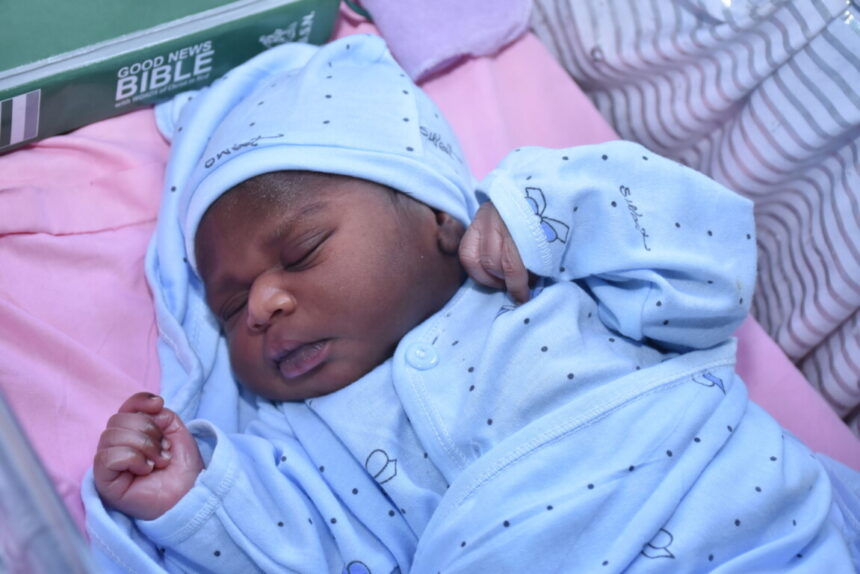
Tension and panic set in at the General Hospital, Kaura Namoda, in Zamfara State following the disappearance of a 10-day-old newborn from the labour ward of the hospital facilities.
According to a statement signed by Suleiman Isah, spokesperson of the state’s Ministry of Health, the incident reportedly occurred after a woman, who was seriously ill and unconscious following childbirth nine days earlier, was brought to the facility.
Isah explained that an unidentified woman wearing a face mask allegedly took the baby from the mother’s side and disappeared into thin air, causing chaos within the premises and the state at large.
Reacting to the development, the Zamfara State Government sent a high-level delegation led by the Commissioner for Health in Zamfara State, Dr Nafisa Muhammad Maradun, to the Kaura Namoda Emirate Council to sympathise with the Emirate and the family of the missing child over the unfortunate incident.
During the visit, the commissioner met with the baby’s mother and assured the family that the state government was committed to uncovering the circumstances surrounding the disappearance.
Also during the visit, Mannir Mu’azu Haidara, Chairman of Kaura Namoda Local Government Area in Zamfara State, pledged to provide CCTV cameras to strengthen security at the General Hospital and help prevent similar incidents in the future.
Inside Nigeria’s Growing Fear of Babies Disappearing from Hospitals
Over the past few years, several disturbing cases involving missing or allegedly stolen babies have emerged from hospitals and health centres in different parts of Nigeria, raising concerns over security lapses, child trafficking and weak monitoring systems within medical facilities.
From Lagos to Nasarawa, Ekiti to Plateau, desperate mothers have cried out after discovering their babies missing under mysterious circumstances shortly after delivery.
In 2025, police in Ekiti State launched an investigation after a newborn reportedly disappeared from Okeyinmi Health Centre in Ado-Ekiti. Authorities later arrested suspects and recovered the child after uncovering an alleged scheme involving a woman accused of faking pregnancy to obtain a baby.
In another incident on January 9, 2024 in Nasarawa State, a woman disguised as a caregiver stole a one-day-old baby from the postnatal ward of Dalhatu Araf Specialist Hospital in Lafia. Police later arrested suspects linked to the incident.
Lagos has also witnessed similar reports. In one case, a woman was arrested for allegedly stealing a newborn baby from a hospital ward while the mother was recovering after surgery. Investigators alleged that the child was meant to be sold through an illegal network.
In June 2019, hospital authorities in Plateau State confirmed the recovery of a three-day-old baby allegedly stolen by a woman who reportedly posed as a medical worker.
Although some of the babies were eventually rescued, many families say the emotional trauma remains difficult to overcome.
How The Babies Disappear
Security experts and child rights advocates say many hospital-related baby theft cases follow similar patterns.
Some suspects reportedly disguise themselves as nurses, cleaners, caregivers or even relatives of patients. In overcrowded wards where hospitals face staff shortages and limited security surveillance, strangers can sometimes move around unnoticed.
In certain cases, investigators have linked the thefts to illegal adoption rings, trafficking syndicates and so-called “baby factories” operating secretly across parts of the country.
“These criminals study hospital routines carefully,” said a child protection advocate in Abuja. “They often target vulnerable mothers, especially women recovering from childbirth, first-time mothers or patients left unattended.”
Experts also note that poor identity verification systems in some hospitals make it easier for suspects to gain access to maternity wards.
The growing reports have increased anxiety among pregnant women and their families.
Many mothers now insist that relatives remain with them throughout their stay in hospital. Some families reportedly avoid leaving newborns alone even for a few minutes.
In some public hospitals, concerns over inadequate security infrastructure, including the absence of CCTV cameras and visitor tracking systems, continue to fuel fears.
Calls For Stronger Hospital Security
Child rights groups and medical professionals are now calling for stricter security measures in hospitals nationwide.
In January 2026, Dr Richardson Ajayi, founder of Bridge Clinic Fertility Centre, Abuja, stressed the need to strengthen healthcare systems rather than focusing solely on individual practitioners. “While healthcare depends on the dedication of doctors, nurses and other professionals, patient safety ultimately rests on the strength of the systems that support them,” Ajayi said. “To build real trust, we need clear standards, transparent oversight and continuous improvement without resorting to blame for those on the front line.”
Experts also want stronger collaboration between hospitals, law enforcement agencies and child protection organisations to quickly investigate suspicious cases.
Analysts warn that baby theft is not just a family tragedy, but a wider security and social problem linked to human trafficking, illegal adoption networks and organised crime.
While authorities have made arrests in some cases, concerns remain that many incidents may go unreported, especially in rural communities where access to justice is limited.
For affected parents, however, the issue goes beyond statistics or investigations.
It is the fear that a place meant to protect life can suddenly become the scene of unimaginable loss and often times getting justice may seem like a tall dream