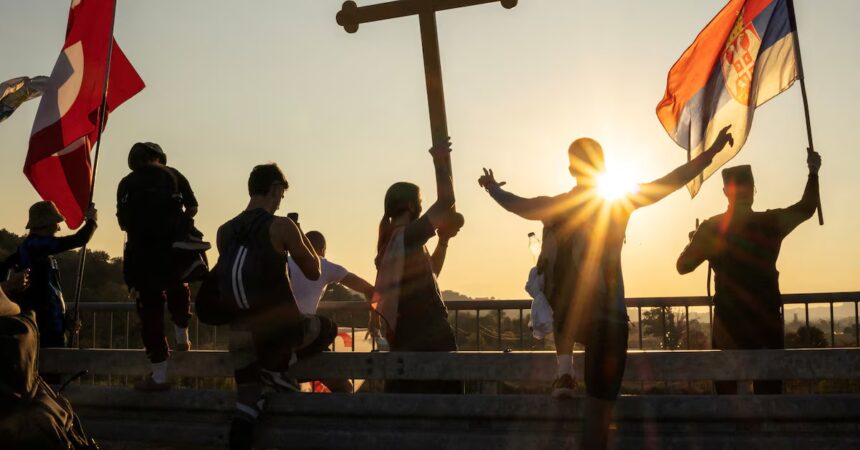
A student-led movement has scored a historic victory in Serbia’s parliamentary election, marking a major setback for the political establishment that has dominated the country for more than a decade.
According to preliminary results reported by Reuters on Monday, October 26, the movement’s Student List won about 52.7 per cent of the vote, securing 139 seats in the 250-member parliament. The ruling Serbian Progressive Party-led alliance received about 39.2 per cent while Aleksandar Vučić conceded defeat.
How It All Began
The movement grew out of public anger over a deadly railway station disaster in Novi Sad in November 2024. A concrete canopy collapsed, killing 16 people and triggering nationwide protests.
Students demanded accountability and a transparent investigation. Their protests soon expanded into a broader campaign against alleged corruption and failures in government institutions.
Thousands of citizens joined demonstrations across Serbia. Students organised marches, occupied university spaces and called for political change. Their sustained protests eventually pushed the country towards an early parliamentary election.
From Protesters to Political Leaders
Rather than rely on traditional opposition parties, the students backed a list of candidates that included academics and other professionals.
Their campaign focused on fighting corruption, improving education, protecting media freedom and strengthening public institutions. The movement also attracted voters who had grown frustrated with Serbia’s political establishment.
The election result now gives the student-backed bloc a parliamentary majority. However, the movement has yet to establish a clear leadership structure or announce all its plans for forming a government.
What Happens Next?
The election victory marks the beginning of a new challenge. The student-backed lawmakers must now turn their campaign promises into practical policies.
They face public expectations for stronger accountability, better public services and more independent institutions. They must also decide how to manage Serbia’s relationships with the European Union, China and Russia.
The movement’s diverse membership could complicate those decisions. Its supporters share demands for political reform, but they may not agree on every policy issue.
A Lesson for Young People Around the World
Serbia’s election offers a powerful example of how sustained civic action can reshape a country’s political landscape.
The students began by demanding answers after a national tragedy. They built a wider movement, attracted public support and eventually competed for political power.
Their victory raises a bigger question for young people elsewhere: can protest movements deliver lasting change once they enter government?
For Serbia, the answer will depend on whether its new parliamentary majority can fulfil its promises and restore public trust in state institutions.