
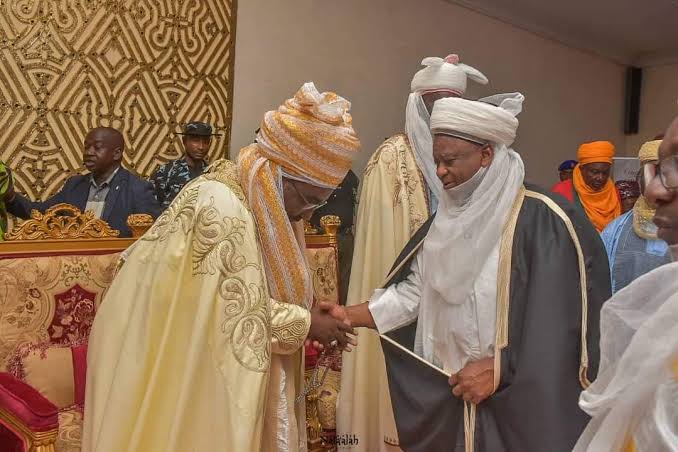
The Sultan of Sokoto, Alhaji Muhammad Sa’ad Abubakar III, has urged traditional institutions across Nigeria to take responsibility for documenting their histories to prevent the distortion of their heritage by outsiders.
The Sultan made the call on Wednesday in Zaria, Kaduna State, during the presentation of a book titled Emirs of Zazzau: A Biographical Study from 1800–2025, held as part of activities marking the sixth anniversary of the enthronement of the Emir of Zazzau, Ambassador Ahmed Nuhu Bamalli.
He commended the Emir for documenting the history of the Zazzau Emirate, describing the initiative as an important contribution to preserving the identity, heritage and historical memory of its people.
According to the Sultan, traditional institutions are best positioned to document their histories because of their direct knowledge of their communities, traditions and institutions.
“You cannot allow someone to write your own history. You have to write your own history as it is because you know more than any other person,” he said.
The Sultan recalled that he had previously challenged the Emir of Zazzau to emulate his efforts in documenting the history of the Sokoto Caliphate.
He noted that he had published his own book, Sultans of Sokoto, several years ago as part of efforts to preserve the history of the institution and its people.
He said the Zazzau publication was particularly significant because historians from the emirate’s four dynasties were involved in producing the work.
The Sultan subsequently called on other emirates and traditional institutions across Nigeria to undertake similar historical documentation projects.
“We need to know who we are, where we come from and where we are going. We should not allow social media to write whatever they want and try to change the course of history,” he said.
Sultan Warns Against Historical Distortion
The Sultan cautioned against relying solely on historical accounts written by individuals who may not have adequate knowledge of the traditions and experiences of Nigerian communities.
He said inaccurate narratives could distort the understanding of the past and negatively affect how future generations perceive their heritage.
He therefore encouraged traditional institutions to preserve historical records, oral traditions and important accounts of their communities for future generations.
The Sultan also urged Nigerians to continue praying for the country’s leaders, including President Bola Ahmed Tinubu, state governors, emirs and other traditional and political leaders.
He called on citizens to support their leaders and pray for them to succeed, stressing that effective leadership would ultimately benefit the people.
Uba Sani Commends Emir of Zazzau
In his remarks, Kaduna State Governor Uba Sani applauded the Emir of Zazzau for initiating the historical documentation project.
The governor described the publication as an important contribution to preserving the history and heritage of the Zazzau Emirate.
He urged the Emir to remain patient, continue listening to the people and make use of constructive advice in the administration and development of the emirate.
Sani also expressed appreciation to the Sultan for his continued support for the Zazzau Emirate and for attending the anniversary and book presentation.
Emir Explains Reason for the Book
The Emir of Zazzau, Ambassador Ahmed Nuhu Bamalli, said the publication was necessary because of what he described as historical distortions and inaccuracies surrounding the history of the Zazzau Emirate.
He stressed that communities that fail to document and preserve their histories risk losing their identity, heritage and connection with future generations.
The book presentation formed part of activities marking the sixth anniversary of the Emir’s ascension to the throne.
The event was attended by former Vice-President Namadi Sambo, government officials, traditional rulers, scholars, historians, members of the Zazzau Emirate Council and other dignitaries.