
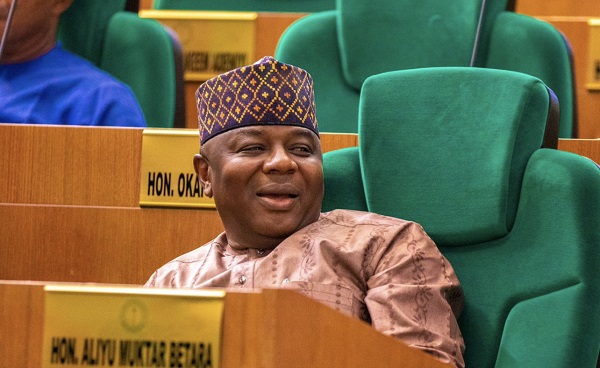
A member of the House of Representatives, Muktar Betara Aliyu, has announced N1.06 billion in financial support for All Progressives Congress (APC) candidates contesting national and state assembly seats in Borno State.
Betara, who represents Biu/Bayo/Shani/Kwaya Kusar Federal Constituency, said the support would also cover serving lawmakers who lost their bids during the party primaries.
He announced the package on Sunday in Maiduguri during the inauguration of the Borno State APC Campaign Council. He said 10 APC candidates and outgoing members of the House of Representatives would receive N50 million each, amounting to N500 million.
He also announced that 28 APC candidates and outgoing members of the Borno State House of Assembly would receive N20 million each, bringing the total support for the state legislators and candidates to N560 million.
Betara said the financial support was aimed at strengthening the party’s structures and mobilising grassroots support for its candidates.
“We can’t win elections from elsewhere. We should go back to our people at the grassroots, seek their forgiveness, and canvass support for our party candidates from the presidency down to the state assembly,” he told party stakeholders.
Who is Betara?
An accountant by training, Betara was first elected to the House of Representatives in 2007. He has since been re-elected in the 6th, 7th, 8th, 9th and 10th National Assemblies.
He chaired several committees, including the Army Committee in the 7th Assembly, Defence Committee in the 8th Assembly and Appropriations Committee in the 9th Assembly.
Betara’s financial support has raised questions among members of the public and political analysts, particularly at a time when many lawmakers struggle to execute constituency projects.
Unlike politicians whose influence is largely limited to the federal level, Betara has also been associated with several development projects across Borno State.
His initiatives include the construction of township roads in Biu and neighbouring local government areas, health centres, provision of ambulances, construction of mini-stadia and installation of more than 600 solar-powered streetlights.
He is also said to have regularly used personal funds to support medical procedures, youth empowerment programmes and local businesses.
Analysts call for scrutiny
A political analyst, Dr Lawan Cheri, said the N1.06 billion support package raised questions about the source of the lawmaker’s wealth, arguing that the amount was far beyond the cumulative legitimate salary and allowances of a parliamentarian.
“I don’t see any fault in people asking the fundamental question of: Where did he get the money from? And what are the implications of that on the fight against corruption?” he asked.
Cheri warned that large donations and spending by politicians were often viewed as investments rather than acts of generosity.
“People will try to recoup what they invested, and this will result in failing to provide the services needed by communities,” he said.
He argued that politicians who viewed campaign spending and donations as financial investments could seek to recover their money after assuming public office, either directly or through the use of political influence.
Cheri said failure by the Independent National Electoral Commission (INEC) to monitor and regulate such spending could have wider implications for governance beyond elections.
“If INEC is not controlling such spending, it will have implications on governance itself, not only politics, because it will be viewed as a political investment,” he said.
Another public affairs analyst, Dr Alhaji Ahmadu Ibrahim, called on regulatory bodies and other stakeholders to urgently address the trend to protect the integrity of the country’s democracy.
“I have never seen politicians spending money like this time. N1 billion donations by a House of Representatives member who has no record of business or a wealthy background? It calls for scrutiny.
“All these things should be considered to save the face of democracy in the country,” he said.