
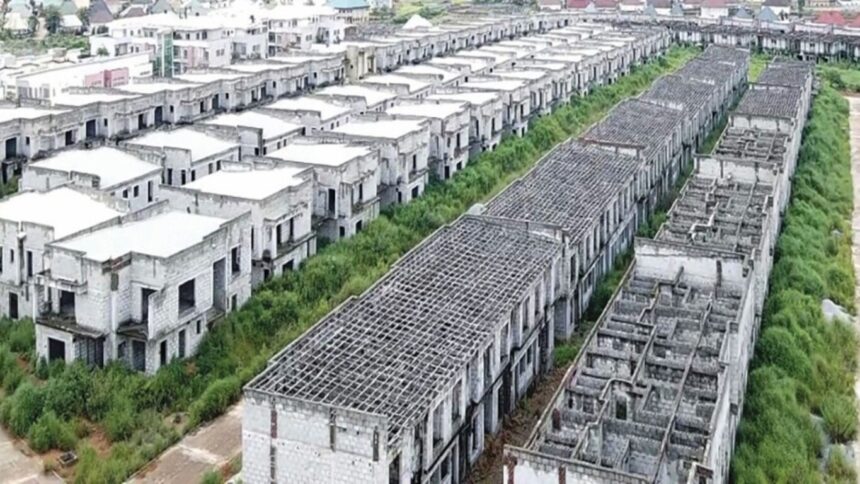
At night, some of Abuja’s most expensive neighbourhoods tell a strange story. Behind high walls and elaborate gates, luxury homes sit in darkness while thousands of residents struggle with rising accommodation costs. In parts of Maitama, Asokoro, Jabi, Wuse II and other high end districts, some finished properties remain empty for months or even years. Abuja has no verified citywide count of these “ghost houses”, but repeated investigations and statements from housing officials point to vacant and abandoned properties as a visible problem.
A city full of homes, yet short of housing
The contradiction becomes clearer when placed against Abuja’s housing needs. A recent World Bank assessment estimated that Abuja accounts for about 10 per cent of Nigeria’s housing deficit. The assessment puts the city’s additional housing need at about 1.7 million units. At the same time, housing officials and stakeholders continue to draw attention to completed properties that remain unused.
In 2024, Housing and Urban Development Minister Ahmed Dangiwa said the government planned to identify abandoned estates and consider higher ground rents for owners who kept completed properties vacant. He proposed triple ground rent for estates that remained unoccupied beyond three months. The proposal reflected growing concern over properties that occupy valuable land without serving the housing market.
Behind the gates of Abuja’s ghost houses
A drive through some of Abuja’s high end districts can reveal the contrast. Large compounds stand behind tall fences, often with security posts, landscaped grounds and completed buildings. Yet some show little sign of regular human activity.
An investigation previously identified vacant properties in areas including Asokoro, Maitama, Wuse II and Jabi. The report linked some of the empty homes to high rents and large upfront payments. For prospective tenants, the problem goes beyond finding a house. They must also find the money to secure it.
The situation creates a peculiar urban landscape. A property can look ready for occupation from the outside while remaining locked for long periods. Some houses may belong to owners who live elsewhere. Others may await buyers or tenants. Some developments may also face disputes or financial problems.
When luxury becomes too expensive to occupy
High property values help explain part of the puzzle. Abuja’s prime districts attract wealthy buyers and investors, but the cost of renting or buying in these areas puts many homes beyond the reach of ordinary residents.
Some landlords demand substantial rent payments upfront. Others prefer to wait for buyers or tenants who can meet their asking prices. In a market where construction, land and maintenance costs continue to influence property prices, owners may resist lowering their valuations.
That decision can leave completed houses outside the active housing supply even when people need accommodation nearby.
The money question
The story of Abuja’s empty mansions also attracts allegations about wealth and property ownership. Some commentators have claimed that wealthy individuals use expensive properties to store illicit funds. Such claims require evidence, however, and they cannot apply to every vacant house in the capital.
Court records do show that some Abuja properties have featured in major asset-recovery cases. In July 2026, the Federal High Court in Abuja ordered the final forfeiture of 48 properties linked to former Attorney General of the Federation, Abubakar Malami, following an EFCC application. The properties included assets in Maitama, Asokoro, Jabi and Wuse II.
That case provides documented evidence of high value Abuja properties entering an asset forfeiture process. It does not prove that vacant houses across the capital generally serve as vehicles for money laundering.
A housing paradox
The empty house debate exposes a wider problem in Abuja. The city needs more accessible housing, yet some completed properties remain outside the reach of people who need homes.
FMBN Managing Director Shehu Osidi backed calls in 2025 to tax vacant Abuja houses. He argued that underused properties could contribute to financing affordable housing.
A vacancy tax could change the calculation for owners who keep properties empty for long periods. Better property records could also help authorities identify genuinely abandoned buildings and distinguish them from homes whose owners simply live elsewhere.
Can Abuja fill the silence?
The government faces a difficult balance. Property owners have rights, but vacant buildings also occupy valuable urban land and can affect the wider housing market. Any policy must therefore distinguish between genuinely abandoned properties, investment properties, homes awaiting sale and buildings caught in legal or financial disputes.
For now, Abuja’s “ghost houses” remain more than a collection of dark windows and locked gates. They represent a striking contradiction within Nigeria’s capital: a city where housing demand remains high, while some of its most expensive homes remain silent and empty.
Until authorities produce a reliable inventory of vacant properties, nobody can say exactly how many ghost houses Abuja has. But the question remains visible every night, behind the gates of mansions that have everything except the people who are supposed to live in them.