The Economic and Financial Crimes Commission (EFCC) says it receives more than 20,000 petitions concerning public corruption every year, with some investigations allegedly uncovering dramatic increases in the wealth of public officials.
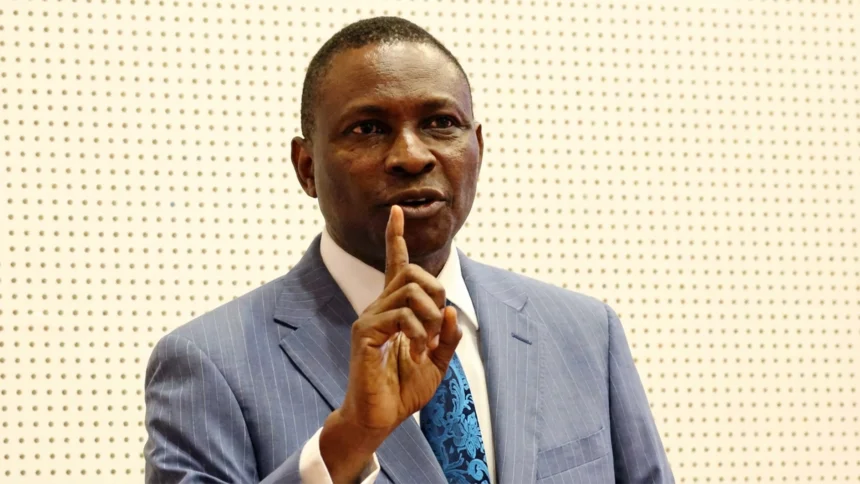
EFCC Chairman Ola Olukoyede made the disclosure in Abuja at an event marking the 80th birthday of former Attorney-General of the Federation and Minister of Justice, Kanu Agabi.
Olukoyede said the volume of complaints and the cases handled by the commission reflected the scale of the corruption challenge facing Nigeria.
He also described Nigerians as victims of the alleged diversion of public resources, arguing that corruption affects the wider population rather than only government institutions.
EFCC Chairman: Some Officials Accumulated Millions
Olukoyede said some EFCC investigations had traced substantial naira and dollar assets to public servants whose financial positions were comparatively modest before they assumed office.
He said some officials allegedly accumulated millions of dollars and naira within three or four years of entering public service.
“Somebody will spend three to four years as a public servant, but before he got to office he had less than N100 thousand in his account. By the time he’s leaving, we were able to trace several millions of dollars and naira to him.”
The EFCC chairman also alleged that some officials had acquired dozens or even hundreds of houses during their time in public service.
“Some build 50 something houses, sometimes 200 houses.”
Olukoyede used the examples to stress the importance of public officials being able to account for their stewardship and the management of public resources.
The remarks are allegations about cases handled by the commission and do not, by themselves, establish criminal liability against any particular individual. Specific cases remain subject to investigation and judicial determination.
Over 20,000 Public Corruption Petitions a Year
Olukoyede said the EFCC receives more than 20,000 petitions relating to public corruption annually.
“I receive over 20,000 petitions in a year in respect to public corruption, all terrible.”
He said the nature of some complaints raised serious concerns about how public resources were being managed.
According to the EFCC chairman, corruption should not be viewed solely as an issue for law enforcement agencies because its consequences are experienced by citizens.
He called for collective action against the diversion of national resources.
EFCC Says Nigerians Are Affected by Corruption
Olukoyede argued that the effects of alleged corruption extend beyond individual cases.
When public funds are allegedly diverted, resources that could otherwise support public services and development may be affected.
He therefore urged Nigerians to recognise the broader consequences of financial misconduct in government.
“As Nigerians we’re victims of these fraudulent activities.”
He called for greater public resistance to practices that undermine accountability in public office.
ICPC Chairman Blames Culture and Weak Systems
Also speaking at the event, the Chairman of the Independent Corrupt Practices and Other Related Offences Commission (ICPC), Musa Adamu Aliyu, identified two factors that he said contribute to the persistence of corruption in Nigeria.
He pointed to what he described as societal tolerance of corrupt practices and weaknesses within public institutions.
“The major challenge of corruption in this country is that we tolerate the culture of corruption, that is why it is thriving.”
Aliyu also said institutional weaknesses could make it easier for corrupt practices to persist.
“Secondly, we have systemic errors, our systems are weak.”
Call for Integrity Education
The ICPC chairman called for integrity education to begin early, particularly in primary and secondary schools.
He said younger Nigerians should be deliberately exposed to values that discourage corruption and promote responsible citizenship.
Aliyu also called for greater engagement with Generation Z and Generation Alpha, saying they should understand the importance of integrity from an early age.
“We need to tell them that we want them to imbibe the culture of integrity.”
Why Asset Growth Raises Questions
The issue raised by the EFCC chairman goes beyond the amount of money an individual possesses.
A public servant can legitimately become wealthier through lawful investments, business interests, inheritance or other legitimate sources.
The accountability question arises when investigators identify assets or financial transactions that cannot be adequately explained by known legitimate sources of income.
This is why financial investigations can involve examining bank transactions, property ownership, company interests, procurement records and other financial evidence.
Ultimately, however, allegations must be tested through due process and the courts.
The Wider Fight Against Public Corruption
Olukoyede’s comments come as Nigeria’s anti-corruption agencies continue to investigate and prosecute alleged economic and financial crimes.
The EFCC is responsible for investigating and prosecuting economic and financial crimes within its mandate, while the ICPC focuses on corrupt practices and related offences covered by its enabling law.
Both agencies have repeatedly emphasised the importance of prevention, institutional reforms and public accountability alongside criminal investigations.
The Abuja event brought together members of the legal profession, public officials, civil society organisations, academics and other stakeholders.
At its centre was a broader question: how can Nigeria strengthen the institutions, values and systems needed to make public resources more accountable?