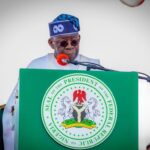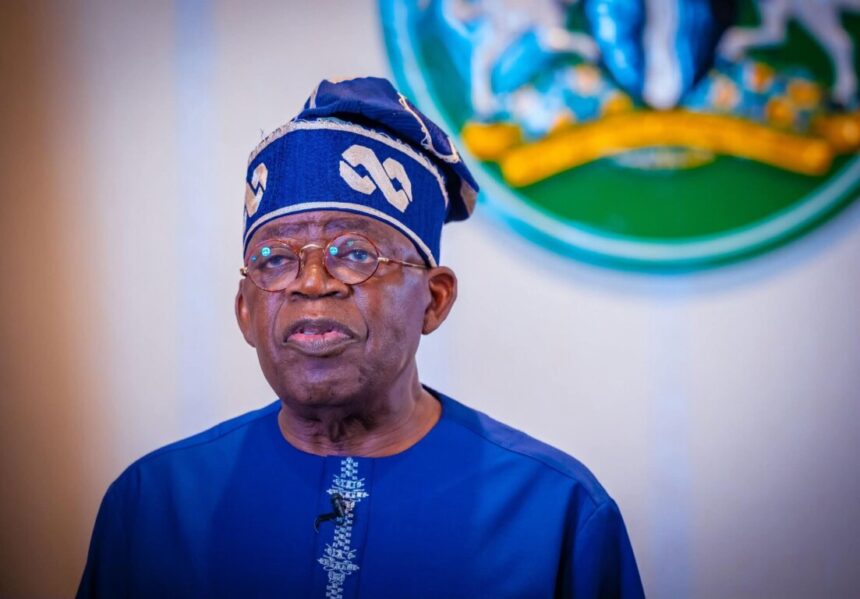
President Bola Ahmed Tinubu’s administration has accumulated a long list of reforms, projects and policy interventions since taking office in May 2023.
The list includes the removal of petrol subsidies, foreign exchange reforms, tax changes, student loans, minimum wage increases, compressed natural gas initiatives, agricultural mechanisation, infrastructure projects and security operations. The government has also pointed to rising revenue, stronger foreign reserves, trade surpluses and improved activity in financial markets as evidence of economic progress.
Many of these interventions are real and significant. However, describing all 50 as straightforward “achievements” creates a problem because the list combines new Tinubu policies, inherited projects, ongoing programmes, government claims and economic outcomes.
A more useful assessment is to ask three questions: What did Tinubu actually change? What did Nigerians inherit from previous administrations? And have the reforms improved the economic lives of ordinary people?
That distinction becomes particularly important when looking at the naira, petrol prices and the student loan programme.
Fuel subsidy removal: a major reform with a major household cost
One of Tinubu’s most consequential decisions came at the beginning of his presidency when he announced the end of the petrol subsidy.
The policy removed a large government expenditure and changed the structure of Nigeria’s downstream petroleum market. The World Bank reported that petrol prices rose sharply after the subsidy was removed, with pump prices increasing by about 170 percent.
The reform addressed a long-standing fiscal problem, but it should not automatically be described as the “elimination of corruption” in the petroleum sector. Ending a subsidy can reduce opportunities for certain forms of subsidy-related fraud and eliminate the cost of the programme, but corruption is a broader issue involving procurement, regulation, crude production, refining, distribution and other parts of the sector.
For ordinary Nigerians, the immediate consequence was much clearer: fuel became substantially more expensive.
In May 2023, petrol prices were adjusted to roughly ₦488-₦557 per litre in different parts of the country following the subsidy removal. By September 2026, reports showed NNPCL stations in some locations selling petrol at around ₦1,380-₦1,430 per litre.
That means the success of subsidy reform cannot be judged solely by how much money government saved.
The bigger question is whether those savings are being converted into infrastructure, public services, jobs and productive investment that eventually reduce the burden on households.
The naira has a new market structure, but remains weak
Foreign exchange reform is another major pillar of Tinubu’s economic programme.
In June 2023, the Central Bank of Nigeria consolidated segments of the foreign exchange market and moved towards a more market-based system. The stated objectives included improving transparency, price discovery and investor confidence.
This was a substantial change from the multiple exchange-rate structure that existed before Tinubu took office.
However, reforming the FX market is not the same as strengthening the naira.
As of September 15, 2026, the naira was reported at about ₦1,326.30 per dollar in the official market, while parallel-market rates were around ₦1,385-₦1,410 per dollar.
The figures show that the currency remains considerably weaker than it was before Tinubu’s reforms.
That does not necessarily mean the FX reform itself failed. The reform was primarily about how the market operates. The value of the naira is also affected by oil production, foreign exchange supply, imports, exports, inflation, capital flows, investor confidence and monetary policy.
It is therefore more accurate to say that Tinubu changed the architecture of the foreign exchange market without yet producing a strong naira.
That distinction is important when assessing the administration’s economic record.
The Buhari comparison needs context
Comparisons between Tinubu and Muhammadu Buhari are often presented through the exchange rate and petrol price.
However, saying Buhari left office with the dollar at ₦800 is not an apples-to-apples comparison because Nigeria had multiple exchange-rate windows, with official and parallel rates differing significantly.
A credible comparison should therefore use the same market for both administrations.
The same caution applies to petrol prices. For much of Buhari’s presidency, Nigerians bought petrol at a heavily subsidised price of around ₦145 and later ₦165–₦185 per litre. But prices were adjusted sharply around the transition to Tinubu’s administration after the subsidy was removed.
The important point is not simply that fuel was cheaper under Buhari.
It is that Nigerians under Tinubu are paying a much higher market price for petrol, while the government argues that the old subsidy system was financially unsustainable.
Both facts can be true at the same time.
The real test: has reform improved purchasing power?
This is where headline economic statistics meet everyday life.
Tinubu’s administration can point to stronger government revenues, higher FAAC allocations, increased foreign reserves, trade surpluses and improvements in some financial-market indicators.
These are important indicators of the health of government finances and the wider economy.
However, they do not automatically mean that ordinary Nigerians have become richer.
For a salary earner, the important question is whether income has increased faster than the cost of food, transport, rent and electricity.
For a trader, it is whether purchasing power has improved.
For a manufacturer, it is whether energy, imported inputs and logistics have become more affordable.
For a farmer, it is whether production costs and access to markets have improved.
This is why real income and purchasing power should sit alongside government revenue and foreign reserves in any assessment of Tinubu’s record.
NELFUND: education access is only half the equation
The Nigerian Education Loan Fund has become one of the administration’s most visible social interventions.
NELFUND provides loans to students who might otherwise struggle to finance tertiary education. The programme has expanded access to education and represents a significant shift from relying almost entirely on families to finance university and other tertiary education.
But there is another question that cannot be ignored: what happens after graduation?
A student loan solves one problem — access to education financing. It does not automatically solve the problem of employment.
If graduates leave university without productive employment opportunities or sufficient income, repayment can become difficult.
That does not make the student loan scheme inherently problematic. Rather, it highlights the connection between education policy and economic policy.
The success of NELFUND should therefore eventually be measured not only by the number of students receiving loans, but also by graduation outcomes, employment, earnings and repayment performance.
The government can finance a student’s education, but the wider economy must create opportunities for that graduate to turn the education into income.
Otherwise, a policy designed to open doors to education could leave some graduates entering the labour market with financial obligations before they have secured stable employment.
Minimum wage: more money, but what can it buy?
The increase in Nigeria’s minimum wage is another important intervention.
The Tinubu administration signed the ₦70,000 minimum wage into law in 2024, representing a significant nominal increase from the previous national minimum wage.
For workers who receive the statutory minimum wage, the increase matters.
But nominal salary increases must also be considered against inflation.
If prices rise faster than wages, workers can receive more naira while being able to buy less with it.
This is why the real measure of the minimum wage is not simply ₦70,000 versus the previous figure.
The more important question is what ₦70,000 can purchase.
Can it cover food?
Can it cover transportation?
Can it contribute meaningfully to rent?
Can a worker support a family with it?
These questions connect wage policy directly to the broader inflation and exchange-rate story.
CNG: an attempt to reduce the cost of transport
The administration’s compressed natural gas programme is designed to provide an alternative to petrol and reduce transportation costs over time.
Nigeria has significant natural gas resources, making the transition potentially important for both transportation and energy.
However, announcing conversion programmes and deploying CNG buses are not the same as demonstrating a nationwide reduction in transport costs.
The long-term success of the policy will depend on the availability of CNG infrastructure, conversion centres, supply reliability, vehicle availability and whether the savings are actually passed to passengers.
Again, the ordinary Nigerian provides the ultimate test.
Infrastructure: achievement or continuation?
Tinubu’s 50-point list also contains numerous roads, bridges, rail projects, ports and power projects.
But this is one area where attribution needs particular care.
Several major infrastructure projects associated with the current administration began under previous governments.
The Second Niger Bridge, for example, was substantially developed before Tinubu took office. The Zungeru Hydroelectric Power Project was also advanced under the Buhari administration.
The Abuja Light Rail has an even longer history, having been initiated under earlier administrations and later completed and commissioned under Buhari before its subsequent revival.
Tinubu can therefore claim the continuation, completion, rehabilitation or operationalisation of inherited projects where his administration delivered those stages.
But it would be inaccurate to present every inherited project as if it originated under Tinubu.
A serious presidential scorecard should distinguish between new projects, inherited projects completed during the administration and ongoing projects.
Agriculture: from tractors to food security
Agricultural mechanisation is another area where the Tinubu administration has made substantial commitments.
The government has announced the deployment of thousands of tractors and other equipment as part of efforts to increase agricultural productivity.
The logic is straightforward: greater mechanisation can reduce dependence on manual labour, expand cultivated land and potentially increase production.
But tractors are an input, not an outcome.
The ultimate measure is whether farmers produce more food at lower cost, whether food reaches markets efficiently and whether consumers experience greater food availability and affordability.
This distinction applies to many government programmes.
A project can be successfully launched without its intended economic impact being fully realised.
Security: operations versus everyday safety
The administration has also highlighted military operations against terrorists and insurgents, arrests of suspects, weapons recovery and the surrender of fighters.
These are important developments when independently verified.
However, security performance needs to be measured from the perspective of communities as well as military operations.
For Nigerians, security means being able to travel safely, farm without fear, attend school, operate businesses and sleep without worrying about attacks or kidnapping.
The number of terrorists reportedly neutralised is therefore only one part of the picture.
A broader assessment should examine trends in killings, kidnappings, attacks, displacement and the geographical spread of insecurity.
Regional development commissions and local government autonomy
Tinubu’s administration has also expanded the architecture of regional development commissions, building beyond the Niger Delta Development Commission established during the Obasanjo administration.
This is an important distinction.
The NDDC itself is not a Tinubu creation. It was established in 2000.
What is distinctive about the current administration is the expansion of the development-commission model to other geopolitical regions.
Similarly, local government financial autonomy should be described carefully.
The Supreme Court’s intervention in the issue is a judicial development. It should not simply be presented as a policy personally delivered by the president.
Tinubu’s administration can be assessed on its support for the broader institutional and legal process, while the court’s ruling remains a judicial act.
What Tinubu changed and what he inherited
The 50-point list becomes more useful when divided into categories.
Clearly associated with Tinubu’s administration are major initiatives such as petrol subsidy removal, FX-market restructuring, NELFUND, the CNG programme, the ₦70,000 minimum wage, new tax reforms, YouthCred, CREDICORP and the expansion of regional development commissions.
Inherited or continued projects include several major roads, bridges, rail projects and power developments.
Government-reported outcomes include stronger reserves, higher revenues, trade surpluses, increased manufactured exports and improved financial-market performance.
Long-term programmes such as agricultural mechanisation, PHC revitalisation, cancer infrastructure and digital-skills initiatives require longer-term outcome measurements.
This classification does not diminish the administration’s record. Instead, it makes the assessment more credible.
How does Tinubu compare with previous administrations?
Every Nigerian administration has had policies that shaped the country’s trajectory.
Olusegun Obasanjo’s eight years were associated with telecommunications liberalisation, banking consolidation, pension reform, debt relief and major institutional reforms.
Umaru Musa Yar’Adua’s shorter administration was strongly associated with the Niger Delta Amnesty Programme and attempts at electoral and governance reform.
Goodluck Jonathan’s administration pursued power-sector privatisation, railway development, agricultural reforms, GDP rebasing and the SURE-P programme.
Muhammadu Buhari oversaw major road and rail construction, the Second Niger Bridge, Sukuk-funded infrastructure, the Petroleum Industry Act and continued expansion of Nigeria’s national identity system.
Tinubu’s administration is distinguished by the scale and speed of its economic restructuring, particularly the decisions on fuel subsidy and foreign exchange.
But the administrations also operated under different economic conditions and for different lengths of time.
Obasanjo and Buhari had eight-year tenures. Jonathan had about five years, while Yar’Adua governed for roughly three years. Tinubu’s record is still developing.
A simple count of projects therefore cannot determine which administration performed better.
The 50-point list: what should Nigerians look for?
A more rigorous scorecard would place every claim into one of five categories:
Delivered: The programme or project has been completed or the policy has clearly been implemented.
Ongoing: The project or programme is underway but its final outcome has not yet been established.
Inherited: The project began under an earlier administration but was continued, completed or operationalised by Tinubu.
Government claim: The figure comes primarily from official government reporting and requires independent verification or context.
Overstated: The wording goes beyond what available evidence can establish.
This approach is especially important for claims involving corruption, security and economic causation.
For example, “subsidy removed” is a verifiable policy decision.
“Corruption eliminated” is a much broader claim requiring substantially more evidence.
Similarly, “FX market unified” describes a policy change.
“Naira strengthened” describes an economic outcome that needs to be demonstrated through exchange-rate and purchasing-power data.
The ultimate measure is not the number 50
There is no doubt that the Tinubu administration has made major changes to Nigeria’s economic policy framework.
The fuel subsidy is gone. The FX market has been substantially restructured. The government has introduced a student-loan system, changed the tax framework, increased the minimum wage, promoted CNG and expanded several infrastructure and agricultural programmes.
Those are consequential decisions.
But the existence of reform should not end the conversation about results.
The strongest test of the administration will be whether today’s painful reforms produce tomorrow’s stronger economy.
If subsidy removal creates fiscal space but households remain permanently crushed by energy and transport costs, the reform’s social consequences cannot be ignored.
If FX reform improves transparency but the naira remains vulnerable, stability and productivity must remain priorities.
If student loans increase university access but graduates cannot find productive jobs, education financing alone will not solve the problem.
If government revenue rises but public services fail to improve, higher revenue will not automatically translate into better governance.
And if infrastructure spending increases without lowering the cost of doing business, its economic impact will remain incomplete.
Tinubu’s record is still being written
The most defensible assessment of Tinubu’s first years is therefore neither a celebration of 50 unqualified achievements nor a dismissal of the administration’s reforms.
It is a record of major structural changes, significant ongoing projects, inherited programmes and measurable economic gains accompanied by substantial costs for households.
The administration has changed the direction of several major policies. Whether those changes become a lasting improvement in Nigerians’ standard of living remains dependent on what happens next.
Ultimately, the question is not how many achievements can fit on a list.
It is whether the reforms produce a stronger and more stable naira, better-paying jobs, affordable energy, lower production costs, improved public services, greater security and higher real purchasing power.
For ordinary Nigerians, that is the scorecard that matters most.