
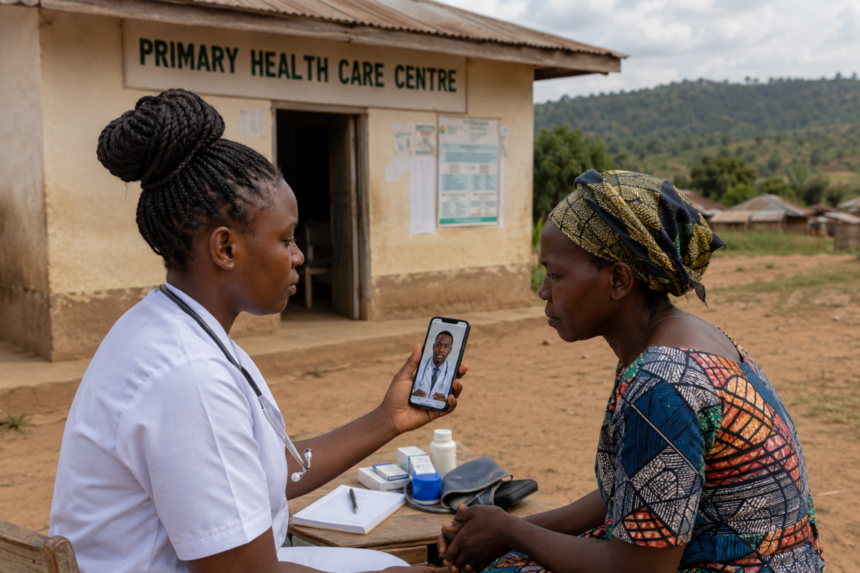
Telemedicine in Nigeria is creating new ways for people in rural communities to access doctors and health workers without always having to travel long distances to major hospitals and medical centres.
For many Nigerians living in rural areas, accessing healthcare can involve long journeys, expensive transportation and lengthy waiting times. The distance between communities and specialist healthcare facilities can make it difficult for patients to receive timely medical attention.
Telemedicine is beginning to change this situation by allowing patients and health workers to communicate with medical professionals through phones, video calls and messaging platforms.
In some communities, health workers also use platforms such as WhatsApp to communicate with doctors and seek advice on difficult cases.
How Does Telemedicine Work?
Telemedicine allows healthcare services to be provided remotely using digital communication technologies.
Depending on the available infrastructure, patients may communicate with doctors through:
- Phone calls
- Video consultations
- Messaging applications
- Online healthcare platforms
- Digital health systems
Instead of travelling several hours to see a specialist, a patient may be able to speak with a healthcare professional remotely.
For people living far from major hospitals, this can reduce the time and transportation costs associated with accessing medical advice.
However, telemedicine does not mean that every medical problem can be treated remotely. Some conditions still require physical examinations, laboratory tests, imaging or other forms of in-person care.
Government Support for Telemedicine in Nigeria
The Federal Government of Nigeria has included telemedicine and digital health within broader efforts to improve healthcare access.
The Universal Service Provision Fund (USPF) also has an e-health initiative aimed at supporting healthcare delivery in underserved and rural communities.
Such initiatives can help connect primary healthcare centres with larger hospitals and specialist facilities.
A health worker at a rural facility, for example, can share information about a difficult case with a doctor or specialist located elsewhere.
The specialist can then provide guidance on possible next steps, helping the local health worker make better-informed decisions without requiring the patient to immediately travel to another location.
How Telemedicine Could Help Rural Nigerians
One of the biggest advantages of telemedicine is its potential to reduce geographical barriers to healthcare.
A patient living in a remote community may be several hours away from a specialist hospital. Telemedicine can provide an initial connection with a medical professional without requiring an immediate journey.
It can also help health workers in rural primary healthcare centres access specialist knowledge.
This could be particularly useful where rural facilities have limited numbers of doctors and specialists.
Internet and Electricity Remain Major Challenges
Despite its potential, telemedicine in Nigeria faces significant infrastructure challenges.
Poor internet connectivity remains a problem in many rural communities. Unstable electricity supply can also make it difficult to maintain reliable digital healthcare services.
For telemedicine to work effectively, healthcare facilities need dependable electricity, internet connections and appropriate digital devices.
Without these basic requirements, even a well-designed digital healthcare programme may struggle to reach the people who need it most.
The Cost of Smartphones and Internet Data
Affordability is another barrier.
Some Nigerians may not have access to smartphones capable of supporting video consultations or other digital health services. Even when people have smartphones, the cost of regularly purchasing internet data can discourage them from using telemedicine services.
A 2026 study cited in the discussion found that cost, poor network coverage and limited health knowledge can restrict the adoption of telemedicine.
This means that expanding telemedicine is not simply about introducing new technology. It also requires addressing the economic and infrastructure conditions that determine whether people can actually use it.
Patients Still Value Physical Consultations
Technology cannot completely replace traditional medical consultations.
Some patients prefer visiting doctors physically because healthcare professionals can conduct examinations and observe symptoms directly.
Certain medical conditions also require diagnostic tests, imaging, procedures or surgery that cannot be performed through a phone or computer.
For this reason, telemedicine should generally be viewed as a complement to physical healthcare, rather than a complete replacement for hospitals and clinics.
Training Health Workers for Digital Healthcare
Another challenge is the level of digital skills among healthcare workers.
A 2025 review of 29 studies identified several barriers to telemedicine adoption in Nigeria, including inadequate electricity, unreliable internet connections, limited technical skills, regulatory challenges and insufficient support systems.
Health workers need appropriate training to use telemedicine platforms effectively.
Rural health centres also require reliable devices, internet access and technical support.
Investing in healthcare workers is therefore just as important as investing in digital infrastructure.
Stronger Regulation Could Improve Telemedicine
The growth of digital healthcare also raises questions about regulation, privacy, data protection and professional standards.
Patients need to know how their medical information is being handled and who has access to it.
Healthcare providers also need clear guidelines on issues such as remote diagnosis, referrals, record keeping and professional responsibility.
Stronger systems and regulations could help build confidence among both healthcare workers and patients.
Can Telemedicine Improve Healthcare Access in Nigeria?
Telemedicine has the potential to make healthcare more accessible, particularly for people living far from specialist facilities.
But its success will depend on more than simply providing digital platforms.
Nigeria needs better internet coverage, reliable electricity, affordable data, suitable devices, trained health workers and effective regulatory systems.
Where these conditions exist, telemedicine can help connect rural healthcare facilities with doctors and specialists in other locations.
The Future of Rural Healthcare
The future of healthcare in Nigeria may increasingly involve a combination of physical and digital services.
A patient could visit a nearby primary healthcare centre, where a health worker conducts an initial assessment and then consults a specialist remotely when necessary.
This approach could reduce unnecessary journeys while ensuring that patients can still be referred to hospitals when physical treatment is required.
For rural communities, that could make healthcare more connected and responsive.
Conclusion
Telemedicine cannot replace hospitals, emergency care or physical medical examinations, but it can help reduce the distance between rural Nigerians and healthcare professionals.
With better internet connectivity, stable electricity, affordable data and improved digital skills among health workers, telemedicine could become an increasingly important part of Nigeria’s healthcare system.
For some Nigerians, access to a doctor may no longer begin with a long journey to a hospital.
It may begin with a simple message or phone call.