In the Warri Kingdom, something special happens when a King (OLU) dies, “A tree is planted”.
That simple tradition is part of a much bigger story — a story of kings, culture, tradition and a royal family whose history is linked to the ancient Benin Kingdom.The Warri Kingdom has a history that goes back more than 500 years. And there is much more to the story than many people know.It all started with a prince from Benin
The story of the Warri royal family begins with Ginuwa, a prince from the Benin royal family. Historical accounts say Ginuwa was the son of Oba Olua of Benin. He later left Benin and settled among the Itsekiri people.
Ginuwa became the first Olu of Warri, beginning a royal dynasty that continues today. This is one reason Warri and Benin share some royal traditions. But Warri is not simply an extension of Benin.
Over many years, the Itsekiri people developed their own language, culture and traditions. So, Warri has its own identity while still carrying an important link to the Benin royal family.
The trees that remember kings
Now, here is one of the most interesting traditions in Warri. When an Olu dies, a tree is planted in his honour at Ijala, the traditional royal burial ground. According to the traditional history of the kingdom, the practice began with Ginuwa. After his death, he was buried at Ijala and a tree was planted in his honour.
The tradition continued with other kings. Imagine walking through an area where trees represent kings who ruled many years ago. Each tree becomes a reminder of a different chapter in the kingdom’s history.
The king may be gone, but the tree remains.
The crown has a story too
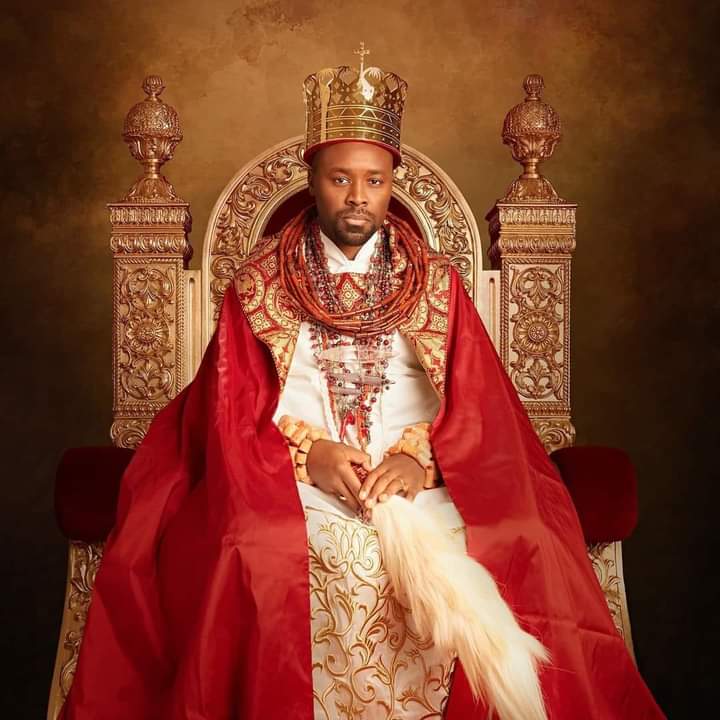
There is another way to understand Warri’s history — by looking at the crown worn by the Olu.The early Warri kings wore coral-beaded crowns. The crown is closely linked to the kingdom’s history and its connection with Benin.
But things changed over time.
During the reign of Olu Atuwatse I, the royal crown changed to a silver design influenced by European and Christian traditions. A cross became part of the royal design.
This was a major change. It showed how Christianity and European contact had begun to influence the kingdom.
But the old crown returned
The story did not end there.
One later king, Olu Atogbuwa, chose to return to the traditional beaded crown.
Why?
Historical accounts say he did not embrace Christianity. This shows that the royal crown was not just something the king wore on his head. It also reflected the beliefs and changes taking place in the kingdom.
The kings who changed Warri
Warri has had many OLUs, and each king played a part in the kingdom’s story.
Ginuwa I
He became the first Olu of Warri and started the royal dynasty. His story also created the important link between the Warri and Benin royal families.
Ijijen
His reign helped establish the kingdom around Ode-Itsekiri and strengthened contact with Portuguese traders.
Irame
He is remembered for strengthening the kingdom’s military power and helping it expand.
Ojoluwa
His reign is linked to the development of the coronation boat regatta, which later became an important royal tradition.
Atuwatse I
He brought a major change to the royal crown. His reign also saw stronger Christian influence in the monarchy.
Erejuwa II
His reign became another important chapter in the modern history of the Warri Kingdom.
Atuwatse III
The present Olu of Warri, Ogiame Atuwatse III, became king in 2021. His reign has brought fresh attention to Warri’s history, culture and traditions.
So why does Warri’s royal clothing look like Benin’s?
This is where the history gets really interesting.
If you look at the traditional clothing, crowns and other royal items used in Warri, you may notice similarities with those of the Benin royal family. There is a historical reason for this.
The Warri royal dynasty traces its roots to Ginuwa, a Benin prince. Because of this connection, some royal traditions and symbols have remained similar, but Warri also added its own traditions over the centuries.
So, what we see today is a mixture of history.
Benin influence.
Itsekiri culture.
European influence.
Christian traditions.
All of these helped shape the Warri Kingdom.
A history that is still alive
The Warri Kingdom is not just about old kings and ancient stories. Its traditions are still alive today. The crowns are still important, the royal ceremonies continue,the culture continues.
And the trees at Ijala continue to remind people of the kings who came before. That is what makes Warri’s history so fascinating.
You can read about its history in books.
You can hear it from historians, but you can also see parts of that history in its crowns, clothing, ceremonies, traditions and trees.
A kingdom with a story to tell
The history of Warri is a story of people, kings and change. It is a story that begins with a prince from Benin and grows into the history of a distinct Itsekiri kingdom.
It is a story of crowns that changed.
It is a story of traditions that survived.
And it is a story of trees planted to remember kings.
More than 500 years later, the story of Warri is still being written, and perhaps the next chapter is already waiting to be told.