
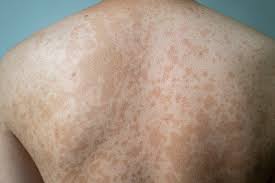
Have you ever noticed white, brown or pink patches on someone’s skin and wondered what caused them?
Many people think these patches result from poor hygiene or a serious skin disease, but in reality, they may be a sign of tinea versicolor, a common fungal skin condition that affects millions of people, especially in hot and humid countries like Nigeria.
Tinea versicolor, also called pityriasis versicolor, happens when a type of yeast called Malassezia grows too much on the skin, this yeast naturally lives on everyone’s skin and usually causes no problems. However, heat, humidity, excessive sweating, oily skin and hormonal changes can cause it to multiply, leading to visible skin patches.
The condition often appears on the chest, back, shoulders, neck and upper arms. The patches may be lighter or darker than the surrounding skin and sometimes look pink or brown. They may have fine scales and itch slightly, but many people feel no pain or discomfort.
According to the American Academy of Dermatology, teenagers and young adults between 15 and 30 years are more likely to develop the condition. People who live in tropical climates also face a higher risk because warm weather creates the perfect environment for the yeast to grow.
Research published by the National Center for Biotechnology Information (NCBI) shows that about 1 per cent of people in cooler parts of the world have tinea versicolor. In tropical regions, however, the figure can rise to 40 per cent, making it one of the most common fungal skin infections.
Although the patches may affect a person’s confidence, doctors say there is no need to panic. Tinea versicolor is not contagious. You cannot catch it by touching someone, sharing clothes or living with an infected person. It is also not a sign of poor personal hygiene.
Doctors usually diagnose the condition by examining the skin. They may also take a small skin sample or use a special light called a Wood’s lamp to confirm the diagnosis.
The good news is that treatment is available. Mild cases often clear up with antifungal creams, lotions or medicated shampoos. People with severe or recurring infections may need antifungal tablets prescribed by a doctor.
Even after successful treatment, the condition can return, especially during hot weather. Since the yeast naturally lives on the skin, doctors advise people who experience frequent outbreaks to use medicated antifungal products from time to time as a preventive measure.
Health experts also recommend keeping the skin clean and dry, wearing loose clothing, showering after heavy sweating and seeking medical advice if unusual skin patches do not go away.
Tinea versicolor may change the colour of the skin, but it is not dangerous. Knowing the facts can help people seek the right treatment early and avoid the fear and stigma that often come with visible skin conditions.