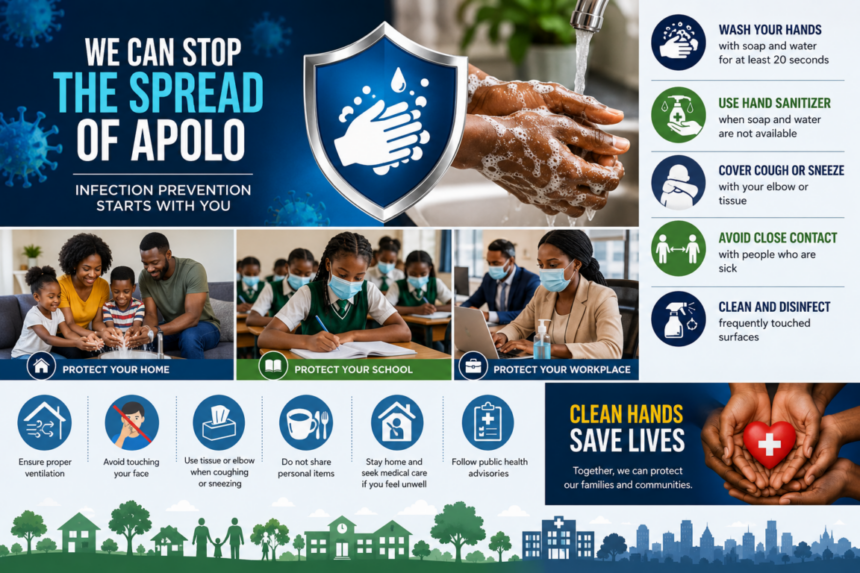
As concerns continue over the Apolo outbreak, preventing the spread of infection is becoming a shared responsibility for individuals, families, schools, workplaces and communities.
While healthcare workers play a critical role in managing infectious diseases, everyday habits can also help break the chain of transmission. Simple measures such as regular handwashing, proper respiratory hygiene, cleaning frequently touched surfaces and avoiding close contact with people who are unwell can reduce the risk of infection.
The message is straightforward: infection prevention does not begin in the hospital. It begins with what people do every day.
According to the information provided, Apolo is described as a contagious viral illness that can spread from one person to another, particularly in places where people live, work, study or gather closely.
Transmission may occur through direct contact with an infected person, contaminated hands, respiratory droplets or contaminated objects and surfaces.
The material also states that there is currently no specific cure for Apolo. Treatment is mainly supportive and focuses on relieving symptoms, maintaining hydration, controlling fever and managing complications while the body’s immune system fights the infection.
That makes prevention particularly important during an outbreak.
How Can the Spread of Apolo Be Reduced?
Breaking the chain of transmission requires consistent action at both the individual and community levels.
One of the simplest measures is proper hand hygiene. Hands should be washed frequently with soap and clean running water for at least 20 seconds, particularly after contact with potentially contaminated surfaces and before touching the face.
Where soap and water are unavailable, an alcohol-based hand sanitiser can be used.
People should also avoid touching their eyes, nose and mouth with unwashed hands, as these areas can provide pathways for infection.
Respiratory hygiene is equally important. Covering the mouth and nose when coughing or sneezing can help reduce the spread of respiratory droplets, while maintaining distance from people who are ill can further reduce exposure.
Anyone who develops symptoms should stay at home where possible and seek appropriate medical attention.
Keep Frequently Touched Surfaces Clean
Infection prevention does not stop with personal hygiene.
Objects and surfaces that are frequently touched can also become part of the chain of transmission. Regular cleaning and disinfection can therefore help reduce the risk of spreading infection within homes, schools and workplaces.
Items such as door handles, desks and other commonly touched surfaces should receive particular attention.
People should also avoid sharing personal items such as towels, cups, utensils and handkerchiefs with others.
These measures may appear simple, but consistent compliance can make a significant difference during an outbreak.
Ventilation Also Matters
Indoor environments can bring people into close contact for extended periods.
Proper ventilation in homes, classrooms, offices and other indoor spaces can therefore form part of a broader infection prevention strategy.
Keeping indoor environments clean and adequately ventilated, alongside good hand and respiratory hygiene, can help create safer spaces for people who live, work or study together.
Infection Prevention Starts Beyond the Hospital
Infection Prevention and Control, or IPC, is often associated with hospitals and healthcare facilities. However, its principles extend far beyond clinical settings.
At home, parents and caregivers can encourage regular handwashing and ensure that commonly used spaces remain clean.
In schools, teachers and administrators can promote hygiene among students while encouraging early reporting of symptoms.
Workplaces can also support infection prevention by maintaining clean environments, encouraging appropriate hygiene practices and ensuring that employees who become unwell take the necessary steps to seek medical attention.
The goal is to make these practices part of everyday life rather than something people remember only when an outbreak occurs.
Early Reporting Can Help Protect Others
Recognising symptoms and responding early is another important part of infection prevention.
People who develop symptoms should avoid unnecessary close contact with others and seek medical evaluation where appropriate.
Early reporting can also help families, schools and workplaces respond more quickly and reduce potential exposure to others.
Public health advisories should also be followed as they are issued by relevant health authorities.
Everyone Has a Role to Play
The fight against an infectious disease cannot be left entirely to doctors, nurses and other healthcare professionals.
Individuals also have an important role to play.
A person who washes their hands regularly, avoids sharing personal items, practises proper respiratory hygiene and stays away from others when unwell is helping protect not only themselves but also the people around them.
That responsibility becomes even more important for protecting vulnerable members of the community.
Clean Hands, Safer Communities
The most effective prevention measures are often the simplest ones.
Wash your hands. Keep shared spaces clean. Cover coughs and sneezes. Avoid close contact when you are unwell. Follow public health guidance.
These habits can help reduce the spread of infection during an outbreak and can continue to protect communities long after the immediate threat has passed.
The Apolo outbreak is therefore a reminder that public health is a collective responsibility.
Prevention starts with you and the simple act of keeping your hands clean can help protect your home, school, workplace and community.