
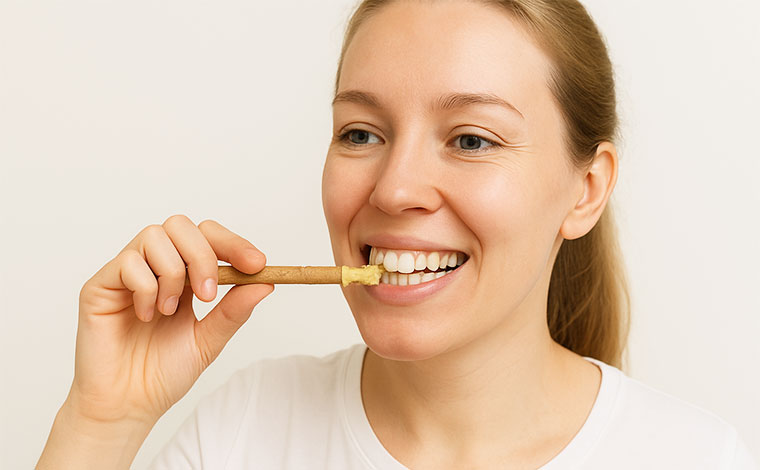
For more than 1,400 years, Muslims around the world have used the miswak, a natural teeth-cleaning stick, following the practice (Sunnah) of Prophet Muhammad (peace be upon him). While its religious significance has long been recognized, modern scientific research is increasingly confirming many of the oral health benefits associated with its regular use.
Miswak, commonly obtained from the Salvadora persica tree, has been used for centuries across the Middle East, Africa, and parts of Asia as a natural alternative to the modern toothbrush. Today, researchers and dental professionals acknowledge that the plant contains several naturally occurring compounds that promote oral hygiene.
Islamic traditions contain numerous narrations highlighting the importance the Prophet Muhammad (peace be upon him) placed on using the miswak.
One of the most widely quoted hadith, recorded in both Sahih al-Bukhari and Sahih Muslim, states:
“If I had not feared hardship for my followers, I would have ordered them to use the miswak before every prayer.”
This narration underscores the Prophet’s emphasis on maintaining oral cleanliness and hygiene.
Another narration reports that the Prophet frequently used the miswak before prayers, before reciting the Qur’an, upon waking from sleep, and before entering his home.
Today, scientists say this centuries-old practice aligns remarkably well with modern dental recommendations encouraging regular cleaning of the teeth throughout the day.
Scientific analysis has revealed that Salvadora persica contains several bioactive compounds beneficial to oral health. These include natural fluoride, silica, calcium, potassium, sodium bicarbonate, tannins, sulfur compounds, vitamin C, flavonoids, essential oils, and antibacterial agents.
These natural ingredients work together to help clean teeth, strengthen enamel, reduce plaque formation, inhibit bacterial growth, and freshen breath.
Several laboratory studies have shown that miswak possesses antimicrobial properties capable of reducing bacteria responsible for tooth decay, gum disease, and bad breath.
Research published in international dental journals indicates that individuals who use miswak correctly often experience lower levels of dental plaque and healthier gums compared to those with poor oral hygiene habits.
According to researchers, the antibacterial compounds found in Salvadora persica are effective against Streptococcus mutans, one of the primary bacteria responsible for dental cavities.
The plant’s natural silica acts as a gentle abrasive, helping remove stains from the teeth without causing significant damage to the enamel when used properly.
Meanwhile, tannins found in the plant help tighten gum tissue and reduce inflammation, while natural fluoride contributes to strengthening tooth enamel and preventing decay.
The essential oils present in miswak stimulate saliva production, which plays a crucial role in neutralizing acids in the mouth and washing away food particles and bacteria.
Health experts also note that increased saliva production helps reduce dry mouth, a condition that can increase the risk of cavities and oral infections.
Beyond dental hygiene, some studies suggest that regular use of miswak may contribute to overall health by reducing harmful bacteria that can enter the bloodstream through diseased gums.
Although more research is needed in this area, scientists increasingly recognize the link between good oral health and reduced risks of cardiovascular disease, diabetes complications, respiratory infections, and adverse pregnancy outcomes.
The World Health Organization (WHO) has acknowledged the traditional use of chewing sticks like miswak and has encouraged further scientific research into their effectiveness, particularly in communities where conventional toothbrushes may not be readily available.
Dental professionals, however, emphasize that proper technique is essential. Miswak should be cleaned regularly, trimmed when the fibers become worn, and replaced periodically to maintain effectiveness and hygiene.
Experts also stress that while miswak offers significant oral health benefits, users should still seek regular dental check-ups and treatment when necessary.
For Muslims, the growing body of scientific evidence serves as another example of how Islamic teachings often promote practices beneficial to human health.
Although the primary motivation for many believers remains following the Sunnah of Prophet Muhammad (peace be upon him), modern science continues to validate that this simple natural toothbrush offers genuine health advantages.
From reducing plaque and fighting harmful bacteria to strengthening teeth and improving gum health, miswak remains one of the oldest—and increasingly one of the most scientifically supported—tools for maintaining oral hygiene.
As interest in natural healthcare continues to grow globally, researchers believe miswak may play an even greater role in future preventive dental care, combining centuries-old tradition with modern scientific understanding.