
President Bola Ahmed Tinubu will not physically attend the 81st Session of the United Nations General Assembly (UNGA) in New York, making it the third consecutive year he has been represented at the annual global gathering since assuming office in 2023.
The development followed weeks of uncertainty over the President’s attendance. Nigeria’s Permanent Representative to the United Nations, Ambassador Jimoh Ibrahim, had earlier indicated that Tinubu would attend the session, with arrangements reportedly made for him to sit near United States President Donald Trump.
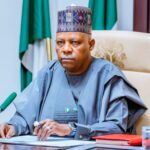
However, the Presidency announced on Sunday that Tinubu had directed Vice President Kashim Shettima to lead Nigeria’s delegation to the 81st UNGA.
According to a statement by Stanley Nkwocha, spokesman to the Vice President, Shettima will lead a high-level delegation comprising Rivers State Governor Siminalayi Fubara, Zamfara State Governor Dauda Lawal, ministers and other senior government officials.
The 81st UNGA General Debate is scheduled for September 22 to 28, 2026, under the theme, “Restoring trust, managing transformation: A United Nations that delivers for all.”
Shettima is expected to deliver Nigeria’s national statement, outlining the country’s position on major global issues, including national development, peace and security, economic growth and international cooperation.
He is also expected to participate in high-level meetings focusing on the Right to Development, climate action and other issues of strategic importance to Nigeria and Africa.
The Vice President will further attend the traditional reception for heads of delegation and hold bilateral meetings with foreign leaders, international organisations and development partners on the sidelines of the General Assembly.
The Presidency said the engagements would provide Nigeria with an opportunity to advance President Tinubu’s economic diplomacy, strengthen strategic partnerships and promote the country’s interests on issues including global financial architecture, sustainable development, climate finance and multilateral cooperation.
Nigeria’s UN envoy, Jimoh Ibrahim, has meanwhile dismissed concerns over Tinubu’s absence, saying the country would continue to play a full diplomatic role at the gathering.
Ibrahim said it was common diplomatic practice for presidents to be represented by vice presidents or foreign ministers when they could not attend in person. He also said Nigeria would retain its designated seating arrangement, including its front-row position at the Assembly.
The development has, however, attracted criticism from opposition figures.
Former Vice President Atiku Abubakar questioned Tinubu’s repeated absence, arguing that the President’s non-attendance at the 79th UNGA in 2024, the 80th in 2025 and now the 81st in 2026 represented a pattern that required explanation.
Atiku, through his Senior Special Assistant on Public Communication, Phrank Shaibu, argued that UNGA provides an important platform for heads of government to pursue diplomatic, economic and investment opportunities through bilateral engagements.
He questioned whether controversies surrounding Tinubu’s past dealings with United States law-enforcement agencies could be influencing the President’s decision, although this remains an allegation advanced by Atiku and not an established explanation for the President’s absence.
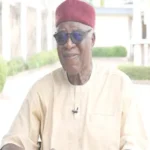
Former Director-General of the Voice of Nigeria and APC chieftain Osita Okechukwu, however, defended Tinubu’s decision.
Speaking on Trust TV, Okechukwu argued that Nigeria’s constitutional framework provides for the Vice President to act on behalf of the President when necessary. He also suggested that Tinubu’s other engagements, including discussions with investors, could have influenced the decision.
Some international relations experts have also offered differing interpretations of the development.
Dr Riyauddeen Zubairu Maitama of Bayero University Kano expressed concern about the President’s repeated absence, arguing that a Nigerian presidential presence at UNGA carries diplomatic and symbolic significance. He said the absence could potentially affect Nigeria’s ability to pursue certain interests through high-level engagements.
Career diplomat Ambassador Suleiman Dahiru similarly questioned the decision and expressed concern about what he described as the declining weight of Nigeria’s foreign policy.
Dr Wasiu Kewulere of Kwara State University, however, said Tinubu’s absence should not automatically be interpreted as a diplomatic setback. He suggested that diplomatic considerations that are not publicly known could have informed the decision to send the Vice President.
Kewulere also argued that a country’s international influence cannot be measured solely by whether its president attends the UN General Assembly. He pointed instead to broader factors such as economic strength, military capability and a country’s role in international affairs.
With Shettima leading the Nigerian delegation, the country will nevertheless participate in the 81st UNGA through a high-level representation. The immediate focus will now be on the issues Nigeria raises at the Assembly and the diplomatic and economic engagements undertaken on the country’s behalf.