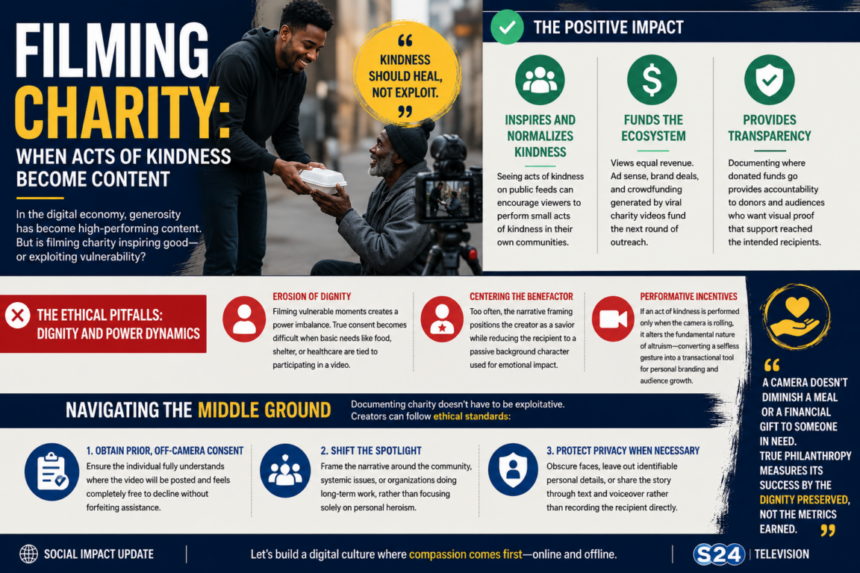
In the digital economy, generosity has become high-performing content, as millions of viewers scroll through videos of influencers paying off strangers’ layaway bills, handing out wads of cash to unhoused individuals, or funding life-altering medical procedures.
These clips generate massive engagement, spawning a polarizing debate: Is filming acts of charity an effective tool for inspiring global good, or is it a performative exploitation of vulnerable people?
Proponents of filming charitable acts argue that the benefits outweigh the social discomfort.
-
Inspiration and Normalization: Seeing acts of kindness on public feeds can trigger positive behavioral reinforcement, encouraging viewers to perform small acts of kindness in their own communities.
-
Funding the Ecosystem: For content creators, views equal revenue. The ad sense, brand deals, and crowdfunding generated by viral charity videos frequently fund the next round of outreach, creating a sustainable financial loop for giving.
-
Transparency: Documenting where donated funds go provides accountability to donors and audiences who want visual proof that support reached the intended recipients.
The Ethical Pitfalls: Dignity and Power Dynamics
Conversely, ethicists and advocacy groups raise serious concerns about the commodification of human suffering.
-
Erosion of Dignity: When a person receiving aid is put on camera during one of the most vulnerable moments of their life, it creates an unavoidable power imbalance. True consent becomes difficult to give when basic needs like food, shelter, or healthcare are tied to participating in a video.
-
Centering the Benefactor: Too often, the narrative framing positions the creator as a savior while reducing the recipient to a passive background character used for emotional impact.
-
Performative Incentives: If an act of kindness is performed only when the camera is rolling, it alters the fundamental nature of altruism—converting a selfless gesture into a transactional tool for personal branding and audience growth.
Navigating the Middle Ground
Documenting charity does not have to be inherently exploitative if creators follow ethical standards:
-
Obtain Prior, Off-Camera Consent: Ensure the individual fully understands where the video will be posted and feels completely free to decline without forfeiting assistance.
-
Shift the Spotlight: Frame the narrative around the community, systemic issues, or organizations doing long-term work, rather than focusing solely on personal heroism.
-
Protect Privacy When Necessary: Obscure faces, leave out identifiable personal details, or share the story through text and voiceover rather than recording the recipient directly.
Ultimately, while a camera does not diminish the practical value of a meal or a financial gift to someone in need, true philanthropy measures its success by the dignity preserved, not the metrics earned.