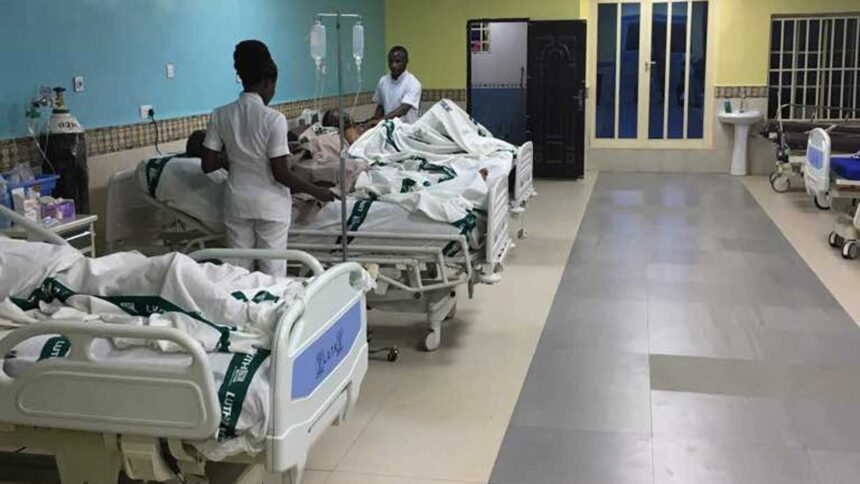
A hospital is not only a place of diagnosis, but a place where fear waits outside consultation rooms, where families count oxygen levels like prayers, where a doctor’s sentence can change the mood of an entire home, where a nurse’s tone can either calm a patient or deepen their distress.
Healthcare systems are often judged by buildings, equipment, bed spaces, specialist units, and technology. But for patients and families, the real test is sometimes simpler and more human: Were we seen, heard and treated with dignity?
In Nigeria, that question sits at the heart of a healthcare system carrying two truths at once.
There are doctors, nurses, interns, pharmacists, laboratory scientists, cleaners, porters, and caregivers doing extraordinary work under difficult conditions. Many are overworked, underpaid, emotionally stretched, and operating in facilities where resources do not always match the scale of need.
But there are also patients and families whose hospital experiences expose gaps in empathy, communication, supervision, and consistency of care.
Both truths matter.
And any serious conversation about Nigeria’s healthcare system must hold them together.
A Personal Encounter With a Stretched System
In 2022, my family had a deeply personal encounter with Nigeria’s healthcare system.
My mother had returned from London critically ill. She developed severe leg swelling and breathing difficulties and was taken to a private hospital in Gwarinpa, Abuja. After an initial diagnosis involving a blood clot in the chest, she was referred to another hospital in Jabi for more intensive care.
She was admitted for more than a month and was later managed for multiple conditions, including heart failure, diabetes, and mental health complications.
During that period, I stayed closely involved in her care. I saw the anxiety of families. I saw the pressure on healthcare workers. I saw patients who were confused, frightened, resistant, exhausted, and vulnerable. And I saw a system struggling to deliver both medicine and humanity at the same time.
There were healthcare workers who showed patience and professionalism. Some nurses and doctors remained calm even when wards were busy and relatives were anxious. Their resilience deserves acknowledgement.
But there were also moments that raised difficult questions.
Some patients who resisted medication seemed to go unattended for long periods instead of being consistently encouraged with patience. In a hospital environment, where illness can affect behaviour, understanding, and cooperation, compassionate persistence is not optional. It is part of care.
I also saw behaviour that raised concerns about professional discipline and institutional standards, including a staff member smoking within the hospital vicinity at night. Whether or not this happened inside a clinical area, such conduct raises questions about the culture of accountability expected within healthcare spaces.
These may appear like small details, but in hospitals, small details can shape trust, and trust is one of the most important medicines in any care environment.
The Numbers Behind the Pressure
Nigeria’s healthcare workers operate inside a system facing major structural strain.
The African Health Observatory Platform notes that Nigeria has one of the largest health workforces in Africa, but the supply of doctors, nurses and midwives remains below the threshold recommended by the World Health Organization. It also highlights uneven distribution, poor remuneration, weak coordination, industrial unrest, and migration as major pressures affecting clinical outcomes and public confidence.
That pressure is not abstract. It shows up in long waiting times, in exhausted nurses, in rushed explanations, in families feeling compelled to become informal supervisors of care, and when communication breaks down between medical staff and relatives.
It also shows up in public spending patterns. World Bank data shows that out-of-pocket payments remain a major part of health financing in Nigeria, meaning many families still pay directly for care at the point of need.
For ordinary families, this means illness is not only medical, it is financial.
A diagnosis can become a household economic emergency. A prolonged admission can drain savings. A prescription can force painful choices between treatment, transport, food, rent, and school fees.
And when families are paying heavily out of pocket, expectations, anxiety, and a uspicion rises. Every delay feels personal. Every poor explanation feels like neglect.
This is why communication is not a soft skill in healthcare, rather it is risk management.
Nigeria is not blind to these problems.
The National Health Facility Survey 2023, produced by the National Bureau of Statistics with federal health institutions, assessed 3,330 health facilities across the 36 states and the FCT. The survey was designed to monitor service availability, readiness, quality, facility inputs, provider effort, provider knowledge, and citizen perspectives on health service delivery.
That matters because healthcare quality cannot be improved by assumptions alone, it must be measured.
Are facilities staffed?
Are essential medicines available?
Are patients treated respectfully?
Are providers supervised?
Are complaints documented?
Are incidents investigated?
Are families informed?
Are health workers supported enough to do their jobs well?
These are not emotional questions, in fact, they are governance questions.
In 2024, the World Bank approved a $1.57 billion financing package for Nigeria, including $570 million to strengthen primary healthcare and $500 million to address governance issues affecting education and health delivery.
The key word there is governance, because Nigeria’s healthcare crisis is not only about money.
It is about how systems are managed, how workers are supported, how standards are enforced, and how patients are protected.
Healthcare workers are human beings, they get tired, work long shifts, face emotional trauma, and sometimes they deal with difficult patients, frightened relatives, and limited tools.
But patients are also human beings. They are often scared, confused, in pain, financially strained, and dependent on people they do not know.
The meeting point between these two forms of pressure is where professionalism becomes essential.
Nursing, especially, is not only a clinical function, it is a human discipline.
It requires patience, emotional intelligence, observation, consistency, firmness, and compassion. A patient refusing medication is not merely “difficult.” Sometimes, refusal is fear. Sometimes, it is confusion. Sometimes, it is pain. Sometimes, it is a mental health issue. Sometimes, it is a communication failure.
The response should not be abandonment. It should be structured engagement, a calm explanation, a second attempt, a supervisor’s intervention, a family conversation, a documented refusal, and a clear escalation pathway.
This is how care becomes accountable without becoming harsh.
One overlooked part of the Nigerian hospital experience is the role of relatives.
In many cases, family members do far more than visit, they buy drugs, chase test results, monitor feeding, ask questions, interpret changes in behaviour, advocate when patients cannot speak clearly, and become the emotional bridge between the patient and the institution.
But when communication from healthcare workers is weak, relatives can quickly become anxious, suspicious, or confrontational. This is not always because they are troublesome. Sometimes, it is because they are afraid and uninformed.
Hospitals must therefore treat family communication as part of care. A five-minute update can prevent a one-hour conflict. A respectful explanation can reduce tension. A clear complaint channel can stop anger from becoming chaos.
In high-pressure wards, silence is dangerous. Not because nothing is happening, but because families may interpret silence as neglect.
This Is Not an Attack on Health Workers. This article is not an indictment of all healthcare workers. That would be unfair and inaccurate.
Many Nigerian health professionals are saving lives every day under conditions that would break weaker systems. They work through shortages, migration pressures, poor infrastructure, and emotional fatigue.
But acknowledging their sacrifice should not prevent us from demanding better standards.
Two things can be true at once: Nigeria’s health workers deserve better support, and Nigerian patients deserve consistent dignity.
The solution is not to blame one side. The solution is to build systems where compassion is not dependent on mood, supervision is not accidental, and accountability is not activated only after tragedy.
If Nigeria wants a healthcare system that protects both patients and professionals, reform must go beyond buildings and equipment.
It must include:
– Patient communication standards; Every ward should have clear rules for updating families, documenting concerns, and explaining care decisions.
– Stronger supervision of wards: Senior nurses, unit heads, and duty doctors must actively monitor patient handling, not only clinical charts.
– Professional conduct enforcement: Hospitals must enforce rules on smoking, hygiene, patient interaction, confidentiality, and workplace discipline.
– Complaint and feedback systems: Patients and families need safe, simple ways to report concerns without fear of retaliation.
– Training in empathy and mental health awareness: Patients who are confused, distressed, resistant, or mentally unwell require special communication and handling.
– Better staffing and worker welfare; Burnout damages care quality. Health workers cannot give humane care consistently if the system itself treats them inhumanely.
– Routine measurement of patient experience
Hospitals should track waiting time, communication quality, complaint resolution, drug availability, and patient satisfaction.
These reforms are not luxuries, they are patient safety tools.
The Real Meaning of Care:
My mother eventually improved enough to be discharged after more than a month of treatment and continued medical management.
For that, my family remains grateful, But gratitude should not silence reflection. A healthcare system can save a life and still leave lessons behind.
My experience taught me that Nigerian hospitals are not just short of equipment or funding. Some are also short of consistency, consistency in compassion, communication, supervision, and dignity.
Medicine may treat the body, but care must protect the person, and behind every patient is a family holding on to hope. That hope must never be taken for granted.
Because in the end, hospitals are not just buildings filled with beds, monitors, prescriptions, and files.
They are places where human lives hang in delicate balance.
And if Nigeria’s healthcare system is to move forward, every interaction inside hospital walls must reflect not only skill, but humanity.
True healing is not completed by medicine alone. It is completed by compassion, consistency, and accountability.