
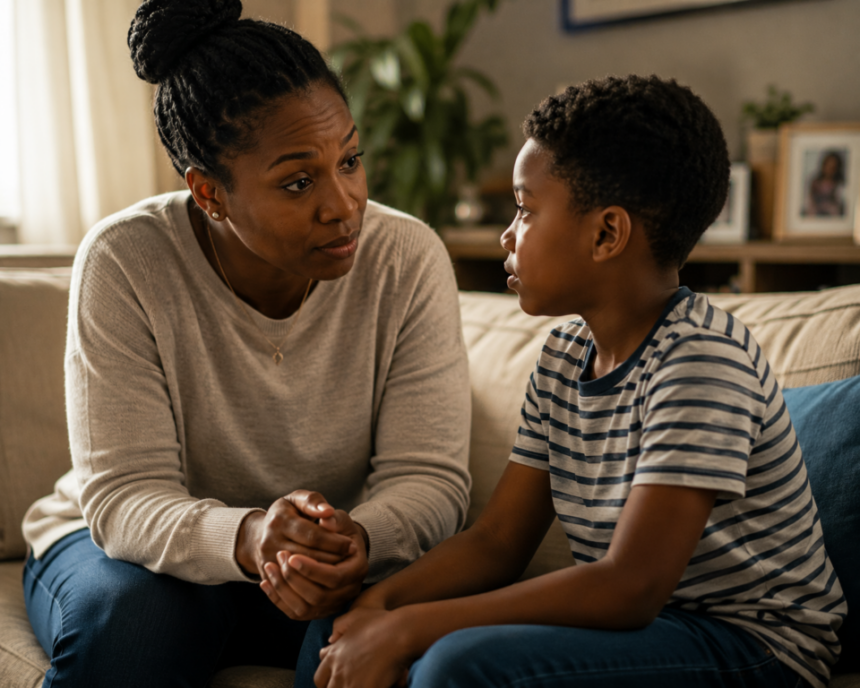
One of the biggest mistakes most parents make is thinking that food, shelter, and school are enough, while these things matter, children need something deeper, they need a safe space where they can talk freely without parents judging, yelling at, or ignoring them.
Sadly, many children grow up unable to discuss their personal struggles with their parents, whenever they try to express themselves, adults interrupt them, misunderstand them, scold them, or tell them that their feelings do not matter.
Over time, these children stop trying, this lack of communication leaves a generation of children carrying heavy feelings in total silence.
While some struggle with academic pressure, others deal with loneliness, fear, sadness, and even bullying. Many face problems they do not even know how to explain. Yet every morning, they put on a smile, get ready for school, and act like everything is fine.
Because they smile and keep up with daily life, people think they are doing okay. But in reality, these young people carry hurts that are much too heavy for them to handle alone. Not every child has a parent who notices when they feel down. Millions of kids are just looking for one person who will truly listen to them.
When home does not feel warm and welcoming anymore, children who experience neglect stop talking. Children who face misunderstanding stop trying to explain. Children who feel judgment start hiding the truth, their fears, and their mistakes. They have to face their hardest days completely alone.
Sadly, not everyone has good intentions. Some bad company misleads these children into paths they now regret, simply because they needed a safe space.
Parents see their children grow distant. Having a discussion with them becomes so difficult, and a massive wall now stands between them. The truth is simple: trust requires a lifetime to build, and it starts in childhood.
Real connection happens in the quiet moments when a child asks, “Can I tell you something?” and a parent drops everything to listen. It grows when adults allow children to express fears, opinions, and mistakes without facing mockery or anger. A child’s mental health matters just as much as their results or material comfort.
Parents must learn how their children are truly faring. Pay close attention to sudden changes in behavior, sleep, and attitude. Create intentional time for heart-to-heart conversations. Children need more than just providers. They need patient listeners, gentle guides, and safe harbors. They must know that when life becomes overwhelming, they can run home without fear of rejection.
The greatest gift you can give your child is not just provision, but your presence. Aim for connection over correction.
Because a child who finds a listening ear today may escape a lifetime of silent suffering tomorrow.
So before asking, “What does a child have to say?” perhaps the better question is: “Have I created a safe space for my child to say it?”