
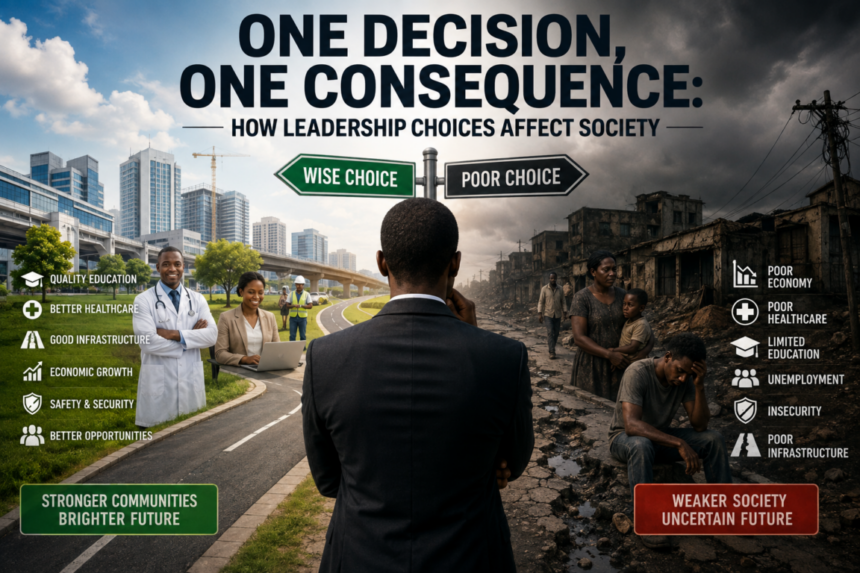
Every leader makes decisions that can change people’s lives, with a single choice capable of creating opportunities, solving problems or producing consequences that affect thousands or even millions of people
Leadership decisions affect society because leaders control policies, public resources, institutions and development priorities, meaning their choices often extend far beyond their offices
A leader who invests in education can give young people better opportunities, while a leader who strengthens healthcare can improve the quality of life for entire communities, however poor decisions can create hardship, deepen inequality and weaken public trust
When Leadership Choices Reach Everyday Life
Leadership choices often appear in policies that people encounter every day, including decisions about roads, electricity, water, businesses, transportation and public services
When governments improve infrastructure, support businesses and expand access to essential services, these decisions can boost economic activity and improve living standards, but when important infrastructure is ignored, citizens may face higher transportation costs, unemployment, poor services and fewer opportunities
Leaders also influence society through decisions about security, with effective security policies capable of protecting communities and encouraging businesses to invest, while poor security decisions can leave citizens vulnerable and discourage economic growth
Today’s Decisions Can Shape Tomorrow’s Future
A leadership decision does not always produce immediate results, as some choices create consequences that continue for years and can affect future generations
For instance, leaders who invest in quality education can strengthen a country’s workforce for the future, while leaders who neglect schools can leave young people without the skills they need to compete
Economic decisions also carry long-term effects, because a government that manages public funds responsibly can create stronger institutions and attract investment, whereas reckless spending can increase debt and reduce resources for essential services
When Society Pays the Price
Leadership does not exist separately from society, because every major decision eventually reaches ordinary people
Families feel the impact through food prices, employment, education, healthcare, transportation and security, while businesses respond to government policies and wider economic conditions
A decision that looks small inside a government office can therefore create major changes outside it, with a single policy potentially affecting household income, business costs, access to services and people’s confidence in their leaders
This is why citizens must pay attention to leadership choices, demand accountability, ask questions, participate in elections and speak up when leaders make decisions that harm their communities
Responsible Choices Build Stronger Societies
Ultimately, one decision can create opportunities for progress or trigger problems that affect an entire society
Good leaders should consider both immediate results and long-term consequences before making important choices, while also listening to citizens, examining available evidence and accepting responsibility for their actions
Leadership carries power, but it also carries responsibility, and when leaders make thoughtful decisions, society can move forward, while careless choices can create consequences that spread far beyond the people who made them
A leader may make one decision in a single moment, but society can live with its consequences for years