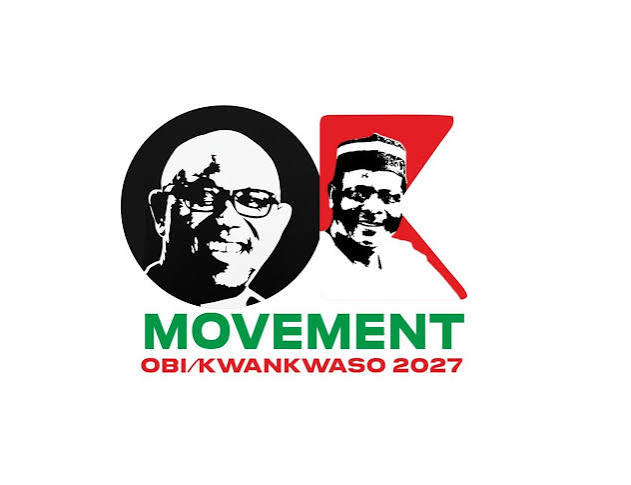
Fresh divisions have emerged within the emerging opposition alliance ahead of the 2027 general elections following a dispute between the Nigeria Democratic Congress and the Obi-Kwankwaso Movement over the formation of a presidential campaign council.
The disagreement became public after the NDC rejected a 59-member Presidential Campaign Council recently announced by the Obi-Kwankwaso Movement to coordinate support for a proposed Peter Obi-Rabiu Kwankwaso joint ticket under the party platform.
The Obi-Kwankwaso Movement had announced an independent campaign structure headed by John Ughulu as Director-General. The movement said the structure would mobilise support for the coalition while operating independently of any campaign council that might subsequently be constituted by the NDC.
However, the NDC leadership disowned the announcement, maintaining that consultations on the 2027 campaign structure were still ongoing and that no official presidential campaign council could be established without approval from the party’s central executive.
In a statement signed by NDC National Chairman, Senator Cleopas Moses, the party rejected the purported campaign council and insisted that its constitutional structures must be followed.
The dispute has exposed differences over organisational authority, leadership and the relationship between the NDC as a political party and the grassroots movement supporting Obi and Kwankwaso.
The OK Movement, however, rejected the position of the NDC leadership, saying it does not require the personal approval of any individual within the party to carry out its organisational activities.
Its National Secretary, Saadatu Sani, said the movement recognised the supremacy of political parties within constitutional and statutory limits but maintained that it remained an independent organisation with its own leadership and internal processes.
Sani said the movement would support the NDC’s presidential and vice-presidential candidates, as well as other candidates where it had resolved to do so.
She also said the movement was built from the grassroots and was not dependent on sponsorship from political office holders.
According to her, the movement’s internal membership records indicate about 2.5 million registered members and coordinators across the country.
The disagreement has also centred on the position of Ughulu, whose leadership of the movement has reportedly faced opposition within the NDC. The party has referred him to its disciplinary committee over alleged previous primary election disputes in Lagos and alleged breaches of party discipline, according to a party source cited by Daily Trust.
The source said attempts to restructure the movement’s leadership had met resistance from state and ward coordinators, who reportedly opposed efforts to place the movement directly under the control of the party.
The crisis comes after the Obi-Kwankwaso Movement recently unveiled a 59-member campaign council as part of preparations for the 2027 elections.
Political analyst Toyin Ajulo said the dispute had emerged at a sensitive stage for the opposition alignment, given that the alliance between the Obi and Kwankwaso blocs was intended to create a broader political platform ahead of 2027.
Meanwhile, leaders of the Obi-Kwankwaso Movement have acknowledged that the disagreement with the NDC predates the latest public dispute, while indicating that reconciliation efforts are ongoing.
The two sides now face the task of resolving questions surrounding campaign authority, leadership and the structure through which the emerging alliance will operate as preparations for the 2027 elections intensify.