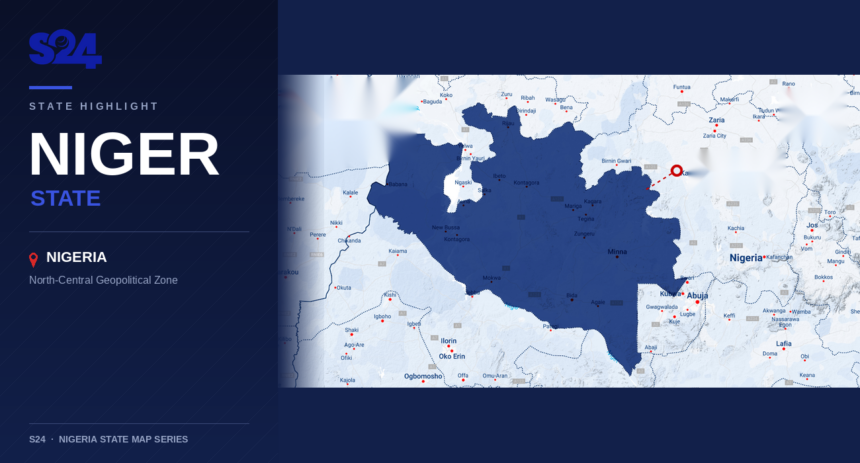
The deaths of 37 suspected illegal miners in the custody of the Nigeria Security and Civil Defence Corps (NSCDC) in Minna, Niger State, have triggered protests, official investigations and questions about the conditions inside the detention facility.
The victims were among scores of people arrested during enforcement operations against suspected illegal mining in the M.I. Wushishi/Lukoto area of Niger State on September 15 and 16, 2026.
The NSCDC initially linked the deaths to a suspected disease outbreak but said the cause had not been conclusively established. It said medical examinations would be carried out to determine what happened.
However, accounts from survivors and subsequent statements from government officials have raised questions about overcrowding, ventilation and possible exposure to hazardous substances.
What happened inside the detention facility?
One survivor, Dauda Shehu, told The Associated Press that about 65 detainees were held in a poorly ventilated cell.
Shehu said the detainees suddenly began struggling to breathe and repeatedly banged on the cell door seeking help.
“We were jampacked and there was no ventilation for us to breathe well,” he said.
The account has become one of the key pieces of information surrounding the incident, although the precise circumstances that led to the deaths have not yet been established through a completed medical or forensic investigation.
Niger State Governor Mohammed Umaru Bago said investigators were examining whether overcrowding and possible exposure to hazardous substances used in mining could have contributed to the deaths.
The governor stressed that the actual cause would have to be established through forensic and medical examinations.
From illegal mining arrests to a detention controversy
The NSCDC said the arrests were carried out as part of an operation targeting suspected illegal mining activities in the area.
Illegal mining has been a longstanding concern in Niger State, with authorities citing its effects on farmland, the environment and surrounding communities.
The deaths, however, have shifted public attention towards the treatment and conditions of the people arrested during the operation.
Premium Times reported that relatives of some detainees disputed allegations against those arrested. Some reportedly claimed that people who were not involved in mining were also among those detained.
Those claims have not been independently verified.
Meanwhile, Amnesty International has called for an independent investigation into the incident, including an examination of both the arrests and the conditions under which the detainees were held.
Protests erupt in Minna
The deaths sparked protests in Minna on Friday, September 18.
Protesters gathered around the NSCDC office demanding answers and accountability over the deaths.
Reuters reported that security forces fired live ammunition during the unrest, while other reports said police used tear gas to disperse protesters.
The unrest also involved attempts by some protesters to attack or set fire to government buildings, while reports indicated that public and private property was vandalised.
In response, Governor Bago imposed a 24-hour curfew on Minna after Friday prayers.
The governor said the measure was necessary to restore order following attacks and vandalism reported in parts of the city.
Niger NSCDC commandant suspended
The Federal Government has suspended the Niger State NSCDC Commandant, Suberu Siyaka Aniviye, pending the outcome of an investigation.
Interior Minister Olubunmi Tunji-Ojo said the government would investigate the incident and that anyone found responsible would not be shielded.
The Niger State Government has also established a committee of inquiry, while the police and other security agencies are conducting separate investigations.
Governor Bago has additionally declared three days of mourning for the victims.
Questions investigators must answer
Despite the investigations now underway, major questions remain about what happened to the detainees.
Among them are:
- What exactly caused the 37 deaths?
- How many people were being held at the facility?
- What were the conditions inside the cell?
- Was there adequate ventilation?
- Were detainees provided sufficient food and water?
- Were any of those detained minors?
- How long had the detainees been held?
- Were hazardous substances present in or around the detention facility?
- Why were so many detainees held in a single facility?
The answers will depend on the findings of the medical, forensic and security investigations.
Because the deaths occurred while the victims were in state custody, the investigations will also have to establish what happened from the moment of arrest through detention and the onset of the reported health crisis.
For the families waiting for answers, the investigation is not simply an official procedure. It is an attempt to establish how people who were arrested during an illegal-mining enforcement operation ended up among 37 people who died behind a detention-cell door.