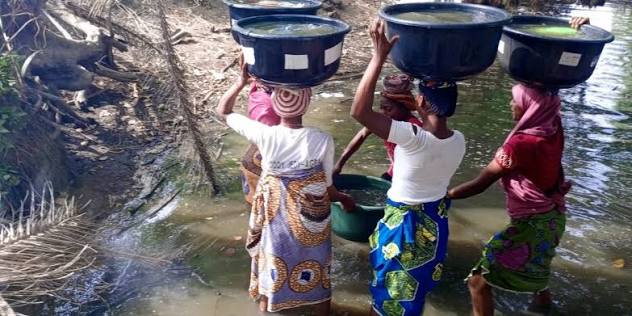
Residents of Karu have appealed to the government and relevant authorities to end a water shortage that has lasted for more than a month. They say the crisis has disrupted daily life and increased the cost of living for many families.
In separate telephone interviews with S24 Television, residents said the lack of clean and safe water has forced households to rely on costly alternative sources. Many families now spend a large part of their income on water.
One resident, Khadijah Mohammed, said the poor public water supply has made life difficult for people across the community.
She explained that most residents now depend on commercial water vendors. Some households pay as much as ₦1,000 for a barrel of water to meet their daily needs.
According to her, these extra expenses come at a time when families already face high food prices, transport costs, and other financial pressures.
“Our biggest challenge is water. We have been crying over this issue for many years, but nothing has changed. We are forced to buy water at ₦1,000 per barrel, and many families can no longer afford enough water for their daily needs,” she said.
Another resident, said the shortage affects almost every part of Karu. She added that many people spend hours each day looking for water.
She urged the government and the Water Board to take urgent action and restore public water supply.
“We are appealing to the government and the Water Board to come to our rescue. Water is a basic necessity, and people in Karu are suffering because of this prolonged scarcity,” she said.
Residents called on the Federal Capital Territory Administration, the Abuja Water Board, and the Abuja Municipal Area Council to provide a lasting solution. They asked the authorities to repair and improve water infrastructure and ensure a steady supply of clean water.
Health experts say access to clean water is vital for public health and sustainable development. The World Health Organization and the United Nations Children’s Fund state that safe drinking water helps prevent disease, improves sanitation, and supports economic growth.
Experts also warn that long periods without clean water can increase cases of cholera, typhoid fever, and diarrhoea. The risk is higher in crowded communities where people often rely on unsafe or untreated water sources.
Residents said clean and affordable water is a basic right, not a privilege. They urged the authorities to treat the shortage as an urgent public health issue and act without further delay.