Thousands of women filled the streets of Abeokuta, with their echoing in songs of protest as they marched towards the palace of the Alake, demanding justice, with no weapons, instead, they relied on unity, courage and determination to challenge a system that had treated them unfairly for years.
At the heart of the movement stood a woman who refused to be intimidated by kings, colonial officials or deeply rooted traditions. She believed women deserved a voice, education was a right rather than a privilege, and no government should exploit its people.
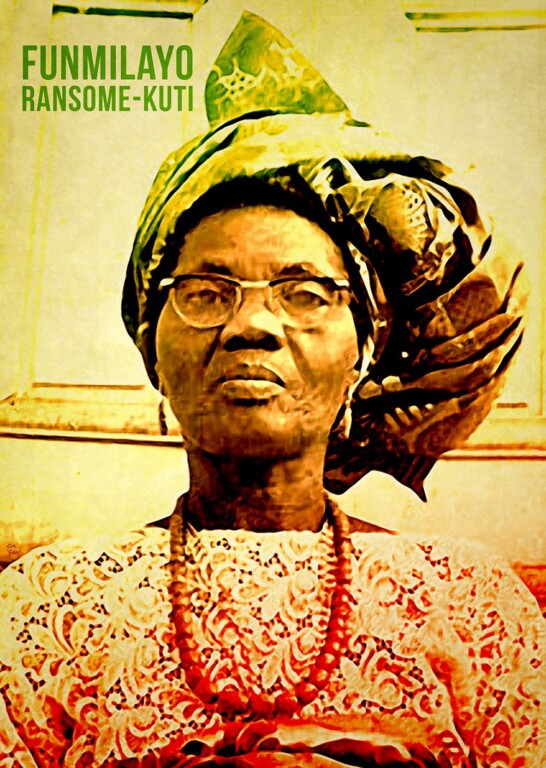
Her name was Funmilayo Ransome-Kuti.
Today, many people know her simply as the mother of Afrobeat legend Fela Kuti. Yet that title barely captures the extraordinary life she lived. Long before Nigeria gained independence, Funmilayo had already become one of Africa’s most influential activists, leading thousands of women in peaceful protests, confronting colonial authorities and fighting tirelessly for justice, equality and democracy.
More than four decades after her death, her story remains one of courage, resilience and the power of ordinary people to create extraordinary change.
A Girl Who Refused to Accept Limits
Funmilayo Ransome-Kuti was born on October 25, 1900, in Abeokuta, present day Ogun State, at a time when opportunities for girls were limited. Society expected women to remain in the background while men occupied positions of leadership.
Her parents, Chief Daniel Olumeyuwa Thomas and Lucretia Phyllis Omoyeni Adeosolu, believed education could transform lives. Because of that belief, they ensured their daughter attended school when many families considered formal education unnecessary for girls.
Funmilayo attended Abeokuta Grammar School before travelling to England for further studies. There, she trained as a teacher before returning home with more than a certificate. She brought back fresh ideas about education, equality and social justice, ideas that shaped the rest of her life.
Teaching allowed her to encourage young girls to dream beyond society’s expectations. However, she soon realised that educating children alone would not improve women’s lives if the system itself remained unfair.
A Marriage Built on Shared Ideals
In 1925, Funmilayo married Israel Oludotun Ransome-Kuti, a respected educator and Anglican minister. Unlike many marriages of the time, theirs was built on mutual respect and shared beliefs about education, service and social progress.
Together, they raised children in a home where ideas, debate and learning flourished.
Their children would each leave a lasting mark on Nigeria. Fela Kuti revolutionized African music and used his songs to challenge military rule. Dr Beko Ransome-Kuti became a fearless human rights activist, while Professor Olikoye Ransome-Kuti transformed Nigeria’s healthcare system as Minister of Health.
The family’s commitment to justice did not happen by chance. It grew from the values Funmilayo and her husband nurtured at home.
When She Chose to Fight for Women
As the years passed, Funmilayo witnessed the daily struggles of women in Abeokuta, especially market traders who worked tirelessly to support their families.
Despite their contributions to the local economy, they faced heavy taxes, unfair treatment and exclusion from political decisions that affected their lives.
Although women carried much of the economic burden, they had little political representation.
Determined to change that reality, Funmilayo transformed the Abeokuta Ladies Club, which mainly served educated women, into the Abeokuta Women’s Union, an organisation that welcomed market women regardless of their educational background or social status.
Membership grew rapidly, attracting tens of thousands of women.
For perhaps the first time in Nigeria’s history, educated women and market traders stood together under one movement, united by a common demand for justice.
The Protest That Changed History
The Abeokuta Women’s Union soon became one of the most powerful grassroots movements in colonial Nigeria.
Its members challenged unfair taxation imposed on women and accused the Alake of Abeokuta of supporting policies that worsened their hardship.
Rather than resorting to violence, Funmilayo organised peaceful demonstrations.
Thousands of women marched through the streets singing, dancing and chanting messages that demanded accountability. They surrounded government buildings, organised public meetings and refused to remain silent.
Their persistence shook both the traditional institution and the British colonial administration.
The protests became so influential that the Alake of Abeokuta, Oba Sir Ladapo Ademola II, abdicated his throne in 1949 before later returning under a reformed system of governance.
It was an extraordinary victory.
Few believed ordinary women could successfully challenge a powerful traditional ruler backed by colonial authorities.
Funmilayo proved them wrong.
Taking the Fight Beyond Abeokuta
Her activism did not end with local politics.
Funmilayo emerged as one of Nigeria’s leading voices against colonial rule. She travelled widely, attended international conferences and spoke passionately about African self determination, women’s rights and democratic governance.
She advocated for women’s participation in politics and campaigned for universal suffrage at a time when women’s voices were routinely ignored. Beyond that, she helped establish organisations that promoted social welfare, education and political awareness across Nigeria. As her influence grew, many Nigerians came to regard her as a symbol of fearless leadership.
Colonial officials, however, saw her differently. To them, she represented a growing movement that ordinary citizens could organise to demand change.
Paying the Price for Courage
Standing up to powerful institutions came at a cost.
Colonial authorities closely monitored her activities, and critics labelled her a troublemaker because she refused to accept injustice.
Yet she remained undeterred.
Meaningful change, she believed, rarely comes without resistance.
Her courage inspired thousands of women to believe their voices mattered.
The Mother Who Inspired a Revolution
Although the world celebrates Fela Kuti as a musical icon, many historians believe his fearless spirit reflected his mother’s influence.
Growing up, Fela watched Funmilayo challenge authority without fear. He saw her organise protests, question injustice and refuse to compromise her principles.
Those lessons later echoed through his music, making him one of Africa’s most outspoken critics of military dictatorship.
Her influence extended far beyond music.
Through her children and the countless activists she inspired, Funmilayo’s ideals continued to shape Nigeria long after her most famous protests had ended.
A Tragic End
On February 18, 1977, Nigerian soldiers raided Fela Kuti’s Kalakuta Republic in Lagos.
The violent attack left many people seriously injured.
During the raid, soldiers reportedly threw the 76 year old Funmilayo from an upstairs window.
She suffered severe injuries and never fully recovered.
Funmilayo died on April 13, 1978, from complications linked to those injuries.
Even in death, her story reminded Nigerians of the heavy price many activists pay for speaking truth to power.
A Legacy That Refuses to Fade
More than a century after her birth, Funmilayo Ransome-Kuti remains one of Nigeria’s greatest national figures.
She helped redefine the role of women in public life, proving that leadership depends on courage and conviction rather than gender.
Her campaigns advanced women’s rights, challenged colonial oppression and demonstrated the power of peaceful protest long before similar movements spread across Africa.
Today, her influence lives on in every woman who seeks public office, every activist who peacefully demands accountability and every young girl who believes education can unlock a brighter future.
History often celebrates kings, presidents and generals.
Yet some of the greatest revolutions begin with ordinary people who dare to ask difficult questions.
Funmilayo never carried a weapon. Instead, she carried an idea, that justice belongs to everyone. That single belief changed Nigeria forever.