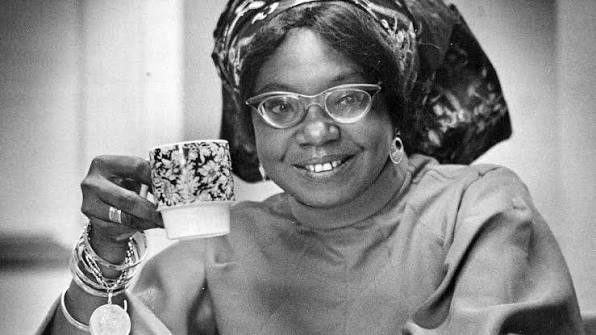
Flora Nwapa changed the course of African literature. She became the first African woman to publish a novel in English through a major international publisher. Her success opened the door for many African women writers.
She grew up in an Igbo community where storytelling, market life, spirituality, and strong women shaped everyday life. Those experiences later inspired many of her novels.
Nwapa became the first African woman novelist to publish an English-language novel in Britain. She also became one of Africa’s first female publishers after founding Tana Press in Nigeria.
Early Life and Education
Flora Nwapa was the eldest of six children. Her father, Christopher Ijeoma, worked as an agent with the United Africa Company, while her mother, Martha Nwapa, taught drama.
She attended primary school in Oguta before moving to Elelenwo Secondary School in Obio Akpor Local Government Area of Rivers State.
She later enrolled at CMS Girls School in Lagos. The school later moved to Ibadan, merged with Kudeti Girls School, and became St Anne’s School, Ibadan.
Career in Education and Public Service
After returning to Nigeria, Nwapa joined the Ministry of Education in Calabar as an Education Officer. She served in that role until 1959.
She then taught English and Geography at Queen’s School, Enugu, from 1959 to 1962. From 1962 to 1967, she worked as Assistant Registrar at the University of Lagos.
After the Nigerian Civil War ended in 1970, she joined the government of East Central State. She served as Commissioner for Health and Social Welfare from 1970 to 1971. She later became Commissioner for Lands, Survey and Urban Development and served from 1971 to 1974.
Nwapa also lectured at Alvan Ikoku Federal College of Education in Owerri. In 1989, the University of Maiduguri appointed her Visiting Professor of Creative Writing.
Literary Career
Nwapa published her first novel, Efuru, in 1966 at the age of 35. Literary scholars regard the book as the first English-language novel published internationally by an African woman.
Before publication, she sent the manuscript to renowned Nigerian author Chinua Achebe in 1962. Achebe praised the work and even paid the postage so she could send the manuscript to the English publisher, Heinemann.
Following the success of Efuru, she published several novels, including:
- Idu (1970)
- Never Again (1975)
- One Is Enough (1981)
- Women Are Different (1986)
She also wrote two short story collections:
- This Is Lagos (1971)
- Wives at War (1980)
Her poetry collection, Cassava Song and Rice Song, appeared in 1986.
Nwapa also wrote several books for children.
Publishing and Women’s Voices
In 1974, Nwapa founded Tana Press. Three years later, she established the Flora Nwapa Company. Through both publishing houses, she published her own books alongside works by other writers. She focused strongly on promoting women’s voices.
She once explained that one of her goals was to educate women around the world, especially feminists, about Nigerian women’s lives. She wanted readers to understand their economic independence, family relationships, traditional beliefs, and place within society.
Many literary scholars describe Tana Press as the first publishing house run by an African woman for a large female readership. They consider the company far ahead of its time because publishers rarely recognised African women as a major reading audience.
Views on Feminism
At the start of her writing career, Nwapa avoided identifying as a feminist because she believed the movement treated men unfairly. Over time, she developed a different understanding of feminism. Her personal journey reflected wider debates about feminism in Africa and across the world.
International Recognition
Nwapa’s work appeared in leading literary publications, including Présence Africaine and Black Orpheus during the 1960s and 1970s. In 1992, editors included her work in Daughters of Africa, the landmark anthology edited by Margaret Busby.
She also continued her teaching career around the world.
She taught or lectured at:
New York University, Trinity College, University of Minnesota, University of Michigan, University of Ilorin
Reflecting on her work, she once said:
“I have been writing for nearly thirty years. My interest has been on both the rural and the urban woman in her quest for survival in a fast-changing world dominated by men.”
Family Life
Flora Nwapa married Chief Gogo Nwakuche.
She had three children: Ejine Nzeribe, Uzoma Gogo Nwakuche, Amede Nzeribe
Death and Legacy
Flora Nwapa died from pneumonia on 16 October 1993 at a hospital in Enugu. She was 62 years old. Publishers released her final novel, The Lake Goddess, after her death.
Today, Flora Nwapa remains one of Nigeria’s greatest literary pioneers. She transformed African literature, expanded opportunities for women writers, and built publishing platforms that amplified African voices. Her novels continue to influence readers, writers, and scholars around the world.