By Gloria Attah
Fresh calls for greater continental unity have again taken centre stage, with diplomats and policy advocates pushing for the creation of a United States of Africa.
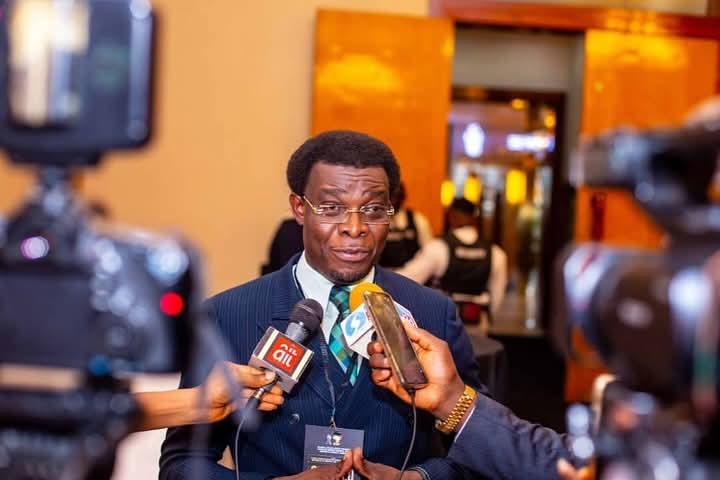
Speaking at a press briefing, the Chief Executive Officer of the African School of Diplomacy and International Relations, Tunji John Asaolu, said Africa can no longer afford divisions created by colonial borders and competing national interests.
The event, themed “One Africa, One Voice, One Future: Renewing the Call for the United States of Africa,” reflected on the ideals behind the founding of the Organization of African Unity on May 25, 1963, now known as the African Union.
Professor Asaolu argued that Africa’s fragmented political structure continues to weaken the continent economically and politically despite its vast natural and human resources.
“A fragmented Africa leaves individual nations vulnerable, economically marginalized, and politically sidelined on the world stage. But a unified Africa would be a geopolitical superpower,” he said.
He noted that Africa possesses more than 60 percent of the world’s uncultivated arable land and large deposits of critical minerals, yet many citizens remain poor because African countries negotiate separately rather than as one economic bloc.
The diplomat also called for the full implementation of visa-free movement through the African Continental Free Trade Area and the African Common Passport initiative, stressing that colonial borders still limit trade, movement, and opportunities across the continent.
“It is easier for an African to travel to Europe than to visit their own neighbours,” he stated.
Professor Asaolu further advocated stronger continental institutions, including a single African parliament, harmonised economic policies, and a unified defence framework to strengthen peace, security, and economic integration.
He disclosed that the African School of Diplomacy and International Relations and the African Civil Society Forum have trained over 2,500 young diplomats and civil society leaders through the Pan-African Diplomatic Fellowship initiative.
The organisations also announced the submission of a proposed legal framework aimed at accelerating the implementation of the African Common Passport.
Addressing young Africans, Asaolu urged them not to allow colonial boundaries define their identity or aspirations.
“You are African first. Do not let old colonial borders limit your imagination,” he said.
Quoting Pan-African leaders Kwame Nkrumah and Julius Nyerere, he maintained that African unity remains essential for the continent’s survival, dignity, and global influence.
“The creation of the United States of Africa is not an option; it is an absolute necessity for the survival, dignity, and global influence of our continent,” he added.
The event formed part of activities commemorating the 63rd anniversary of the African Union and renewed discussions about Africa’s political and economic future in a rapidly changing global landscape.