

The Federal Government has unveiled a three-phase electricity roadmap to improve power supply, expand infrastructure and transform Nigeria’s electricity sector.
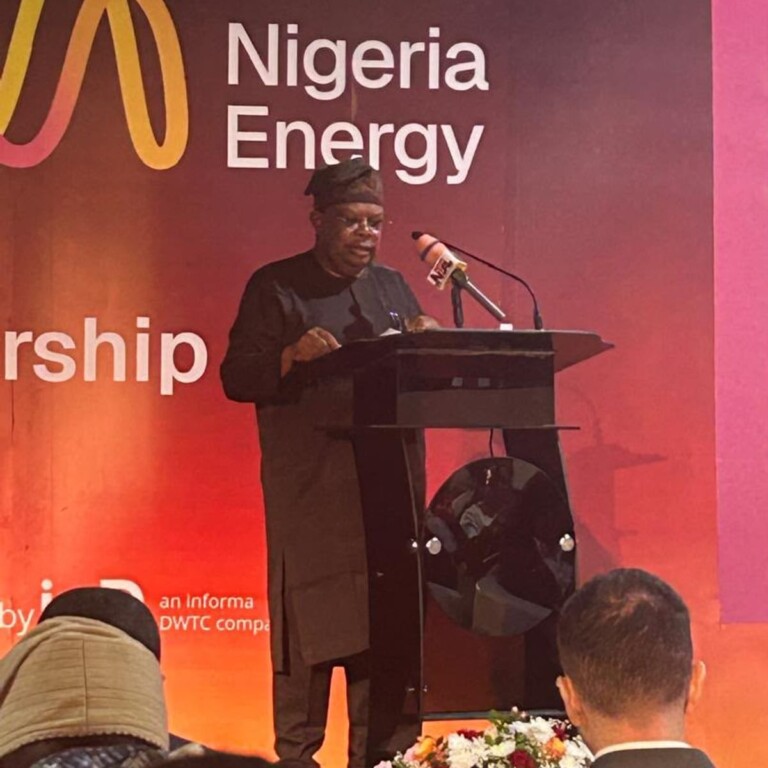
Minister of Power Joseph Tegbe announced the plan at the Nigeria Energy Leadership Summit and Exhibition 2026 in Lagos. The event brought together government officials, energy companies and industry experts to discuss electricity challenges and investment opportunities.
Tegbe said the government would focus on measurable improvements in electricity delivery. The plan aims to address challenges across generation, transmission and distribution.
The first phase targets grid stabilisation by February 2027. The second phase will expand infrastructure and electricity capacity from March 2027 through 2028. The third phase will pursue long-term transformation from 2028 onward.
The minister identified three priority electricity corridors for coordinated investment and infrastructure development.
They are Lagos–Ogun, Benin–Enugu–Port Harcourt, and Abuja–Kaduna–Kano. The government plans to coordinate generation, transmission and distribution projects across these areas.
According to Tegbe, the corridor strategy will help direct resources towards locations with strong electricity demand. It will also help government agencies and private operators coordinate their investments.
The Lagos–Ogun corridor accounts for about 50 per cent of Nigeria’s electricity demand, according to the minister. The government intends to use priority corridors to test interventions before applying lessons elsewhere.
The government is also working to improve the financial health of the electricity market.
Tegbe said the Federal Government had paid ₦1.23 trillion out of an estimated ₦3.3 trillion in legacy power-sector liabilities. This leaves approximately ₦2.07 trillion outstanding, based on the figures disclosed.
The minister said the government was also working to prevent new debts from accumulating. Measures include improving financial accountability and addressing leakages across the electricity value chain.
Meanwhile, the government is prioritising metering and improved revenue collection. These measures aim to reduce electricity losses and strengthen payments to companies supplying power.
Despite the roadmap, Nigeria’s electricity sector continues to face significant operational constraints.
Gas supply problems limit generation at some power plants. In addition, ageing infrastructure and transmission bottlenecks restrict the amount of electricity that reaches consumers.
Distribution companies also face technical and commercial losses. These challenges reduce revenue and limit the funds available for maintenance and new investment.
The government says it will audit existing infrastructure to identify critical gaps. The findings will help determine where upgrades and investment are most urgently needed.
The roadmap sets out the government’s timetable for stabilisation, expansion and long-term reform. However, its success will depend on implementation, funding and cooperation among federal and state governments, regulators and private operators.
For households and businesses, the key measure will be whether electricity supply becomes more reliable. Manufacturers also need dependable power to control production costs and improve productivity.
The February 2027 stabilisation target will therefore be an important milestone. Progress will depend on whether the government can resolve immediate constraints while building a financially sustainable electricity market.