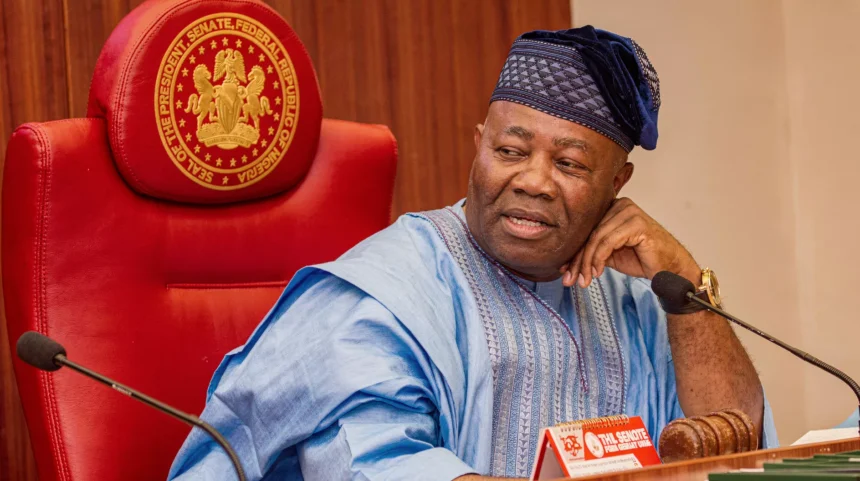
The resolution followed Thursday’s plenary, during which Akpabio cautioned against what he described as the misrepresentation of his comments on a bill seeking to decriminalise attempted suicide and establish a framework for suicide prevention.
Akpabio said his remarks during Tuesday’s debate had been taken out of context, insisting that he would not make disparaging comments about any religion. He cited his long-standing relationship with his aide-de-camp, who he said had been Muslim for 19 years.
The Senate President also argued that his comments were being misinterpreted by television commentators and warned against misrepresenting proceedings of the National Assembly.
During the exchange, Akpabio suggested that the offices of the President and Vice President had already been settled politically, adding that the Senate Presidency was now becoming a target of political attacks.
Supporting the resolution, Senator Fasuyi backed a motion moved by Senator Monguno, affirming that the Senate President’s seat was not vacant and would remain occupied by Akpabio.
Senator Babangida Hussaini also expressed support for Akpabio, citing his contributions to his state and endorsing his return. Hussaini further called attention to the problem of hard drugs and substance abuse, which he linked to criminality, banditry and terrorism.
Controversy Over Suicide Decriminalisation Bill
The resolution followed controversy over Akpabio’s comments during Tuesday’s debate on a bill seeking to decriminalise attempted suicide.
The proposed legislation seeks to replace criminal punishment for survivors of suicide attempts with a framework focused on medical assessment, treatment, referral and continued support.
During the debate, Senator Asuquo, who presented the bill, argued that criminalising attempted suicide could discourage people experiencing suicidal crises from seeking help and could lead survivors to fear prosecution rather than access medical care.
The proposed framework would provide for coordinated suicide prevention services, including crisis helplines, referral pathways and follow-up support.
Akpabio, however, reportedly questioned whether the bill was intended to prevent people from dying by suicide and maintained that attempted suicide remained a criminal offence under the existing legal framework.
His remarks drew attention to the central issue before lawmakers: whether people who survive suicide attempts should face prosecution or receive medical and psychological support.
The bill seeks to shift the response towards prevention, treatment and rehabilitation, ensuring that people experiencing suicidal crises can access appropriate care.
The Senate’s Thursday resolution reaffirmed Akpabio’s position as presiding officer, while the controversy over the proposed suicide prevention legislation has brought renewed attention to the relationship between criminal law and mental health care.