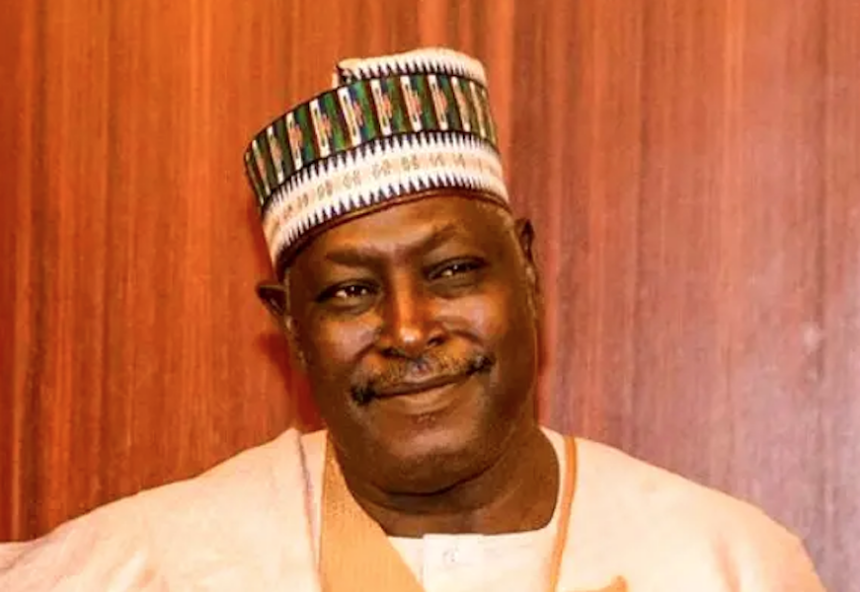
Former Secretary to the Government of the Federation (SGF), Babachir Lawal, has once again changed political platforms, joining the Nigeria Democratic Congress (NDC) less than four months before the 2027 general elections.
Lawal’s latest move has renewed attention on the pattern of political defections in Nigeria, particularly among prominent politicians who have shifted between parties and political alliances over the years.
Lawal was previously associated with the Congress for Progressive Change (CPC), the platform on which former President Muhammadu Buhari contested the presidency before the party became part of the coalition that formed the All Progressives Congress (APC).
He later served as APC North-East vice-chairman before becoming Secretary to the Government of the Federation after Buhari won the 2015 presidential election.
His tenure as SGF ended in 2017 following his suspension and subsequent removal from office amid allegations relating to contracts under the Presidential Initiative for the North-East. Lawal denied wrongdoing.
His relationship with the APC subsequently became strained, particularly ahead of the 2023 presidential election. Lawal openly opposed the party’s decision to field a Muslim-Muslim presidential ticket, describing it as a serious political mistake.
He eventually left the APC and became associated with opposition figures, including former Vice-President Atiku Abubakar.
As political realignments intensified ahead of the 2027 elections, Lawal became involved in the African Democratic Congress (ADC) coalition alongside Atiku and other opposition politicians.
However, his relationship with the ADC also became strained. On June 1, 2026, Lawal resigned from the party following its presidential primary, which produced Atiku as its candidate.
Lawal had publicly supported another aspirant, Mohammed Hayatudeen, and subsequently alleged that the primary process had been manipulated in favour of Atiku and his supporters.
Three months later, Lawal announced his membership of the NDC, where he has now endorsed the party’s presidential ticket of Peter Obi and Rabiu Kwankwaso for the 2027 election.
Explaining his latest political move, Lawal cited concerns about insecurity, economic hardship, hunger, ignorance and disease in the country. He argued that Nigerians concerned about the situation should support the NDC ticket.
The NDC leadership has welcomed Lawal into its fold, with the party’s National Leader, Senator Seriake Dickson, describing him as an experienced political organiser and mobiliser. Dickson said Lawal would play a role in the party’s activities and campaigns in the North-East and assist its operations in the North-Central region.
Lawal’s latest defection has attracted different interpretations from political observers.
Former Kaduna State Legacy ADC chairman, Tijjani Mustapha, described his departure from the ADC as a relief, arguing that it could allow the party to focus on strengthening its structures ahead of the 2027 elections.
However, Chairman of the Northern Christian Association, Rev. Joseph Hayab, said every Nigerian has a constitutional right to belong to any political party of their choice. He noted that political defections did not begin with Lawal and that several prominent politicians have changed parties since Nigeria’s return to democratic rule in 1999.
Former Secretary-General of the Arewa Consultative Forum, Anthony Sani, similarly linked the frequency of defections to what he described as the absence of clearly defined ideological differences among Nigeria’s major political parties. He argued that politicians often select platforms based on their perceived electoral viability.
Lawal’s latest move therefore adds another chapter to his long and shifting political journey, which has taken him from the CPC and APC to opposition alliances involving the PDP, ADC and now the NDC.
With the 2027 elections approaching, his move to the NDC places him in a new political camp, where he is expected to participate in the party’s campaign activities, particularly across northern Nigeria.