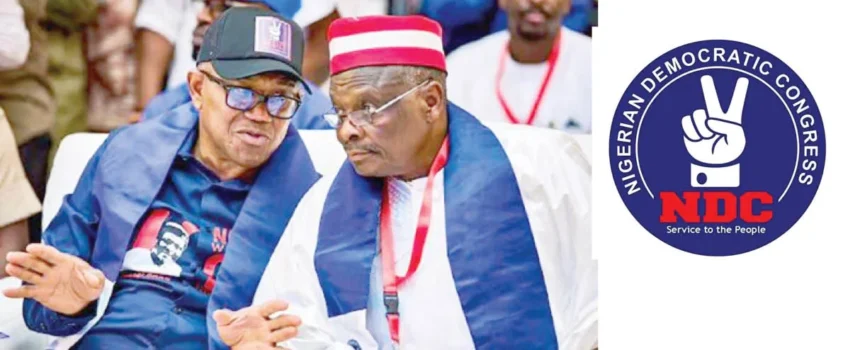
The 2027 presidential ticket of the Nigeria Democratic Congress (NDC), comprising Peter Obi as presidential candidate and Rabiu Musa Kwankwaso as his running mate, has come under scrutiny over differences between the two candidates on key policy issues.
The differences are particularly evident in their positions on fuel subsidy and the proposed establishment of state police, while a separate disagreement has emerged between the party leadership and the Obi-Kwankwaso (OK) Movement over the structure of the presidential campaign.
On fuel subsidy, Obi has maintained that the subsidy should be removed, but argued that the process should have been structured and phased.
Speaking at a Nigerian Bar Association conference in Port Harcourt, Rivers State, Obi said the mismanagement of subsidy savings should not be used as a reason to reverse the policy.
“I subscribe and maintain that you need to remove the subsidy. Mismanagement of the proceeds shouldn’t be the reason for not removing it,” Obi said.
Kwankwaso, however, has expressed support for a modified form of subsidy.
During a television interview on Tuesday, he said an Obi-led NDC administration would reintroduce subsidy “in our own way”, arguing that the government could take measures to reduce fuel prices, including supporting additional refinery capacity.
“We, in the NDC, will do whatever it takes, really, to put the price of oil down,” Kwankwaso said.
The two politicians have also expressed different positions on state police.
Obi has publicly supported the establishment of state police. In a statement on the passage of the State Police Bill, he described it as a significant legislative development, although he questioned the level of public consultation surrounding the process.
In an interview with Arise Television, Obi also said he believed in state police and would “do whatever it takes to secure the country.”
Kwankwaso, however, has maintained his opposition to state police, arguing that the proposal gained momentum largely because of the inability of the federal police structure to adequately address insecurity.
“I have always been against state police,” Kwankwaso said.
Beyond the policy differences, tensions have also emerged between the NDC leadership and the OK Movement, a grassroots organisation supporting the Obi-Kwankwaso ticket.
The disagreement followed the unveiling of a 59-member Presidential Campaign Council by the OK Movement without, according to the NDC leadership, formal approval from the party’s National Working Committee.
NDC National Leader, Senator Seriake Dickson, said support groups should work with the party’s official campaign structure rather than establish competing organs.
The party subsequently disowned the campaign council announced by the movement.
The OK Movement, however, has maintained that it is an independent political organisation and not an appendage of the NDC.
Its National Director-General, John Ughulu, said the movement would retain its structures and independently determine its campaign strategy while collaborating with the NDC.
The disagreement has generated debate among political observers over the relationship between formal party structures and grassroots movements backing the presidential ticket.
Meanwhile, the NDC has said it is awaiting nominations from Obi and Kwankwaso before formally inaugurating its Presidential Campaign Council.
The party’s National Publicity Secretary, Osa Director, said the candidates had been given the opportunity to nominate key officials of the campaign council in consultation with the party leadership.
The party said the arrangement was intended to promote inclusiveness and cohesion, while urging candidates and their supporters to focus on the 2027 elections.
The developments have placed renewed attention on how the NDC will reconcile differences in policy positions and campaign organisation as it prepares for the 2027 presidential election.