In July 2014, Ebola arrived in Lagos.
The virus had already devastated communities across West Africa, and Nigeria faced a frightening possibility. A highly contagious disease had entered one of Africa’s busiest cities, a place where millions of people moved through crowded roads, offices, markets, hospitals and airports every day.
At the centre of that first encounter stood a doctor who had to make a difficult decision.
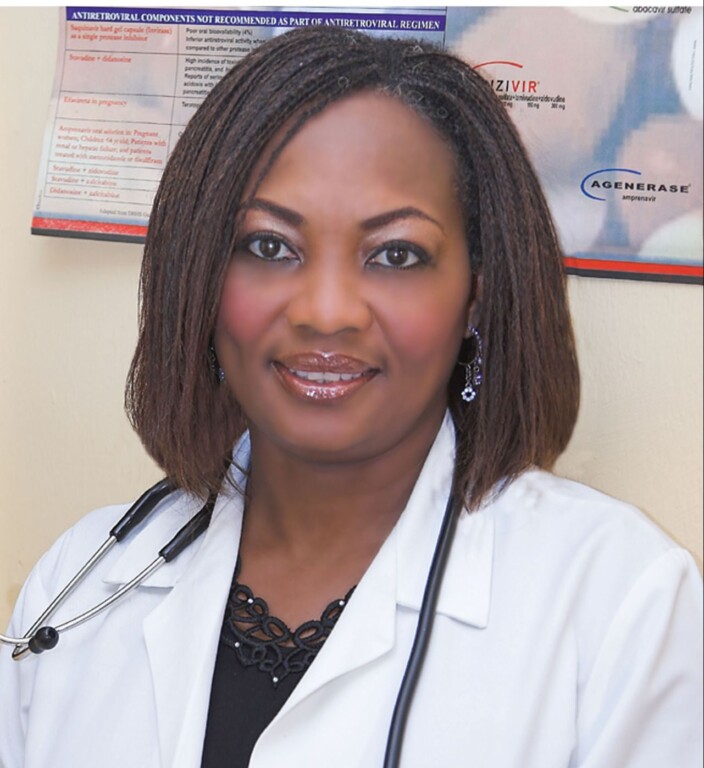
Her name was Dr Ameyo Stella Adadevoh.
At First Consultant Hospital in Lagos, Adadevoh examined Patrick Sawyer, a Liberian who had travelled to Nigeria and arrived in Lagos on July 20, 2014. Sawyer initially believed he had malaria. Adadevoh did not accept that explanation. She recognized signs that raised concern about Ebola and pushed for further investigation.
Then came the decision that would define her legacy.
The Patient She Would Not Release
Sawyer wanted to leave the hospital. He planned to travel to Calabar for an ECOWAS meeting.
Adadevoh refused to let him go.
She understood what could happen if an infected patient moved freely through the country. She kept Sawyer in the hospital and pushed for his isolation while authorities worked to confirm the diagnosis.
The situation placed her under pressure. Yet she held her ground.
For Adadevoh, the safety of the wider public mattered more than the demands surrounding one patient.
That decision became crucial. Nigeria had just encountered a virus that had already caused a devastating outbreak elsewhere in West Africa. Releasing the suspected case could have created more opportunities for transmission.
Instead, the hospital began responding to a threat it had never expected to face.
A Makeshift Barrier Against A Deadly Virus
The hospital did not have everything the medical team needed.
Adadevoh and her colleagues had to act quickly while they dealt with limited protective equipment and an unfamiliar disease. The team created an isolation area and began taking precautions as they waited for confirmation.
The situation demanded more than medical knowledge. It demanded speed, judgment and courage.
Adadevoh also alerted health authorities and helped push the response beyond the hospital walls. Nigeria activated an emergency response structure, while health workers began surveillance and contact tracing.
The battle soon became much bigger than one hospital.
Then Ebola Came For The Doctors
The people fighting the virus could not stand outside its reach.
Health workers treated infected patients while trying to protect themselves. WHO records show that several Nigerian cases involved health workers who cared for the imported case.
Adadevoh eventually joined the list.
On August 4, 2014, authorities confirmed that she had contracted Ebola.
She had spent her career caring for patients. Now she became a patient herself.
There was no dramatic separation between the doctor and the danger she had tried to contain. The virus had reached the woman who had warned others about it.
The Doctor Behind The Headlines
Adadevoh’s story did not begin with Ebola.
Born in Lagos in 1956, she grew up in a family with strong links to medicine, science and Nigerian public life. Her father, Babatunde Kwaku Adadevoh, served as a physician and later became Vice Chancellor of the University of Lagos.
She studied medicine at the University of Lagos and completed her housemanship at Lagos University Teaching Hospital. She later trained in endocrinology in London before returning to Nigeria.
For more than two decades, she worked at First Consultant Medical Centre in Lagos.
Ebola simply brought her work into the national spotlight.
Before the outbreak, she had already shown the instincts that would later define her response to Ebola. In 2012, she alerted Nigeria’s Ministry of Health when H1N1 influenza reached the country.
Her career reflected a pattern: recognize a threat, take it seriously and act.
The Price Of Standing Firm
Adadevoh died from Ebola on August 19, 2014.
She was 57.
Her death came less than a month after Sawyer arrived in Lagos.
By then, the Nigerian response had expanded into a coordinated national effort. Health workers, government agencies and international partners tracked contacts, managed patients and monitored possible transmission. WHO later recorded 20 Ebola cases in Nigeria, including the imported case, and eight deaths.
On October 20, 2014, WHO declared Nigeria Ebola free after the country completed 42 days without a new case following the discharge of the last confirmed patient.
The announcement marked the end of a frightening chapter.
But for many Nigerians, it also carried the memory of the doctor who had refused to let the first confirmed case simply walk away.
More Than The Woman Who Stopped Ebola
It is tempting to reduce Adadevoh’s story to one sentence: the doctor who stopped Ebola in Nigeria.
Her story deserves more than that.
She was a physician long before the world knew her name. She built a career around patient care. She raised a family. She worked quietly in a hospital in Lagos.
Then an unfamiliar disease arrived at her doorstep.
She did what doctors are expected to do in a crisis: she observed, questioned, made a difficult call and acted.
The difference was that the decision carried consequences far beyond one patient.
Today, her name lives on through the Dr Ameyo Adadevoh Health Trust, created in her memory, and through other tributes to her contribution to Nigeria’s Ebola response. Her story also reached a wider audience through the film 93 Days, which dramatized the 2014 Ebola crisis at First Consultant Hospital.
But perhaps the most powerful part of her legacy remains the simplest.
When fear, pressure and uncertainty surrounded the first Ebola case in Lagos, Adadevoh did not look away.
She held the line.
And sometimes, in a public health crisis, one person’s decision to hold that line can give an entire country the time it needs to fight back.