The Central Bank of Nigeria (CBN) has called for increased adoption of alternative payment channels as part of efforts to deepen financial inclusion and accelerate economic growth across the country.
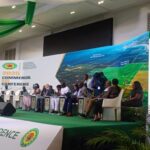
The acting Director of the CBN’s Corporate Communications and Investor Relations Department, Mrs Hakama Sidi-Ali, made the call at the 2026 CBN Fair in Lokoja, Kogi State.
Sidi-Ali’s speech was delivered by the CBN Lokoja Branch Controller, Mr Zubairu Abdulrahman Salihu, at the event, which was organised to engage members of the public on the bank’s policies, initiatives and financial consumer protection measures.
The 2026 CBN Fair was held under the theme, “Driving Alternative Payment Channels as Tools for Financial Inclusion, Growth and Accelerated Economic Development.”
Sidi-Ali said reforms introduced by the CBN under Governor Olayemi Cardoso were beginning to produce positive results, pointing to developments in inflation, foreign reserves and the foreign exchange market.
According to her, headline inflation declined from 15.91 per cent in June to 15.43 per cent in July 2026.
She also said Nigeria’s foreign exchange reserves stood above $52.5 billion as of July 2026, describing the figure as a 17-year high.
The CBN official listed several initiatives and reforms introduced by the apex bank, including foreign exchange market reforms, banking sector recapitalisation, the non-resident Bank Verification Number (BVN), the B-Match foreign exchange trading system, Nigeria Payments System Vision 2028 and the Nigerian Overnight Financing Rate (NOFR).
Alternative payment channels can expand financial access
Kogi State Governor Ahmed Usman Ododo, represented at the event by his Special Adviser on Budget and Finance, Dr Elijah Evinemi, said alternative payment channels could play a major role in extending financial services to underserved communities.
He identified agent banking, mobile money, point-of-sale (POS) terminals, USSD, digital wallets, QR-code payments and electronic banking as key tools for expanding access to financial services, particularly in rural areas.
Ododo said financial inclusion should go beyond simply opening bank accounts, stressing that farmers, traders, artisans, women and young entrepreneurs must be able to meaningfully participate in the formal economy.
He urged banks, fintech companies and payment service providers to expand their services beyond major urban centres and develop affordable, simple and secure products that meet the needs of low-income and underserved Nigerians.
Governor calls for stronger consumer protection
The Kogi governor also called for stronger cybersecurity measures and consumer protection within Nigeria’s digital payment ecosystem.
He said financial institutions and payment service providers must establish effective mechanisms for resolving failed transactions and addressing customer complaints.
According to him, expanding access to financial services without building public trust would not guarantee meaningful financial inclusion.
Kogi records 94% banking penetration
The CBN Lokoja Branch Controller, Zubairu Abdulrahman Salihu, said Kogi State recorded a 94 per cent banking penetration rate in the 2023 Access to Financial Services Survey conducted by Enhancing Financial Innovation and Access (EFInA).
He described the figure as an indication of the state’s potential for deeper adoption of digital financial services.
Salihu encouraged residents to use the CBN Fair to improve their financial literacy and gain a better understanding of digital payment platforms and other financial services.
The CBN said greater adoption of alternative payment channels would help bring more Nigerians into the formal financial system while supporting economic activity and broader development.