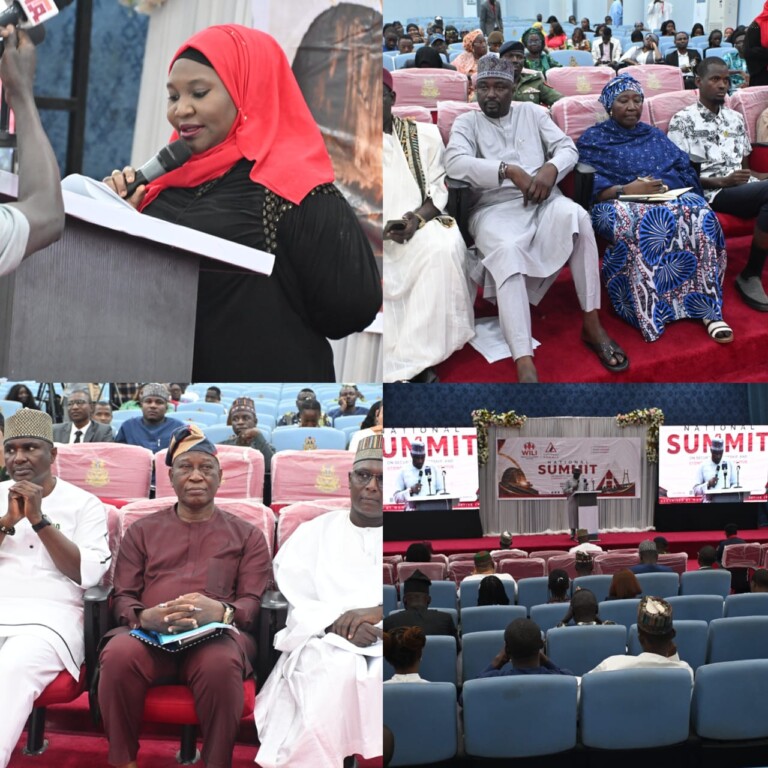
The Women in Leadership Initiative, WILI Africa, has called for a broader approach to Nigeria’s national security, with greater investment in women, young people, livelihoods and community resilience.
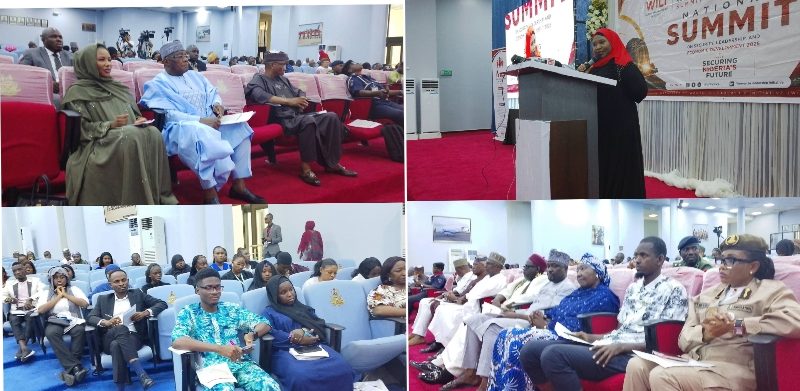
The call was made on Saturday in Abuja at the National Summit on Security, Leadership and Economic Development 2026, organised by WILI Africa under the theme, “Securing Nigeria’s Future.”
The summit brought together government officials, security stakeholders, political leaders, civil society organisations, development advocates, entrepreneurs, women and youth representatives to examine the link between security, leadership and economic development.
Founder of WILI Africa, Maryam Baba, said Nigeria’s security challenges could no longer be addressed through military operations alone, arguing that poverty, unemployment, exclusion and weak institutions often create vulnerabilities that criminal and extremist groups exploit.
Baba said securing Nigeria must also involve securing opportunities, education, livelihoods, justice and the dignity of citizens.
She stressed that young Nigerians who have access to education, skills and legitimate economic opportunities would be less vulnerable to criminal and extremist recruitment.
The WILI Africa founder also placed women at the centre of the security conversation, describing them as critical actors in conflict prevention, peacebuilding, community resilience and national development.
She called for increased participation of women in decision-making, peacebuilding, community engagement and economic transformation, warning that Nigeria could not afford to leave a significant part of its leadership capacity underutilised.
The organisation also highlighted its community interventions, including hygiene education, provision of handwashing facilities and access to clean water in schools during the COVID-19 pandemic, as well as campaigns against child abuse and gender-based violence.
Baba disclosed plans to establish a safe-space centre for survivors of abuse and gender-based violence.
She also unveiled plans for the proposed WILI Abuja Headquarters, which is expected to provide facilities for leadership development, vocational training, digital innovation, policy engagement, counselling and community empowerment.
The proposed centre will include an Executive and Policy Centre, Vocational Training Centre, Digital Innovation Hub, Library and Resource Centre, Counselling Units and a Multipurpose Conference Hall.
Baba appealed to government, the private sector, development partners, academia, civil society and traditional institutions to support the project.
Representing the Secretary to the Government of the Federation, Aminu Sani Yargaya, Permanent Secretary, Special Services Office, said the summit was timely, stressing that Nigeria’s security and development challenges required renewed hope, innovative leadership and a whole-of-society approach.
Yargaya said security, leadership and economic development were mutually reinforcing, noting that a secure environment creates the foundation for investment and social progress, while inclusive leadership strengthens institutions and public confidence.
Representing the Minister of Defence, Rear Admiral Olusanya Bankole, said Nigeria’s security architecture must evolve in response to emerging threats.
He stressed that modern defence goes beyond manpower, weapons and military platforms to include intelligence, technology, cyber capabilities, resilient institutions and citizen confidence.
While acknowledging the importance of military force in protecting the country’s sovereignty, Bankole said force alone could not guarantee sustainable peace.
He called for stronger community confidence, protection of vulnerable groups, counter-radicalisation measures, improved civil-military relations and expanded opportunities for young Nigerians.
The Minister of Humanitarian Affairs and Poverty Reduction, Bernard Doro, also linked poverty to insecurity, warning that economic deprivation and hopelessness could create fertile ground for criminality and exploitation.
Represented at the summit, Doro said Nigeria’s future could not be secured by the force of arms alone, but also through poverty reduction, youth development and the empowerment of women.
He highlighted the ministry’s One Humanitarian, One Poverty Response System, aimed at creating a unified framework for humanitarian response, social protection and poverty reduction.
The National Chairman of the All Progressives Congress, Professor Nentawe Goshwe Yilwatda, called for stronger community leadership and greater opportunities for women and young people.
Yilwatda noted that residents are often the first to detect emerging threats within their communities and therefore urged stronger collaboration between community leaders, citizens and security agencies.
Other speakers, including entrepreneur and civic advocate Dr. Maryam Shettima, as well as experts in entrepreneurship, community security, energy, peacebuilding and inclusive leadership, further broadened discussions on the role of women and youth in national development.
The summit also examined entrepreneurship, the creative economy, financial inclusion, education, energy security, peacebuilding and sustainable economic development as components of a comprehensive national security strategy.