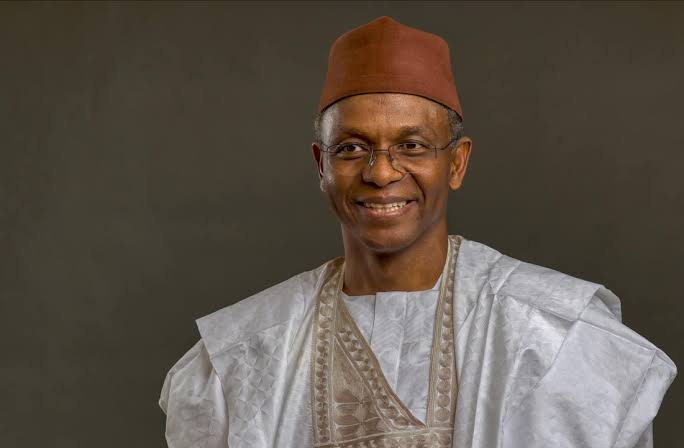
The continued detention and prosecution of former Kaduna State Governor, Nasir El-Rufai, has increasingly moved beyond a purely legal matter, becoming a significant political issue as Nigeria approaches the 2027 general elections.
El-Rufai has been in the custody of government authorities since February 2026 following investigations and subsequent criminal proceedings involving allegations including abuse of office, financial impropriety and money laundering. He has denied wrongdoing, while the Independent Corrupt Practices and Other Related Offences Commission (ICPC) maintains that his detention and prosecution are being conducted within the law. (ICPC)
The political significance of the case, however, goes beyond the allegations before the courts.
From a political science perspective, the central question is no longer simply whether El-Rufai has a case to answer. It is whether his prolonged detention is beginning to influence the balance of political power, opposition mobilisation and public perception of Nigeria’s democratic institutions.
A Legal Case With Political Consequences
The ICPC says El-Rufai’s detention is court-authorised and connected to ongoing investigations and prosecution. The commission has repeatedly rejected suggestions that the former governor is being unlawfully held, stressing that the courts have authorised the relevant detention orders. (ICPC)
A Federal High Court later granted bail under conditions that proved difficult to satisfy, while another bail application on medical grounds was rejected by a Kaduna State High Court after the court questioned the credibility of the medical documentation presented. (Punch Newspapers)
But politically, prolonged detention creates a different dynamic.
El-Rufai is not an ordinary political actor. As a former governor, former FCT minister and influential member of the political opposition, his political networks extend beyond Kaduna State.
He has also become associated with the African Democratic Congress (ADC), one of the platforms around which opposition forces are seeking to build a stronger challenge ahead of 2027.
That makes his continued absence from the political arena politically consequential.
Could It Weaken the Opposition?
One of the strongest political interpretations is that El-Rufai’s detention could weaken opposition mobilisation.
The ADC has openly alleged that the former governor’s continued detention is politically motivated and intended to prevent him from participating effectively in the 2027 elections. The party has also accused the Federal Government of using legal processes to restrict opposition figures. (The Whistler Newspaper)
Those allegations remain political claims, not established facts.
Nevertheless, from the perspective of opposition politics, the absence of a prominent strategist can affect coalition-building, political negotiations, mobilisation and campaign planning.
Political parties depend not only on formal structures but also on individuals who possess networks, resources, political experience and elite connections.
El-Rufai possesses considerable experience within Nigeria’s political establishment. His prolonged detention therefore removes an influential actor from direct political engagement at a time when opposition parties are attempting to consolidate ahead of 2027.
But It Could Also Increase His Political Value
There is another side to the argument.
Political repression, whether real or merely perceived, can sometimes increase the political relevance of the person being targeted.
A politician who is already influential can become a symbol around which supporters and opposition groups mobilise.
This is particularly important in El-Rufai’s case because his supporters can frame the detention as evidence of an attempt to silence a political opponent, while government supporters can present the prosecution as evidence that former office holders are no longer beyond accountability.
Either interpretation can increase political polarisation.
In political science terms, the detention could therefore produce a rally-around-the-victim effect, particularly if the public begins to believe that the legal process is being used for political purposes.
The Selective Justice Question
Perhaps the most important political issue arising from the case is the question of selective accountability.
Nigeria has repeatedly struggled with allegations that anti-corruption agencies prosecute some political actors aggressively while appearing less interested in allegations involving others.
Consequently, the political credibility of the El-Rufai prosecution will depend partly on whether Nigerians believe that similar allegations are treated consistently across political parties.
If supporters of the government believe that El-Rufai is being held because there is credible evidence against him, the case could strengthen the principle that political office does not provide immunity from accountability.
But if opposition supporters conclude that the same standards are not applied to politicians aligned with the government, the case could reinforce the perception that anti-corruption institutions are being used selectively.
That distinction is critical.
Anti-corruption campaigns can strengthen democratic institutions when they are perceived as impartial. They can weaken those institutions when citizens perceive them as instruments of political competition.
It Has Become Part of the 2027 Political Narrative
The timing is also significant.
Nigeria is moving toward the 2027 general election, and opposition parties are attempting to construct a viable alternative to the governing APC.
The ADC has already incorporated El-Rufai’s detention into its political messaging. Former Vice President Atiku Abubakar has also criticised his continued detention and raised concerns about bail conditions and constitutional safeguards. (ThisDayLive)
This means the case can potentially become an issue during the 2027 campaign.
Rather than remaining a narrow anti-corruption matter, opposition politicians could use it to raise broader questions about:
- rule of law;
- judicial independence;
- political persecution;
- abuse of state institutions;
- opposition rights; and
- the independence of anti-corruption agencies.
Whether those arguments resonate with voters will depend on how the case develops and whether the government and prosecution can convincingly demonstrate that the process is being driven by evidence rather than political considerations.
It Could Also Test Tinubu’s Political Strategy
The case presents a complicated political calculation for President Bola Tinubu’s administration.
If the government distances itself completely from the case, it can argue that anti-corruption agencies and the judiciary are independent institutions performing their statutory functions.
However, prolonged detention can still become politically associated with the administration regardless of whether the President directly controls the process.
Indeed, Atiku recently challenged President Tinubu to intervene in the matter, arguing that the President could not claim powerlessness over El-Rufai’s continued detention. (Vanguard News)
The administration therefore faces a difficult political environment.
Intervention could generate accusations of political interference in an ongoing judicial process.
Non-intervention, on the other hand, allows opposition parties to continue portraying the detention as part of a broader strategy to weaken political opponents.
The Institution-versus-Individual Question
For a political scientist, perhaps the most important question is whether Nigeria’s institutions are becoming stronger or whether political competition is being transferred into state institutions.
A healthy democratic system should allow law-enforcement agencies to investigate former governors, ministers and opposition politicians without fear or favour.
At the same time, the same democratic system must protect the presumption of innocence, fair hearing and access to justice.
The two principles are not contradictory.
A former governor should not be above the law.
But neither should the state be allowed to use prolonged detention as a substitute for conviction.
That is why the eventual outcome of El-Rufai’s case will have implications beyond El-Rufai himself.
What Does It Mean for Northern Politics?
The case could also have consequences within Northern Nigerian politics.
El-Rufai has historically occupied an important position among Northern political elites. His political networks cut across Kaduna and the wider Northern political establishment.
If his detention continues, other politicians may become more cautious about openly aligning themselves with him.
Alternatively, his supporters could interpret the situation as an attack on a Northern political figure and mobilise around that perception.
However, it would be premature to conclude that the case will automatically translate into a regional political backlash.
Northern politics is highly fragmented, and political loyalties frequently reflect party affiliation, elite interests, religion, ethnicity, geography and individual political calculations.
The more immediate consequence is likely to be elite realignment rather than a uniform regional response.
The Bigger Democratic Test
Ultimately, the political meaning of El-Rufai’s continued detention will depend on what happens next.
If the prosecution proceeds transparently, the courts independently determine the case and the allegations are tested through due process, the matter could strengthen Nigeria’s accountability institutions.
But if the detention continues indefinitely without meaningful judicial progress, or if Nigerians increasingly perceive the process as designed to keep a political opponent away from the 2027 political arena, the political consequences could be much more serious.
Civil society groups have already called for a review of the circumstances surrounding his detention and urged authorities to ensure due process. (Vanguard News)
El-Rufai himself has also continued to challenge aspects of his detention through the courts, including a fresh suit filed in August 2026 concerning the conditions of his detention and access to his family. (Sahara Reporters)
Therefore, from a political science perspective, the real issue is not simply whether El-Rufai is guilty or innocent. That is ultimately for the courts to determine.
The broader political question is whether Nigeria can demonstrate that its institutions are capable of holding powerful political actors accountable without creating the perception that law enforcement is being deployed as an instrument of political competition.
If that balance is maintained, the case could strengthen democratic accountability.
If it is lost, El-Rufai’s detention could become one of the defining political narratives of the 2027 election cycle.