What if some of the conditions that allow insecurity to grow are found in unemployment, poverty, exclusion, weak institutions and communities where young people struggle to see a future for themselves?
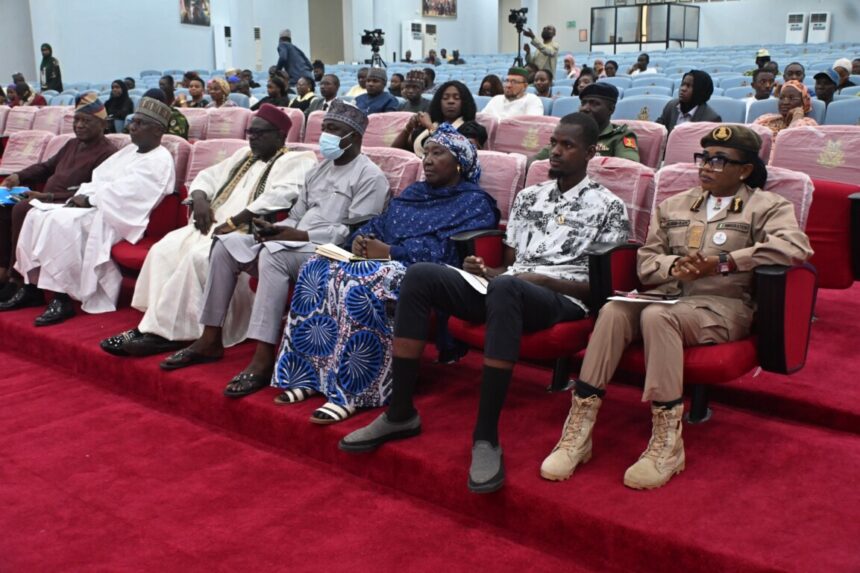
That question was at the heart of the Women in Leadership Initiative Africa’s National Summit on Security, Leadership and Economic Development in Abuja.
Under the theme “Securing Nigeria’s Future,” the summit brought together government representatives, security stakeholders, political leaders, civil society organisations and development advocates to examine a question that is becoming increasingly difficult to ignore: Can Nigeria achieve lasting security without addressing the social and economic conditions that make insecurity possible?
For WILI Africa, the answer is no.
The organisation is calling for a broader understanding of national security, one that goes beyond soldiers, weapons, intelligence and borders to include education, jobs, livelihoods, justice, women’s participation and community resilience.
At the centre of that argument are two groups whose potential, the organisation believes, remains significantly underused: women and young people.
Security Is More Than the Absence of Violence
For decades, conversations about Nigeria’s security challenges have largely focused on military operations and the ability of security agencies to confront armed groups.
Those tools remain important. But speakers at the WILI Africa summit argued that they cannot, on their own, create lasting peace.
Founder of WILI Africa, Maryam Baba, said Nigeria must begin to think about security in broader terms.
“If we are serious about securing Nigeria, we must do more than secure our borders. We must secure opportunities. We must secure livelihoods. We must secure education. We must secure justice. And we must secure the dignity of every Nigerian,” she said.
Her argument rests on a simple premise: people who have access to opportunity have more to lose from instability.
A young person with education, skills, employment and a legitimate pathway to economic independence may be less vulnerable to groups offering money, identity or purpose through violence.
That does not mean poverty automatically produces insecurity, nor does it suggest that unemployed young people are inherently dangerous.
Rather, the argument is that persistent exclusion can create vulnerabilities that criminal and extremist networks may exploit.
This makes development policy part of the wider security conversation.
Why Women Belong at the Security Table
The summit also challenged another traditional assumption about national security, that it is primarily a man’s domain.
Baba argued that women should not be viewed merely as people who benefit from security policies.
They should help design them.
Women often experience insecurity in ways that may not be immediately visible in conventional security assessments. They can also play important roles within families and communities, particularly in identifying tensions, supporting vulnerable people and strengthening social networks.
“Women are not merely beneficiaries of security and development policies. Women are indispensable actors in creating them,” Baba said.
That perspective shifts the conversation from protecting women to including women in the structures that determine what protection looks like.
Greater participation in decision-making, peacebuilding, conflict prevention and community engagement could therefore give policymakers access to perspectives that might otherwise be overlooked.
For WILI Africa, the argument is also economic.
Nigeria cannot afford to leave a significant portion of its potential leadership and productive capacity underused.
The Youth Question
If women represent one underused part of Nigeria’s leadership potential, young people represent another major part of the country’s security equation.
Nigeria has a large and youthful population. That demographic reality can be an enormous advantage if young Nigerians have access to education, skills, entrepreneurship and employment.
But it can also become a vulnerability when large numbers of young people face persistent economic exclusion.
Baba therefore called for greater investment in skills development, education, entrepreneurship and legitimate economic opportunities.
The argument is not simply that youth empowerment is good development policy.
It is that youth empowerment can also function as preventive security policy.
A young person who has access to opportunity may be less susceptible to recruitment by criminal or extremist groups seeking to exploit frustration and hopelessness.
This is why the security debate increasingly intersects with questions about jobs, education and economic inclusion.
The challenge is turning that recognition into policies that actually reach young people.
From Military Force to a Whole-of-Society Approach
Representing the Secretary to the Government of the Federation, Permanent Secretary of the Special Services Office Aminu Sani Yargaya described the summit as timely and argued for a whole-of-society approach to Nigeria’s security and development challenges.
The idea is straightforward: security agencies cannot carry the entire burden of securing the country.
Government institutions, communities, traditional leaders, businesses, civil society organisations, academics, women and young people all have roles to play.
That approach also recognises that security and development are closely connected.
A secure environment encourages investment and economic activity. At the same time, inclusive development can strengthen institutions and reduce some of the vulnerabilities that allow insecurity to take root.
The relationship therefore works in both directions.
Security supports development. Development can also strengthen security.
The Military Still Matters — But It Is Not Enough
The argument for a broader security strategy does not mean abandoning military force.
Representing the Minister of Defence, Christopher Gwabin Musa, Rear Admiral Olusanya Bankole acknowledged the continued importance of military capability in protecting Nigeria’s sovereignty and confronting threats.
But he also argued that modern defence requires more than manpower, aircraft, ships, armoured vehicles and weapons.
Intelligence, technology, cyber capabilities, resilient institutions and public confidence are increasingly important.
Perhaps more importantly, he stressed that military force alone cannot guarantee sustainable peace.
That distinction matters.
A military can defeat an armed group in a particular location. But if the conditions that allow recruitment, criminality or violent mobilisation to flourish remain, another threat can emerge.
That is why Bankole called for stronger community confidence, counter-radicalisation efforts, improved civil-military relations and greater opportunities for young Nigerians.
Poverty Is Part of the Security Equation
The connection between poverty and insecurity was also highlighted by the Minister of Humanitarian Affairs and Poverty Reduction, Bernard Doro.
Represented at the summit, Doro warned that economic deprivation and hopelessness could create conditions that criminal and exploitative actors can take advantage of.
His argument places poverty reduction within the broader national security framework.
The ministry’s One Humanitarian, One Poverty Response System, according to Doro, is intended to create a more coordinated approach to humanitarian response, social protection and poverty reduction.
The underlying principle is important: responding to a crisis after it happens is often more expensive and disruptive than addressing vulnerability before it becomes a crisis.
If a family loses its livelihood, becomes displaced or falls deeper into poverty, the consequences can extend beyond that household.
They can affect education, health, employment and community stability.
In that sense, social protection is not simply welfare policy.
It can also be part of resilience-building.
Communities Are Often the First Line of Detection
The summit also brought the discussion down from national institutions to the communities where insecurity actually develops.
APC National Chairman, Professor Nentawe Goshwe Yilwatda, argued that communities should have a stronger role in addressing security challenges.
Residents are often among the first people to notice unusual movements, emerging tensions or changes in local conditions.
Yet, information from communities is only useful when there is trust between residents and security institutions.
This creates another important part of the security equation: citizen confidence.
If people do not trust security agencies, they may hesitate to provide information.
If communities feel excluded from decision-making, they may become less willing to cooperate with authorities.
And when local institutions are weak, early warning systems can fail before threats escalate.
Strengthening community relationships with security agencies therefore becomes more than a public-relations exercise.
It becomes a practical security strategy.
WILI Africa’s Approach: Build Resilience Before Crisis
WILI Africa’s own interventions reflect the broader philosophy presented at the summit.
The organisation pointed to community programmes involving hygiene education, handwashing facilities and access to clean water in schools during the COVID-19 pandemic.
It has also worked on campaigns addressing child abuse and gender-based violence.
The organisation says it is developing plans for a safe-space centre for survivors of abuse and gender-based violence.
These interventions may appear different from conventional security programmes.
But that is precisely the point.
A child protected from abuse, a woman with access to support, a young person with employable skills and a community with stronger institutions all contribute to a society with greater resilience.
Security, in this context, is not simply about responding when violence occurs.
It is also about creating conditions in which people are better equipped to withstand crises.
A Building for a Bigger Idea
The summit also unveiled plans for the proposed WILI Abuja Headquarters, which the organisation says would provide a permanent platform for leadership development, skills acquisition, policy engagement, innovation and community empowerment.
The proposed facility is expected to include an Executive and Policy Centre, Vocational Training Centre, Digital Innovation Hub, Library and Resource Centre, Counselling Units and a Multipurpose Conference Hall.
For Baba, the project represents more than an office building.
It is intended to become an institutional platform for the organisation’s broader vision.
“We are a women-led organisation. We can do it, but we cannot do it alone,” she said.
That appeal also reflects one of the summit’s central messages: sustainable security requires partnerships.
Government cannot do everything.
Security agencies cannot do everything.
Civil society cannot do everything.
And communities cannot do everything alone.
The challenge is creating systems through which these actors can work together.
The Bigger Question for Nigeria
Nigeria’s security challenges have changed over time.
The country continues to confront terrorism, banditry, kidnapping, communal violence, organised crime and other forms of insecurity. At the same time, economic hardship and social vulnerability continue to shape the environment in which these threats operate.
The response, therefore, cannot be one-dimensional.
Military operations may be necessary.
So are intelligence and technology.
But so are schools that work, jobs that pay, communities that trust institutions, women who participate in decision-making and young people who can see a future beyond survival.
That is the broader argument emerging from the WILI Africa summit.
The question is not whether Nigeria needs stronger security forces.
It does.
The deeper question is whether the country can build a security system that prevents vulnerabilities from becoming crises in the first place.
Because if security means protecting Nigeria’s future, then protecting that future may require more than defending its borders.
It may require investing in the people who will inherit the country.