
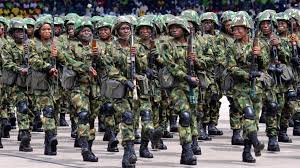
For years, Nigerian security agencies have announced the number of terrorists killed during military operations as evidence of progress in the country’s fight against insurgency.
Headlines often highlight figures running into dozens or even hundreds of militants “neutralised.” While these announcements project military success, security experts increasingly argue that body counts alone are a poor measure of victory.
The debate echoes one of the most controversial military strategies in modern history, during the Vietnam War (1955–1975), the United States relied heavily on enemy body counts to demonstrate progress against the Viet Cong and North Vietnamese forces.
Decades later, historians concluded that many of those figures were exaggerated or inaccurate, while civilian casualties were frequently misclassified as enemy combatants. The strategy created the impression that the war was being won, even as the conflict continued to escalate.
Today, similar questions are emerging in Nigeria.
Measuring Success Beyond Numbers
Nigeria has battled Boko Haram and the Islamic State West Africa Province (ISWAP) for more than 16 years, military operations across the North-East regularly produce reports of terrorists killed, camps destroyed and weapons recovered.
However, analysts say the real question is whether these operations are reducing the insurgents’ ability to recruit, attack communities and control territory.
A high number of enemy casualties may appear encouraging, but it does not automatically translate into improved security. If insurgent groups continue to recruit faster than they lose fighters, the conflict can persist despite repeated military victories.
The Hidden Cost: Nigerian Soldiers
One statistic rarely receives the same attention as enemy casualties, the number of Nigerian military personnel killed, injured or permanently disabled in the conflict.
The Armed Forces seldom publish comprehensive casualty figures, citing operational security. As a result, independent verification is difficult, leaving Nigerians without a complete picture of the human cost of the war.
Behind every military operation are soldiers, airmen, sailors and other security personnel deployed to dangerous environments. Many face repeated combat missions, prolonged separation from their families and the constant threat of improvised explosive devices (IEDs), ambushes and attacks on military bases.
Security analysts argue that understanding the true cost of the conflict requires acknowledging not only enemy losses but also the sacrifices made by Nigerian troops.
More Troops, But Is It the Solution?
President Bola Tinubu’s administration has approved plans to expand the strength of the Nigerian Army as part of efforts to improve national security.
Supporters believe increasing troop numbers will help tackle insurgency, banditry and other security threats occurring simultaneously across several regions.
Critics, however, argue that increasing recruitment without addressing broader structural challenges—including equipment, intelligence, welfare, logistics and training—may place additional personnel in harm’s way without fundamentally changing the nature of the conflict.
Military analysts have consistently stressed that modern counter-insurgency campaigns depend as much on intelligence gathering, community cooperation, governance and economic development as they do on troop numbers.
What Keeps the Conflict Alive?
Perhaps the most important question is not how many insurgents have been killed, but why new fighters continue to emerge.
Research by organisations including the United Nations Development Programme (UNDP) identifies several drivers of violent extremism in the Lake Chad region:
- Poverty and unemployment.
- Poor governance and corruption.
- Limited access to education.
- Human rights concerns.
- Weak state presence in remote communities.
- Local grievances and social exclusion.
The UNDP’s Journey to Extremism in Africa study found that economic hardship, distrust of government institutions and heavy-handed security responses can contribute to radicalisation in some communities.
This suggests that military action alone may not eliminate insurgency if the underlying conditions that allow extremist groups to recruit remain unresolved.
Data Analysis
Available evidence presents a more complex picture than battlefield casualty figures alone.
- Nigeria has faced insurgency since 2009, making it one of Africa’s longest-running security conflicts.
- According to the Armed Conflict Location & Event Data (ACLED), thousands of violent incidents linked to Boko Haram and ISWAP have occurred over the past decade.
- The conflict has displaced millions of people across north-eastern Nigeria, according to the United Nations.
- Humanitarian agencies estimate that more than 40,000 people have died since the insurgency began, although exact figures vary by source.
- Despite repeated military offensives, Boko Haram and ISWAP have continued to launch attacks, demonstrating an ability to regroup and recruit.
These trends indicate that while tactical military successes are important, they have not yet translated into a definitive end to the insurgency.
Looking Beyond the Battlefield
Military victories matter. Neutralising dangerous fighters can save lives and protect communities. But history suggests that wars are rarely won by casualty figures alone.
The Vietnam War demonstrated the dangers of relying on body counts as the primary indicator of success. Counter-insurgency experts argue that sustainable victory depends on restoring public trust, improving governance, protecting civilians, strengthening intelligence, creating economic opportunities and addressing the grievances that extremist groups exploit.
For Nigeria, the challenge may not simply be how many terrorists are killed, but whether the conditions that sustain violent extremism are being eliminated.
As the country continues to invest in security, perhaps the question is no longer “How many terrorists were neutralised?” but “Is Nigeria becoming safer, and at what cost?”