
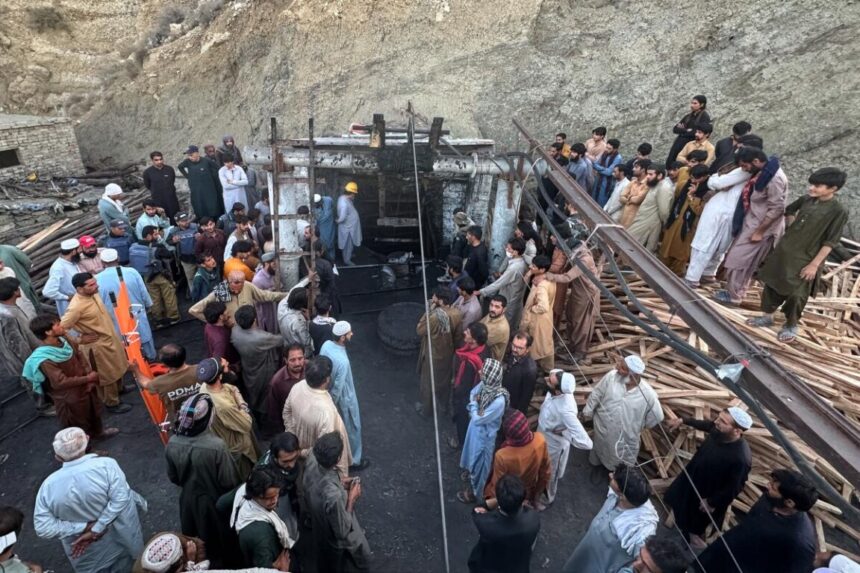
At least 34 miners have died after a methane gas explosion ripped through a coal mine in Pakistan’s Balochistan province, prompting an ongoing rescue operation and renewing concerns about safety standards in the country’s mining industry.
The explosion occurred on Thursday at a coal mine near Quetta, the provincial capital of Balochistan, trapping dozens of workers underground. Rescue teams rushed to the scene shortly after the blast and worked through the night to search for survivors, while also recovering the bodies of those who lost their lives.
By Friday morning, the Provincial Disaster Management Authority confirmed that 34 bodies had been recovered. Officials, however, fear that more miners may still be trapped beneath the rubble, prompting rescue teams to continue searching the damaged mine.
Emergency responders have maintained rescue efforts despite the difficult conditions inside the collapsed sections of the mine. Crews are carefully clearing debris and navigating unstable underground tunnels in the hope of locating anyone who may still be alive.
Authorities say the operation will continue until every miner believed to have been inside the mine has been accounted for. At the same time, officials have urged families to remain patient as rescue workers carry out the delicate operation.
Preliminary reports indicate that methane gas triggered the explosion, although authorities have yet to release the findings of a formal investigation.
Methane is a highly flammable gas commonly found in underground coal mines. Without proper ventilation and gas monitoring systems, it can accumulate to dangerous levels and ignite, often with devastating consequences.
Investigators are expected to examine whether existing safety procedures were followed and whether any operational failures contributed to the disaster.
The latest tragedy has once again drawn attention to Pakistan’s mining industry, where accidents occur regularly, particularly in Balochistan.
Safety experts have repeatedly warned that many coal mines operate with outdated equipment, limited ventilation systems and inadequate emergency preparedness. Although mining regulations exist, labour groups argue that enforcement remains inconsistent, leaving thousands of workers exposed to significant risks every day.
The incident has renewed calls for stronger inspections, improved workplace safety standards and greater investment in modern mining technology.
Balochistan is Pakistan’s largest province by land area, yet it remains one of the country’s least developed regions.
Despite its rich natural resources, the province continues to struggle with widespread poverty, limited infrastructure and high unemployment. As a result, many families depend on coal mining as one of the few available sources of income, even though it remains among the country’s most dangerous occupations.
For many workers, the economic necessity of supporting their families outweighs the risks associated with working underground.
Authorities have pledged to investigate the cause of the explosion once rescue operations are completed. Officials say the findings will help determine whether negligence, equipment failure or safety lapses contributed to the disaster.
The government also hopes the investigation will produce recommendations aimed at preventing similar incidents in the future.
The Pakistan coal mine blast is another painful reminder of the dangers faced by thousands of miners who work in hazardous conditions to support their families.
While rescue teams continue searching for those still missing, the tragedy has intensified calls for meaningful reforms that prioritise worker safety over production. For many observers, preventing future disasters will require not only stronger regulations but also consistent enforcement, better equipment and greater investment in protecting the lives of those working deep underground.