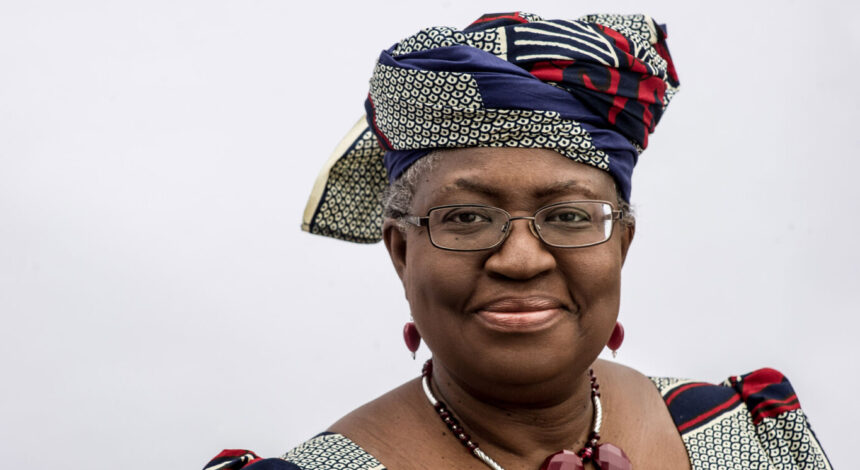
Director-General of the World Trade Organisation (WTO), Dr Ngozi Okonjo-Iweala, has urged Nigerian authorities to ensure that ongoing economic reforms translate into jobs, increased opportunities and tangible improvements in the lives of citizens.
Okonjo-Iweala made the call during a fireside chat with the Governor of the Central Bank of Nigeria (CBN), Olayemi Cardoso, at the 7th Africa Emerging Markets Forum (EMF) in Abuja.
She stressed that Nigeria’s long-term economic success would depend more on the quality of its leadership and governance than on its abundant natural resources.
According to the former Minister of Finance and Coordinating Minister for the Economy, effective leadership must go beyond announcing policies to ensuring their proper implementation and creating an environment where businesses and citizens can thrive.
“It’s all about leadership. We need leaders who have the interests of the country and the continent at heart—not themselves,” she said.
Okonjo-Iweala said leaders must focus on implementation, create jobs for young people and remove barriers that prevent economic growth.
She expressed hope that Nigeria and other African countries would create enough opportunities to discourage young people from seeking better prospects abroad.
“I hope we will indeed have a continent and a country where young people are not seeking to leave, but are seeking to stay because opportunities exist for them here,” she said.
She, however, noted that good leadership must be complemented by responsible and engaged citizens who demand accountability from those in authority.
Okonjo-Iweala called for greater protection of free speech, saying citizens must be able to speak out and participate actively in democratic processes without fear.
“Citizens must demand integrity, transparency and accountability from those who govern them. Good governance cannot thrive without an active and engaged citizenry,” she said.
She also urged Nigerians to take responsibility for promoting accountability, stressing that the task should not be left to journalists and the media alone.
Commenting on the CBN’s economic reforms, the WTO chief commended the apex bank for efforts to strengthen its core mandate but warned that macroeconomic improvements would ultimately be judged by their impact on households and businesses.
She said Nigerians would continue to criticise the reforms unless they began to feel concrete benefits in their daily lives.
“It will not be easy to sustain public support unless people are convinced that they stand to benefit from the reforms,” she said.
Okonjo-Iweala consequently called for stronger coordination among monetary, fiscal and trade institutions to ensure that policy reforms translated into increased production, investment and employment.
On United States tariffs affecting Nigerian exports, she advised the country not to become excessively focused on the measures, noting that many key exports, particularly oil, remained exempt.
She also urged Africans to remain optimistic about the continent’s demographic outlook, pointing out that Africa is expected to account for one in every four people globally by 2050.
Speaking at the forum, Cardoso identified fragmentation in global trade, increasingly selective international capital and rapid advances in artificial intelligence as major changes shaping Africa’s economic future.
He said investors were placing greater emphasis on credibility, transparency, policy consistency and strong institutions when deciding where to commit capital.
“The era of abundant liquidity chasing returns regardless of risk is over,” Cardoso said.
He stressed that African countries must increasingly mobilise domestic resources, including pension funds, insurance assets, domestic savings and diaspora capital, and channel them into productive investment.
According to the CBN governor, reforms implemented over the past three years were beginning to restore confidence in Nigeria’s economy.
He said the central bank had returned to its core mandate, unified the exchange rate, restored price discovery, ended monetary financing of fiscal deficits and rebuilt the foreign exchange market around transparency and settlement integrity.
Cardoso said the reforms had contributed to moderating inflation, stronger external buffers and a safer and better-capitalised financial system.
He also emphasised the importance of preparing an AI-ready workforce, arguing that the continent must equip its young population with the skills needed to compete in a rapidly changing global economy.
Cardoso said Nigeria’s economic performance has implications well beyond its borders, given the country’s significant share of West Africa’s and Africa’s economic output.
“If Nigeria gets it right, the benefits will extend far beyond our borders. That is why we simply cannot afford to get it wrong,” he said.