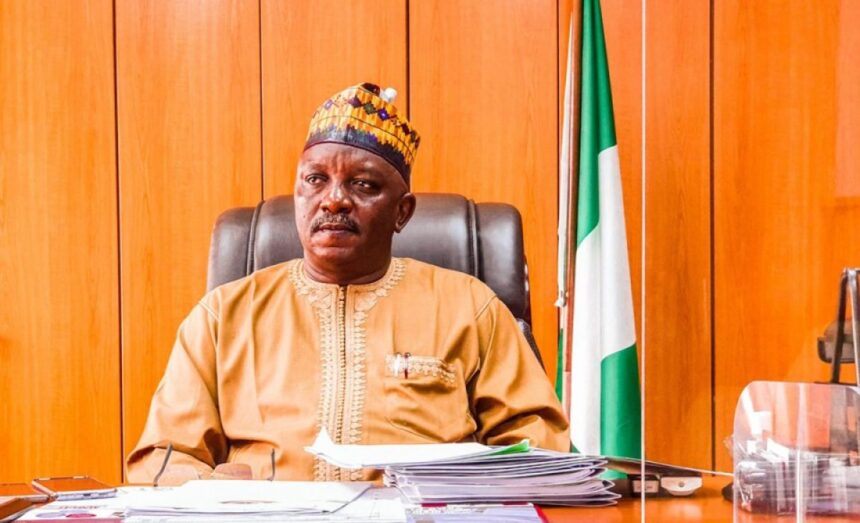
The Federal High Court in Abuja has ordered the forfeiture of additional properties linked to former Minister of Power, Saleh Mamman, who is currently serving a 75-year prison sentence after being convicted on multiple corruption and money laundering charges.
In a ruling delivered on Thursday, July 2, 2026, Justice James Omotosho of the Federal High Court, Maitama, Abuja, granted the application of the Economic and Financial Crimes Commission (EFCC) to permanently forfeit one of the properties traced to proceeds of unlawful activities, while ordering interim forfeiture of four others pending further court proceedings.
The property permanently forfeited is Walijam Apartments, located at No. 43, Plot 435, Lobito Crescent, Wuse 2, Abuja. According to the court, the EFCC successfully proved that the apartment complex was acquired with proceeds of corruption.
Justice Omotosho ruled that the anti-graft agency had presented sufficient evidence linking the property to illicitly acquired funds. The court therefore ordered that the asset be permanently transferred to the Federal Government.
The judge also granted an interim forfeiture order on four additional properties allegedly linked to the former minister. These include:
- Bloom Luxury Suites Nigeria Limited, located on No. 5 Amana Crescent, New Estate, Unguwan Rimi, Kaduna State.
- A mansion at No. 11 Misratah Street, Wuse 2, Abuja.
- Another mansion at No. 13 Misratah Street, Wuse 2, Abuja.
- A.U.A Plaza situated on Plot 734, Kade Street, Wuse 2, Abuja.
Justice Omotosho directed the EFCC to publish the interim forfeiture order in a national newspaper within seven days to enable any interested parties to appear before the court and explain why the properties should not be permanently forfeited to the Federal Government.
The latest ruling follows Mamman’s conviction in one of Nigeria’s most high-profile corruption cases involving a former cabinet minister. The EFCC had arraigned the former minister on an amended 12-count charge bordering on corruption and money laundering involving about ₦33.8 billion.
On May 7, 2026, the court found him guilty on all counts. Six days later, on May 13, Justice Omotosho sentenced him to a cumulative 75 years’ imprisonment, marking one of the stiffest corruption sentences handed down by a Nigerian court in recent years.
During the trial, investigators recovered several assets believed to have been acquired with illicit funds. In addition to the prison sentence, the court ordered Mamman to refund ₦22 billion, which the EFCC successfully traced to him during its investigation.
Asset forfeiture is one of the major legal tools used by the EFCC to recover proceeds of crime. Under Nigeria’s anti-corruption laws, assets proven to have been acquired through unlawful means can be forfeited to the Federal Government after judicial review. Interim forfeiture orders allow the court to preserve suspected assets while giving any legitimate claimants an opportunity to contest the seizure before a final order is made.
The case underscores the Federal Government’s continuing efforts to strengthen asset recovery and ensure that proceeds of corruption are returned to public ownership. It also highlights the judiciary’s role in enforcing accountability through both criminal convictions and the confiscation of assets linked to financial crimes.