
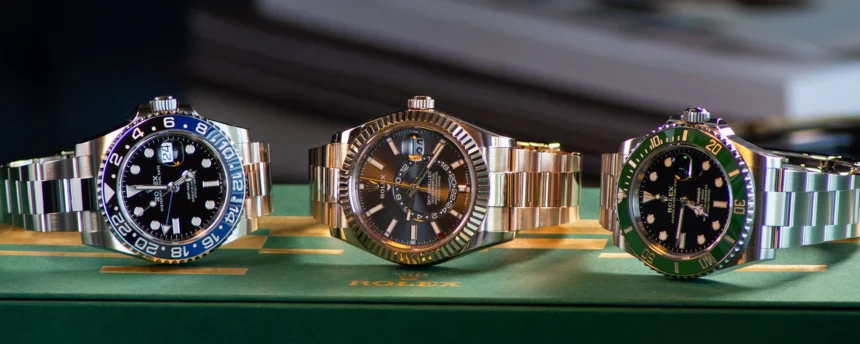
Rolex Wristwatch History reveals how one of the world’s most famous watch brands transformed precision, durability, and luxury timekeeping. Although Rolex became a global symbol of excellence, the company did not create the first wristwatch. That achievement belongs to Patek Philippe, which created an early wristwatch in 1868 for Queen of Naples Caroline Murat. Rolex later changed the industry by making wristwatches more accurate, reliable, and suitable for exploration.
However, Rolex did not create the first wristwatch.
The history of the wristwatch started long before Rolex entered the industry. In 1868, Swiss watchmaker Patek Philippe created an early wristwatch for Queen of Naples Caroline Murat. The timepiece served as both a watch and a piece of jewellery.
Many historians recognise this creation as one of the earliest wristwatches ever made. At that time, people saw wristwatches mainly as fashionable accessories. Men still preferred pocket watches because they considered wristwatches less practical.
The industry needed someone who could transform the wristwatch from a luxury item into a reliable everyday tool.
That person was Hans Wilsdorf.
Hans Wilsdorf founded Rolex after recognising the potential of wristwatches. Born in Bavaria in 1881, Wilsdorf entered the watch industry during the era of pocket watches.
He believed the future belonged to smaller watches worn on the wrist. Many experts doubted that wristwatches could achieve the strength and accuracy required for daily use. Wilsdorf disagreed and pursued his vision.
In 1905, he started a watch business in London. He worked with Swiss manufacturers to produce compact movements for wristwatches.
Three years later, he registered the name Rolex. He chose the name because it was short, easy to pronounce, and suitable for international markets.
Rolex did not invent the wristwatch, but the company changed how people viewed it.
Wilsdorf focused on one major challenge: accuracy.
In 1910, a Rolex wristwatch received the Swiss Certificate of Chronometric Precision from the Official Watch Rating Centre in Bienne. It became the first wristwatch to achieve this recognition.
In 1914, the Kew Observatory in Britain awarded a Rolex wristwatch a Class A precision certificate. Before then, this honour belonged mainly to marine chronometers.
These achievements helped Rolex prove that a wristwatch could match the accuracy of larger timepieces.
Rolex achieved one of its biggest breakthroughs in 1926 with the launch of the Rolex Oyster.
The Oyster became the world’s first waterproof wristwatch. The design protected the movement from water and dust, making the watch suitable for adventure and everyday use.
In 1927, swimmer Mercedes Gleitze wore a Rolex Oyster during her English Channel crossing. The journey lasted more than 10 hours, and the watch continued working perfectly after the swim.
The achievement gave Rolex global attention. It also established the brand’s connection with exploration and human endurance.
Rolex continued developing new technology. In 1931, the company introduced the Oyster Perpetual, its first automatic wristwatch. The watch used a self-winding system powered by the movement of the wearer’s wrist.
The company later became associated with explorers, athletes, and adventurers around the world. Rolex watches accompanied major achievements, including expeditions to Mount Everest.
Hans Wilsdorf built Rolex around quality and trust. He wanted every watch to represent reliability and craftsmanship.
His philosophy helped Rolex become more than a watch company. It became a symbol of ambition and excellence.
The Rolex story is not the story of the first wristwatch. That honour belongs to Patek Philippe’s creation for the Queen of Naples.
Instead, Rolex’s achievement lies in transforming the wristwatch into a dependable instrument used by explorers, professionals, and millions of people worldwide.
The first wristwatch opened the door. Rolex helped define the modern era of timekeeping.