
The Korowai people of Indonesia are among the most isolated indigenous communities in the world. They live deep in the rainforests of Papua, a remote region on the western half of New Guinea. For centuries, they had little contact with the outside world. As a result, they preserved a unique way of life that continues to fascinate researchers and travelers.
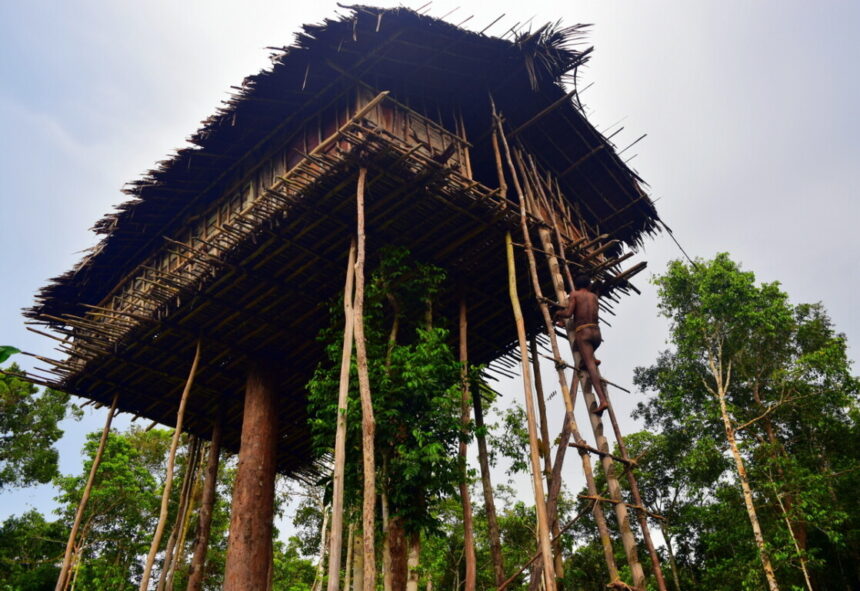
One of the most remarkable features of Korowai culture is their treehouse architecture. Instead of building homes on the ground, they construct houses high above the forest floor. Some of these structures rise more than 30 metres into the air.
The Korowai use materials from the rainforest to build these homes. They gather wood, vines, and palm leaves from the surrounding environment. Moreover, they carefully design the houses to withstand the challenges of rainforest life.
Living high in the trees serves several important purposes. First, it helps families avoid seasonal flooding. Second, it offers protection from wild animals and insects that live on the forest floor.
In addition, spiritual beliefs influence this tradition. Many Korowai believe that higher homes protect them from harmful spirits and negative forces. Therefore, treehouses hold both practical and cultural value.
The Korowai connect closely with their forest environment. They do not rely only on spoken communication. Instead, they use special forest songs to send messages across long distances.
These songs can carry warnings, announcements, and other important information. Furthermore, they help families stay connected despite the thick vegetation between homes. This method remains both practical and culturally significant.
The Korowai depend heavily on the rainforest for survival. They hunt animals, gather forest resources, and cultivate crops. Sago serves as a staple food in their diet.
Their deep knowledge of the forest helps them identify edible plants and medicinal resources. Likewise, they know which materials work best for building homes and making tools. This knowledge has supported their way of life for generations.
The Korowai lived in relative isolation for many years. However, documented contact with outsiders began in 1974. Since then, researchers, missionaries, and government officials have visited the region.
Despite these interactions, many Korowai families continue to follow traditional customs. They maintain their cultural practices and preserve important aspects of their heritage.
Today, the Korowai represent an important example of cultural resilience. Although modernization continues to spread, they have preserved many traditional practices.
Their treehouses, forest songs, and strong connection to nature offer a rare glimpse into an ancient way of life. Moreover, their story highlights the diversity of human cultures around the world.
The Korowai also demonstrate how communities can adapt to challenging environments while preserving traditions. Ultimately, their continued existence reminds us of the importance of protecting indigenous cultures and the valuable knowledge they hold about the natural world.