
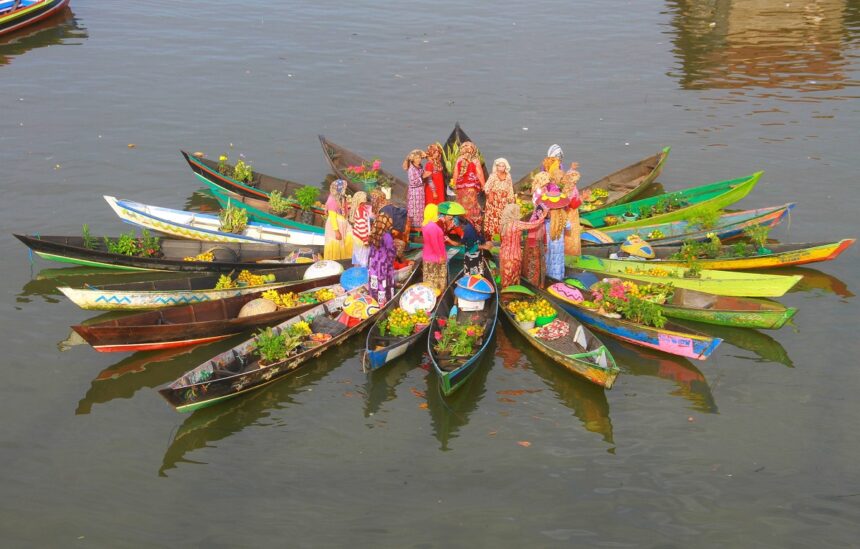
In Indonesia, a centuries old tradition continues to attract tourists and cultural enthusiasts from around the world. The floating market system in South Kalimantan remains one of the country’s most unique trading practices.
Instead of selling goods in shops or open land markets, traders conduct business directly on rivers. They use small wooden boats known as jukung to transport and display their products. Sellers offer fruits, vegetables, spices, fish, snacks, and handmade items while moving across the water.
The floating markets operate mainly in Banjarmasin, a city often called the City of a Thousand Rivers. For generations, rivers served as the main transport routes for local communities. People depended on waterways for travel, communication, and trade long before modern roads appeared.
As river activities grew, communities turned the waterways into busy commercial centers. Over time, the floating market became an important part of everyday life and local culture.
One of the best-known markets is the Lok Baintan Floating Market. Trading activities begin before sunrise, and dozens of boats gather on the river early in the morning. The scene creates a colorful and lively atmosphere filled with movement, bargaining, and conversation.
Women dominate many of the trading activities in the floating markets. Many female traders learned the business from their mothers and grandmothers. Families continue to pass down the skills needed to navigate the rivers and attract customers.
The tradition has helped many women support their households while preserving an important part of Indonesian culture. Their presence has become one of the strongest symbols of the floating market system.
The floating markets now attract visitors from different parts of the world. Tourists often take early morning boat rides to experience the markets and buy local products directly from traders.
Beyond tourism, the markets remain important cultural spaces. They allow communities to preserve local foods, traditional clothing, and regional languages. Many residents still see the markets as symbols of identity and community pride.
Despite their cultural value, floating markets face several challenges. Modern supermarkets and improved road networks have reduced dependence on river trade. Many young people also prefer other jobs instead of continuing the family business.
Local authorities and cultural groups continue to promote and protect the tradition. They organize cultural events and tourism programs to keep the floating markets alive for future generations.
Today, the floating market system remains a powerful symbol of Indonesia’s cultural heritage. It also shows how traditional trade practices can survive in a rapidly modernizing world.