
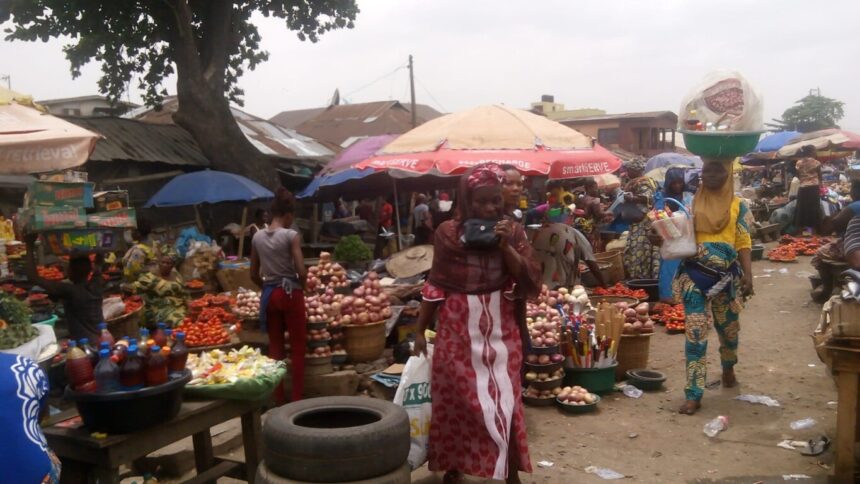
Residents and food vendors in the Federal Capital Territory (FCT) have expressed concern over the continued increase in the cost of vegetables and other essential food items, saying the situation is making daily feeding and business operations increasingly difficult.
Many of those affected said the price surge is forcing them to adjust how they cook, sell food, and manage households across Abuja.
Speaking with the News Agency of Nigeria (NAN), food vendor Mrs Mary Augustine said the cost of tomatoes, pepper, and leafy vegetables has risen sharply in recent months.
She said a big basket of tomatoes, which previously sold for between N45,000 and N48,000, now costs between N85,000 and N90,000. She also noted that a 50kg bag of pepper, once sold for N20,000 to N30,000, now goes for between N120,000 and N150,000.
According to her, the continuous rise has forced food vendors to either increase meal prices or reduce portion sizes.
“We use vegetables every day for cooking soups, stew and salads, but the prices keep increasing almost every week,” she said, adding that she now buys in bulk directly from farmers to reduce frequent market costs.
Another vendor, Mrs Fatima Muhammad, said the situation has forced her to change her cooking methods due to the rising cost of tomatoes, tatashe, shombo, and pepper.
She said onions remain the cheapest option but cannot be relied on alone due to taste and preservation challenges, especially with unstable electricity supply.
Muhammad also noted that many vendors now depend on packaged tomato pastes and sachet pepper mixes as cheaper alternatives to fresh vegetables.
She urged business owners to manage pricing carefully to avoid losing customers.
A caterer, Mrs Lateefat Yusuf, said she has had to adjust her operations, often using alternative ingredients such as sachet tomato paste to remain in business.
She explained that the amount she now spends in the market can no longer buy half of what it used to, adding that she often goes with double or triple her usual budget.
An eatery operator, Mr Isah Sagir, attributed the price increases to high transport costs, insecurity in farming areas, and post-harvest losses.
He said food vendors are struggling to balance affordability with profitability, noting that excessive price increases could drive customers away.
Meanwhile, some residents said the rising food prices are affecting their household feeding patterns.
A housewife, Maman Zainab, said many families now rely on dried vegetables or cooking pastes due to the high cost of fresh produce.
A civil servant, Mr Benjamin Amos, said he now spends more on eating outside because food vendors have raised their prices.
He called on government authorities to support farmers with incentives and improve transportation systems to reduce food costs.
A vegetable farmer, Dr Abdulwahab Ishaq, said insecurity, climate challenges, and high transport costs are major factors behind the rising prices.
He urged stronger government support for farmers, improved storage facilities, and better post-harvest management systems to reduce losses and stabilize food supply.