The Toraja people of Indonesia are known for funeral traditions that many consider unusual. However, for the community, the practices represent respect, love, and a strong connection between families and their ancestors.
The Toraja community lives mainly in the mountainous region of South Sulawesi. Many families there continue to follow customs that have existed for centuries.
Unlike many cultures where burial takes place within days, Toraja families may keep deceased relatives inside their homes for months or even years.
Families preserve the bodies carefully while they save money and prepare for elaborate funeral ceremonies. During this period, relatives continue to speak to the deceased and treat them as part of the household.
The community believes death is not an instant separation. Instead, many Toraja people see it as a gradual journey from the world of the living to the spiritual world.
Funeral ceremonies are among the most important events in Toraja culture. Families often spend years planning them because they require large gatherings, traditional performances, food, and cultural rituals.
Buffalo sacrifices are also central to the ceremonies. Many Toraja people believe the animals help guide the spirit of the deceased into the afterlife.
The size of the ceremony can also reflect family honor and social status within the community.
One of the best-known Toraja traditions is the Ma’nene ceremony, sometimes called the care of ancestors ritual.
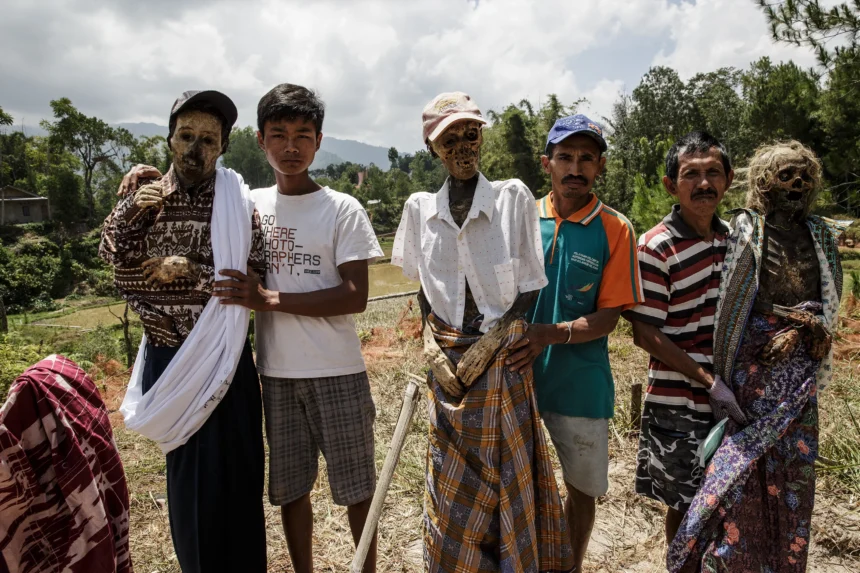
During the event, families remove the bodies of deceased relatives from their graves. They gently clean the bodies, replace old clothes with fresh outfits, and present them publicly.
Some relatives even take family photographs with the deceased as a sign of remembrance and respect.
For outsiders, the ritual may appear shocking. However, the Toraja people see it as a way to maintain strong emotional and spiritual ties with their ancestors.
The Toraja funeral customs have attracted tourists, researchers, photographers, and documentary filmmakers from around the world.
Cultural experts say the traditions highlight how different societies approach death and mourning. They also show how communities preserve family bonds and cultural identity across generations.
Although modern lifestyles continue to influence younger generations, many Toraja families still protect the customs as an important part of their heritage.
The traditions remain one of the world’s most well-known examples of how culture shapes beliefs about death, memory, and family connection.