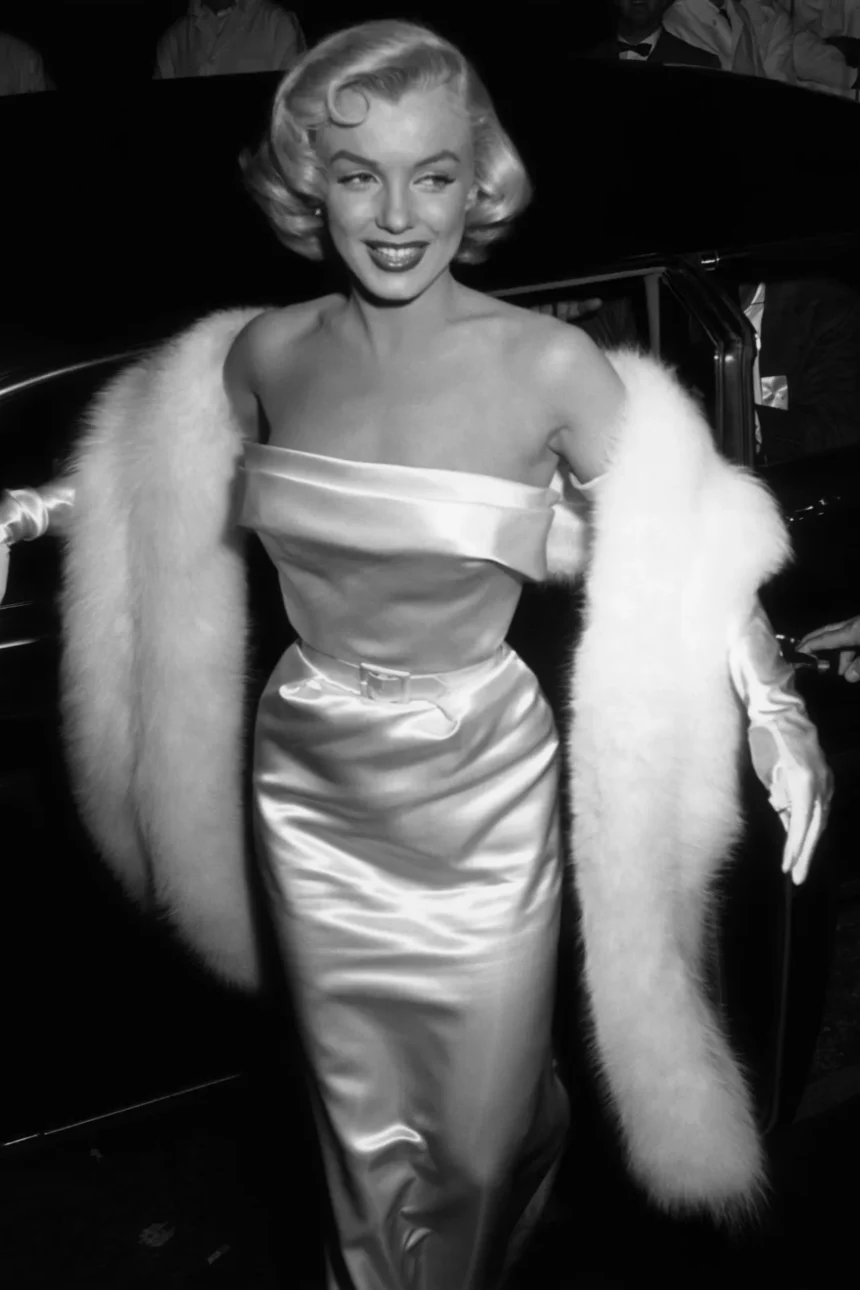
For more than six decades after her death, Marilyn Monroe remains one of Hollywood’s most recognizable faces.
The platinum blonde hair, dazzling smile and iconic white dress billowing above a subway grate continue to define popular culture.
Yet behind that carefully crafted image was a woman far more complex than the glamorous movie star audiences thought they knew.
Born Norma Jeane Mortenson on June 1, 1926, Monroe rose from a childhood marked by instability, poverty and foster care to become one of the biggest stars in cinema history.
Along the way, she challenged Hollywood stereotypes, fought for creative control and built a legacy that continues to influence actors, filmmakers and women around the world.
From Foster Homes to Hollywood
Monroe’s early years were far removed from the luxury associated with her later life.
Her mother struggled with severe mental illness, forcing the young Norma Jeane to move between foster homes, relatives and an orphanage. The uncertainty of her childhood shaped much of her adult life, fueling both her ambition and her insecurities.
Everything changed during World War II.
While working in a California munitions factory, she caught the attention of an Army photographer producing morale-boosting images. The photographs launched a successful modelling career that soon opened the doors to Hollywood.
In 1946, she signed her first contract with Twentieth Century-Fox and adopted the stage name Marilyn Monroe. She transformed herself by lightening her hair, refining her appearance and developing the soft, breathy voice that would become one of the most recognizable in film history.
Becoming Hollywood’s Biggest Star
Monroe spent her early years accepting small film roles before her breakthrough arrived in 1950 with appearances in The Asphalt Jungle and All About Eve.
Hollywood quickly realized it had discovered a new star.
Within a few years, Monroe became one of the world’s highest-profile actresses through films such as Gentlemen Prefer Blondes, How to Marry a Millionaire, The Seven Year Itch and Some Like It Hot.
Her performance of “Diamonds Are a Girl’s Best Friend” remains one of cinema’s most famous musical moments, while the image of her white dress blowing over a New York subway grate became one of the defining photographs of the twentieth century.
By the end of her career, Monroe’s films had earned more than $200 million at the global box office, making her one of Hollywood’s biggest commercial successes.
More Than a Pretty Face
Hollywood marketed Monroe as the carefree “dumb blonde.”
The real woman was remarkably different.
Frustrated by repetitive roles, she moved to New York in 1955 to study under legendary acting coach Lee Strasberg at the Actors Studio. She wanted critics and audiences to recognize her as a serious actress rather than a glamorous screen idol.
She also founded Marilyn Monroe Productions, becoming one of the first female stars to establish her own production company. At a time when studios controlled nearly every aspect of an actor’s career, Monroe’s decision challenged Hollywood’s traditional power structure.
The move paved the way for future generations of actresses seeking greater creative freedom and business control.
A Woman Who Loved Books
Few people associated Monroe with literature or philosophy.
In reality, she built a personal library containing hundreds of books.
She read works by authors such as Fyodor Dostoevsky, James Joyce, Walt Whitman and Leo Tolstoy. Friends often described her as intellectually curious and eager to learn, a sharp contrast to the public image carefully crafted by Hollywood studios.
Historians now argue that Monroe deliberately sought intellectual growth to escape being defined solely by her appearance.
Fame Came at a Cost
Behind the glamour, Monroe struggled with anxiety, insomnia and chronic health problems.
Her private life attracted relentless media attention.
She married three times, including high-profile unions with baseball legend Joe DiMaggio and playwright Arthur Miller. Neither marriage lasted, and each unfolded under intense public scrutiny.
The pressure of constant fame, demanding studio contracts and personal challenges took a heavy emotional toll.
Even as she became one of the world’s most photographed women, Monroe often spoke about loneliness and the difficulty of living beneath the expectations created by her public image.
The Mystery That Never Disappeared
On August 4, 1962, Marilyn Monroe died at her home in Brentwood, California, at just 36 years old.
The official investigation concluded that she died from acute barbiturate poisoning and ruled her death a probable suicide.
However, questions surrounding her final hours have never disappeared.
Over the decades, numerous theories have emerged. Some claim her death resulted from medical negligence involving prescription medication. Others point to alleged relationships with President John F. Kennedy and Attorney General Robert F. Kennedy, fueling conspiracy theories that continue to attract public fascination.
Despite extensive speculation, no conclusive evidence has overturned the official findings.
Marilyn Monroe’s Enduring Legacy
Monroe’s influence extends far beyond classic Hollywood.
She challenged conventional beauty standards by celebrating curves during an era that increasingly favoured slimmer figures. She also fought for professional independence in an industry dominated by powerful studios and male executives.
Today, many scholars see Monroe not simply as a sex symbol but as an early advocate for women’s autonomy in entertainment.
Her life has inspired countless biographies, documentaries, museum exhibitions and academic studies exploring celebrity, feminism, mental health and media culture.
More than sixty years after her death, Marilyn Monroe continues to represent both the brilliance and the burden of fame.
Her story reminds the world that behind every carefully constructed public image is a human being with dreams, fears and extraordinary resilience.
That may be Marilyn Monroe’s greatest legacy—not the glamorous photographs or unforgettable films, but the courage to seek her own identity in an industry determined to define it for her.