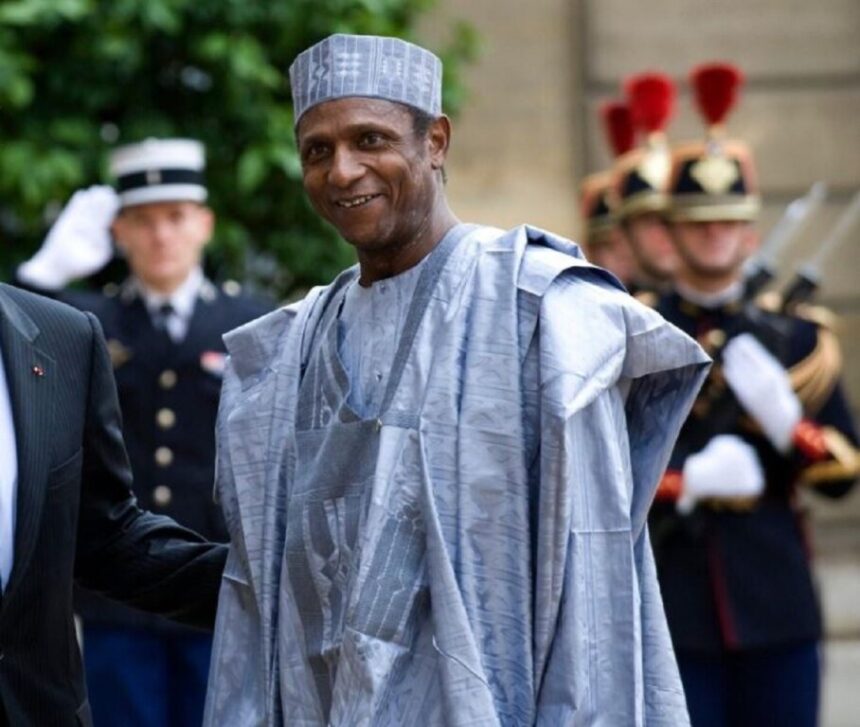
Sixteen years after his passing, Nigerians are once again reflecting on the life and legacy of former President Umaru Musa Yar’Adua, whose death remains a defining moment in the country’s democratic history.
Yar’Adua died on May 5, 2010, at the age of 58, following a prolonged illness that kept him out of the public eye for months and created a period of political uncertainty in Nigeria. He was buried the same day in his hometown of Katsina, in line with Islamic rites, as tributes poured in from across Nigeria and the international community.
His death not only marked the end of his presidency but also triggered a constitutional transition that brought then Vice President Goodluck Jonathan to power, shaping the direction of Nigeria’s leadership in the years that followed.
Yar’Adua served as Nigeria’s president from 2007 until his death in 2010. Despite his relatively short time in office, he was widely regarded for his calm demeanor, measured approach to governance, and strong emphasis on the rule of law. Political analysts often point to his public acknowledgment of flaws in the 2007 elections that brought him to power as a rare moment of political candor in Nigeria’s history.
His administration initiated several key reforms. Among them was the push for electoral reform, aimed at improving the credibility and transparency of Nigeria’s voting process. He also introduced the Niger Delta Amnesty Programme, a major policy effort designed to reduce militancy and restore stability in the oil-producing region, which had been plagued by unrest and disruptions to crude oil production.
Beyond policy, many Nigerians remember Yar’Adua for his personal style of leadership—quiet, disciplined, and less confrontational compared to many of his contemporaries. This approach earned him respect among both allies and critics, even as debates continue over the pace and impact of his reforms.
Sixteen years on, there remains a strong sense of nostalgia among sections of the population. Many Nigerians continue to lament his death, describing it as a significant loss at a time when the country was grappling with institutional reforms and governance challenges. For some, his presidency represented a period of cautious optimism, particularly in terms of strengthening democratic norms and accountability.
Commemorations across the country, especially in Katsina and among political circles, have been marked by prayers, reflections, and renewed discussions about his contributions to Nigeria’s democratic development. Observers note that his legacy continues to influence conversations around leadership style, electoral integrity, and conflict resolution in Nigeria.
As Nigeria marks the 16th anniversary of his passing, Yar’Adua’s tenure remains a reference point in evaluating leadership and governance, with many citizens still expressing a sense of what might have been had his life and presidency not been cut short.