
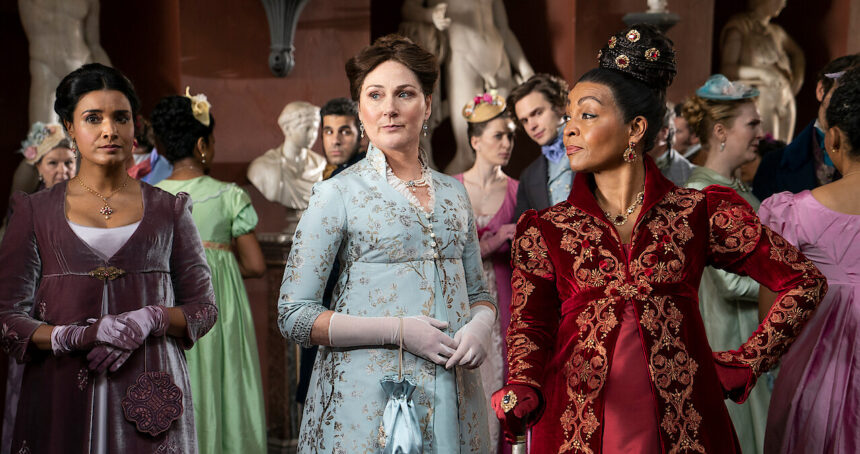
The world of Regency fashion has made a huge comeback in recent years, mainly because of Bridgerton, what started as admiration for empire-waist gowns and pearl accessories has grown into a full fashion movement called “Regencycore.”
This trend mixes early nineteenth-century fashion with modern fantasy and glamour. Through clothing, hairstyles, and luxury fashion collections, the Regency era has become a major influence on modern style.
The Regency era lasted from 1811 to 1820. Fashion during this time focused on elegance and simplicity after the heavy and dramatic styles of the eighteenth century. Women wore empire-waist dresses with high waistlines just below the bust. These gowns often featured flowing skirts, delicate embroidery, lightweight fabrics, and short puffed sleeves. Designers drew inspiration from ancient Greek and Roman clothing, which gave the style a soft and graceful appearance.
Men’s fashion also reflected wealth and social status. Aristocratic men wore tailored coats, polished boots, cravats, and dramatic sideburns. Together, these styles created the refined image now associated with Regency society.
Modern audiences love Regency fashion because it offers escapism. In today’s fast-moving world, the aesthetic represents romance, beauty, and elegance. The costumes in Bridgerton create a dreamy atmosphere filled with sparkling jewels, gloves, corsets, and flowing gowns.
Characters like Kate Sharma, Daphne Bridgerton, and Penelope Featherington have become fashion icons. Kate’s embroidered violet gown, Daphne’s pastel dresses, and Penelope’s beaded yellow outfits show how costume design can reflect personality and social status. Their looks helped turn Regencycore into a popular online trend.
Although fans admire the show’s costumes, many viewers have criticized the fashion changes in later seasons. Early seasons balanced historical inspiration with fantasy. However, seasons two and three introduced modern details such as acrylic nails, curtain bangs, heavy contour makeup, and trendy silhouettes.
Some fans felt these choices broke the illusion of the Regency setting. Critics even used the term “iPhone face” to describe characters who looked too modern in period clothing. This debate raised questions about whether Bridgerton should count as a historical drama or simply a romance inspired by Regency aesthetics.
The influence of Regency fashion now extends far beyond television. Modern designers continue to borrow elements from the era. Ganni and Vivienne Westwood use empire waistlines, corsets, puffed sleeves, pearl chokers, and taffeta fabrics in their collections.
Designers such as Marina Moscone, Jill Stuart, Erin Fetherston, Christian Dior, and Elie Saab also revisit Regency-inspired silhouettes. Their collections combine historical romance with modern couture techniques. These designs prove that fashion constantly evolves while still drawing inspiration from the past.
The Regency revival also highlights the link between glamour and wealth. Many of the sparkling gowns and luxury fabrics associated with Regencycore remain expensive and inaccessible. Costume dramas allow audiences to imagine life at lavish balls and masquerades, but designer collections remind people that luxury still belongs mostly to the wealthy.
In this way, Regency fashion reflects both fantasy and inequality. People everywhere admire the beauty of the aesthetic, but not everyone can afford the lifestyle it represents.
Regency fashion continues to attract audiences because it blends history with imagination. Whether through the pastel gowns of Bridgerton, modern runway collections, or social media trends, the aesthetic still captures people’s attention.
Viewers may notice historical inaccuracies, but the appeal remains strong. Regency fashion offers a temporary escape into a world of romance, elegance, and fantasy. It allows people to dream of masquerade balls, glittering jewels, and becoming the “diamond of the season.”