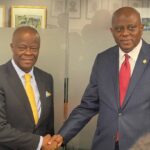
The National Economic Council (NEC) has approved the release of ₦83.2 billion under the Anticipatory Action Trust Fund (AATF) to strengthen Nigeria’s flood preparedness and reduce the impact of seasonal flooding across the country.
The approval was granted during the National Economic Council meeting chaired by Vice President Kashim Shettima at the Council Chamber of the State House, Abuja, on Thursday.
NEC Approves ₦83.2bn Anticipatory Action Trust Fund for Flood Response
Briefing State House correspondents after the meeting, Cross River State Governor Bassey Otu disclosed that although more than ₦166 billion had initially been proposed for the Anticipatory Action Trust Fund, the Council approved ₦83.2 billion for immediate implementation.
According to him, the fund will support proactive flood management measures, including:
- Early warning systems
- Emergency preparedness
- Flood mitigation projects
- Disaster risk reduction initiatives
- Community resilience programmes
The Council also emphasized that the fund is intended to shift Nigeria’s disaster management strategy from reactive emergency responses to proactive planning and prevention.
Shettima: Tinubu’s Reforms Must Deliver Tangible Results
Addressing the Council, Vice President Kashim Shettima said the administration of President Bola Tinubu must ensure that ongoing economic reforms translate into measurable improvements in the lives of Nigerians.
He said government policies should directly benefit farmers, manufacturers, vulnerable citizens, unemployed youths and future generations.
“When this Council last met, I called our economy a workshop—a place of measurement and correction. A place where plans are turned into systems, and systems into institutions, before any of it becomes prosperity,” Shettima said.
He stressed that government performance should be judged by concrete outcomes rather than policy announcements.
“A workshop is judged by one thing—not by the plans pinned to its walls, but by what comes off the bench.”
Nigeria Moving From Stabilisation to Production
In a statement issued by the Senior Special Assistant to the President on Media and Communications, Stanley Nkwocha, Shettima described Nigeria as a federation transitioning from economic stabilisation to sustainable production and coordinated national growth.
According to the Vice President, the focus has shifted from planning to delivering tangible results.
“The assignment has not changed. We remain a federation moving from stabilisation to production, from aspiration to implementation, from isolated interventions to coordinated national growth.”
He also emphasized that social protection programmes should provide lasting support for vulnerable Nigerians while strengthening the country’s human capital.
Shettima Calls for Value Addition to Nigerian Exports
Speaking on economic diversification, Shettima urged Nigeria to end its dependence on exporting raw materials while importing finished products.
He said sustainable economic transformation requires a complete value chain connecting agriculture, manufacturing, quality standards, ports and international markets.
“We cannot continue to export raw materials and import finished products.”
The Vice President pledged to address bottlenecks affecting agricultural exports, including inefficient port operations and compliance with international quality standards.
According to him, improving export processes will enhance farmers’ incomes, support manufacturers and expand Nigeria’s participation in global trade.
“A nation that cannot move its goods has imprisoned its own farmers. Meeting international standards is not submission to foreign demand. It is the price of the markets that will reward our labour.”
Flood Preparedness Remains National Priority
The approval of the ₦83.2 billion Anticipatory Action Trust Fund comes as Nigeria continues to face annual flooding that destroys homes, farmlands, roads and critical infrastructure across several states.
By investing in early warning systems and disaster preparedness, the Federal Government aims to reduce the human and economic costs of flooding while strengthening emergency response nationwide.