I have been staring at this screen for over twenty minutes trying to figure out how to begin. Because the truth is, I do not know what to say to a country that watches a woman burn to death and keeps scrolling. Her name was Ummulkhairi. She taught children the Quran. She had a husband who loved her enough to stand in front of cameras and tell the truth when it would have been much safer to grieve in silence. She had children. She had students who called her Malama. She had a life.
And then a crowd took it from her. In Maraban Jos, Kaduna State, in broad daylight, they beat her and set her on fire. And someone filmed it. I need you to sit with that for a moment before we talk about anything else. Yes, someone filmed it.
Now. The people who will come to argue in the comments already know their lines. She was accused of child theft. She should have thought about that before. You cannot blame people for being angry. I have heard all of it before, after Deborah Samuel in Sokoto, after the Aluu Four in Rivers State, after every single time we have been here, and we have been here too many times.
So let me say this plainly: I do not care what she was accused of. Not because child theft is a small matter. It is not. But because accusation is not conviction. A rumor shouted by a crowd is not evidence. And even if every single thing they said about her were true, which we do not know, which was never tested, which a court never heard, the answer is still not to burn a human being alive on a street while people watch and film and some of them cheer. If that is unclear to anyone reading this, I am not sure what conversation we are having.
She was in police custody when it happened. That detail matters more than most people seem to realize. She was not caught in an open field somewhere. She was inside a police station, under the care of the Nigerian State, alive, protected by law if not by men. Her husband has said publicly that the DPO personally came and took custody of her before she ended up in the hands of the mob. Another witness said the same thing on camera. If that is true, and I want to be very careful here because it has not been proven in court, but if it is true, then what happened in Maraban Jos is not just a story about a mob. It is a story about a police officer who may have handed a living woman to people he knew would kill her. That is not dereliction of duty. That is something closer to execution.
And I want to know what the Inspector-General of Police is going to do about it. Not what he is going to say. What he is going to do. I want to know because I have watched this country bury its scandals before. Occurrence books go missing. Officers get reposted to other divisions. Investigations are announced and quietly abandoned. Families are pressured. Witnesses lose their nerve. And then something else happens somewhere else and we all move on. Not this time. Not if enough of us refuse to move on.
Let me tell you about some of the times we have been here before, because I think we have convinced ourselves that these are rare events, that they are shocking precisely because they are uncommon. They are not.
In September 2018, retired Major General Idris Alkali was driving alone from Abuja to Bauchi through Jos. He had just retired after thirty-five years of service to this country. He encountered a crowd of angry protesters at Dura-Du in Plateau State, people who were themselves grieving after a communal attack the night before. He stopped his car. He told them who he was. A retired general. A fellow Nigerian just passing through. They killed him anyway. They dismembered his body, dragged it through the village, and buried it in a shallow grave. It took the Nigerian Army weeks, divers from Bauchi, fire trucks from Taraba, and a sniffer dog from Abuja to find what was left of him. A man who gave thirty-five years to Nigeria. That is what he got from us in return.
In May 2022, Deborah Samuel was killed in Sokoto over an allegation of blasphemy. People were arrested. They were released. Three years later, nobody has been convicted. Nobody. The case has not even reached a conclusion. The families of those who killed her have more peace tonight than Deborah’s family does. That is the justice system of the Federal Republic of Nigeria working exactly as it has been allowed to work. In March 2025, sixteen Hausa hunters were traveling from Port Harcourt to Kano to celebrate Sallah. They carried hunting rifles, which is what hunters carry. A vigilante group saw the guns. A mob formed. Before anyone asked a single question, all sixteen of them were dead. Sixteen people. Going home for Eid. Gone.
Between 2012 and 2023, Amnesty International documented at least 555 victims of mob violence across 363 incidents in Nigeria. Thirty-two people burned alive. Thirty-two. And that is only what was documented. This is not a crisis that is coming. It is a crisis that is here, that has been here, that we keep describing as if we are surprised by it. I know why it keeps happening. I do not like the answer but I know it. It keeps happening because it works. Because the formal justice system in this country has failed so many ordinary people so many times that a significant number of Nigerians have genuinely concluded that the only justice available to them is the justice they take with their own hands. They have watched armed robbers arrested and bailed by morning. They have watched murderers walk because a witness was too afraid to testify. They have watched case files disappear and prosecutors get phone calls from powerful people and judges make decisions that defy every known principle of law.
So yes, the Nigerian State built this jungle. I will say it again because it needs to be said. The Nigerian State built this jungle. The mobs are its most honest product.
But here is what I also know: you do not burn your way out of a broken system. You do not fix injustice with more injustice. Every time a mob kills someone, it kills the wrong person some percentage of the time. It destroys evidence. It poisons any chance of finding the truth. It tells every innocent person in the crowd watching that their life is also only worth as much as what the people around them decide to believe about them on any given day.
When you normalize mob justice, you do not make yourself safer. You make yourself a potential victim of the next mob.
The Kaduna State Government needs to act. The Federal Government needs to act. And I mean act, not speak. We have had enough speeches. Arrest the people in that footage. They are not hidden. The video is on everyone’s phone. Identify the faces, make the arrests, charge them, try them in open court, and sentence them in a way that makes the next crowd think twice. If any police officer is found to have handed Malama Ummulkhairi to that mob, charge that officer with the same seriousness. A uniform is not a license to kill. It is not a license to facilitate killing either.
Protect the husband. Protect the witnesses. They came forward at personal risk and the State owes them safety, not silence.
And to the National Assembly: the Senate passed a bill in 2017 to prohibit lynching and mob action. It was never signed into law. It has been sitting there for nearly a decade while Nigerians continue to burn. If our legislators cannot find the time or the political will to pass a law against burning people alive, I genuinely want to know what they believe their job is.
I started this piece by saying I did not know how to begin. I have the same problem at the end. Because what do you say after this? What is the right note to close on when a woman who taught children the Quran was set on fire in a Nigerian street and the country has already half-moved on? Maybe this. Ummulkhairi’s husband stood up and told the truth. In a country where silence is usually the safer option, he spoke. That takes a kind of courage most of us have never been tested for. The least we can do, those of us who are still here, still watching, still angry enough to write or read something like this at this hour, is refuse to let it be forgotten. She was a human being. She deserved better from us. From her neighbors. From the officers who were supposed to protect her. From the State that is supposed to protect all of us.
We keep saying we are not animals. It is time we started acting like it.
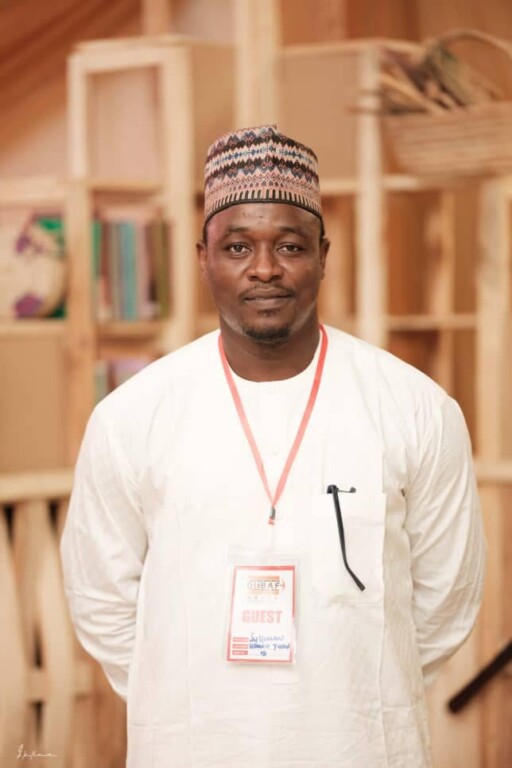
Suleiman writes from Abuja. He is, at the moment of writing this, equal parts heartbroken and furious, and he is not sure which one is winning. He can be reached via suleimanusmanbac@gmail.com